SAEDNEWS: Almond is native to the warm and dry regions of Western Asia and was introduced to Greece and Northern Europe before the advent of written history.
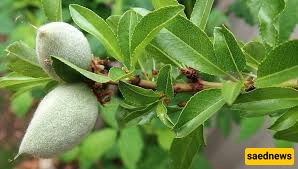
According to Saednews, Almond is native to the hot and dry regions of Western Asia and was introduced to Greece and Northern Europe before written history. Almond is a fruit tree of warm temperate regions and is sensitive to severe winter cold. Almond flowers bloom early, and in areas where late spring frost is likely, they are often exposed to cold damage and the blossoms are destroyed. This phenomenon occurs in Tabriz, Fars, most parts of Azerbaijan, and other regions. Recently, late-flowering almond varieties have been used to cope with late spring frosts.
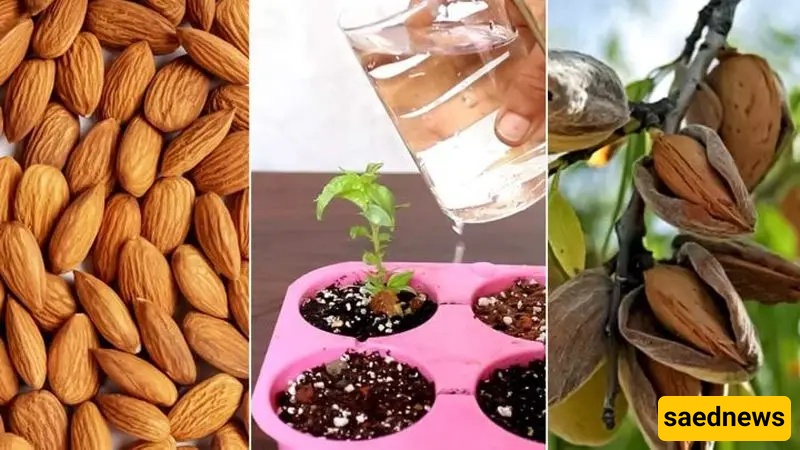
Some almond varieties are self-incompatible, while others, such as Nonpareil, are cross-incompatible and require pollinizer varieties. In selecting pollinizers, care must be taken not to use bitter kernel almonds, because due to metaxenia, pollen from bitter kernel varieties can cause bitter kernels in sweet kernel varieties.
Flower differentiation in almond occurs in late summer, and fertile buds are located on one-year-old shoots and spurs. The period from flowering to fruit maturity lasts 6–8 months. Almond fruits are small and do not require thinning. Flowers and fruits drop in three stages: immediately after fertilization, 30 days after flowering, and 45 days after flowering.
The fruit growth curve in almond, unlike other stone fruits, is a simple sigmoid. Fruits located on the outer parts of the canopy ripen earlier due to better light and heat exposure. Ethylene treatment for simultaneous fruit ripening has positive results. If fruits dry before the hull splits, the shell adheres to the kernel, and this is worsened by water and nutrient stress.
Twin kernels in some almond varieties occur due to fertilization of both ovules within the ovary and is a hereditary trait. A twin kernel rate of 20–25% is considered acceptable, while higher rates are undesirable and reduce commercial quality. Low temperatures during flowering increase twin kernel formation. Good pollination, combined with high yield, may also lead to twin kernel formation. A positive correlation between late flowering and absence of twin kernels is an unusual condition, with about a 10% occurrence rate.
Almond prefers regions with hot, dry summers and mild winters. In some areas with annual rainfall around 500 mm, it is grown under rainfed conditions. The chilling requirement of almond buds is lower than peach and is about 100–400 hours below 7°C. Cold tolerance of different varieties is around −22°C.
Although almond is highly drought tolerant, regular irrigation and fertilization can increase yield up to 4.5 tons per hectare (in-shell). In some suitable varieties, kernel weight accounts for about 60% of total fruit weight. Common varieties grown in Iran include “Benezir,” “Sangi Mashhad,” and “Paper-shell almond.”
Rootstocks used in dry areas include seedling almond rootstocks, with a planting distance of 5–7 meters. Peach rootstock is used for dwarfing almond trees but reduces economic lifespan. Mariana plum rootstock is used in moist soils, while apricot rootstock is used in calcareous soils, though incompatibility may occur.
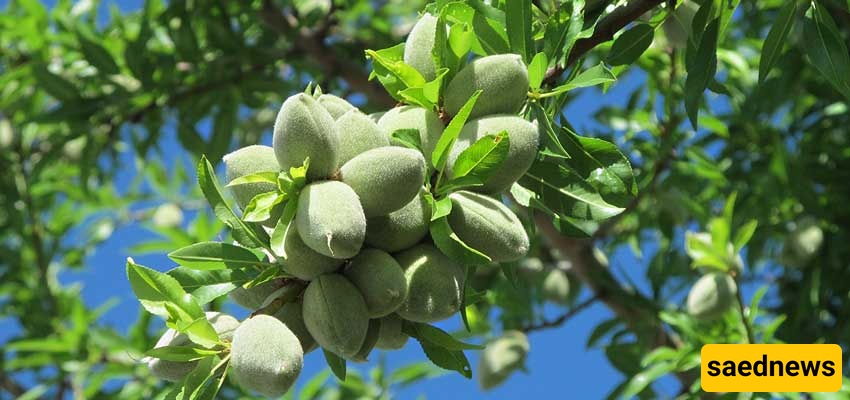
The almond tree is a deciduous tree with narrow leaves, reaching 1.5 to 7 meters in height. Almonds develop inside fruit-like structures similar to peaches. Although the outer hull is not commonly considered edible, it is technically part of the fruit.
To produce sweet almonds, sweet almond varieties must be planted. Bitter and sweet almonds are different types. Bitter almonds contain cyanide and should not be cultivated for consumption purposes. Some ornamental almond varieties produce beautiful blossoms but no fruit and are grown only for landscape purposes.
Before planting almond trees, proper research is necessary. Almond cultivation is mainly suited to Middle Eastern climates and does not grow well in cold regions.
To plant almond trees, you can either buy seedlings or plant fresh, untreated seeds. The planting site should be sunny and well-drained, with no water accumulation around the roots.
First, plow the soil to make it loose and suitable. Plant seeds at a depth of 2.5 to 5 cm and cover them with soil. It is best to plant in autumn so that seeds pass winter underground and germinate in spring.
Protect planted seeds with a mesh cover to prevent damage from animals.
If using seedlings, dig a hole larger than the root ball. Loosen the surrounding soil and optionally add sand to improve drainage. Plant the seedling at the same depth it was originally grown.
Some almond varieties are not self-pollinating and require multiple trees for fruit production. Plant trees 5–9 meters apart.
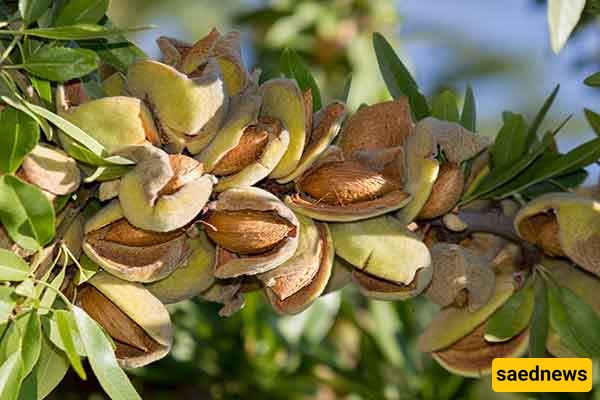
In the first year, irrigation is very important; trees may need weekly deep watering during summer. Balanced fertilizers can be applied. Regularly check for pests such as worms and aphids and control them using appropriate insecticidal soap.
Almond blossoms attract bees, which is beneficial for pollination.
A fungal disease may occur, causing leaves to turn brown and curl upward. Infected leaves should be removed and burned. Fallen leaves should be collected. If the infection persists, appropriate fungicide sprays may be needed.
Pruning should be done carefully, as incorrect pruning can damage the tree. Expert guidance is recommended.
Temperature is the most important factor in almond cultivation. Almond requires moderate winter chilling (100–400 hours below 7°C) for uniform bud break. It has moderate winter cold resistance (less than peach). Flowers open early in spring and are highly vulnerable to late frost. Almond requires a long growing season of 6–8 months and prefers hot, dry summers.
Loamy soils are most suitable, but almonds are often grown in poor soils. Soil and leaf analysis is recommended before planting to determine nutrient deficiencies.
One-year-old or older grafted seedlings with healthy roots are planted in autumn and winter. Best planting time is from early November to early January. Spacing depends on variety and rootstock, typically around 5×5 meters.
Windbreaks should be established before planting. Fertilization before planting may include nitrogen and phosphorus.
Irrigation is essential for improving growth and yield, especially since summer rainfall is insufficient. Saline water should not be used, especially in clay soils. Almonds are sensitive to overhead irrigation. Surface and drip irrigation are commonly used methods.
In old orchards, pruning is limited to removing dry branches and suckers. In modern orchards:
Training pruning: Vase-shaped training is common. The trunk is cut at 60–120 cm depending on growth habit. Scaffold branches are selected and shaped over the first four years until the tree structure is formed.
Annual pruning: Minimal pruning is needed; every 2–3 years, dead and diseased branches are removed. Suckers should be removed annually.