Saed News: This lower molar tooth, discovered in Chagyrskaya Cave in Russia, had a deep cavity whose cause was unclear for a long time. However, recent studies suggest that this hole was most likely created using a sharp, rotating stone tool to remove decayed parts of the tooth.
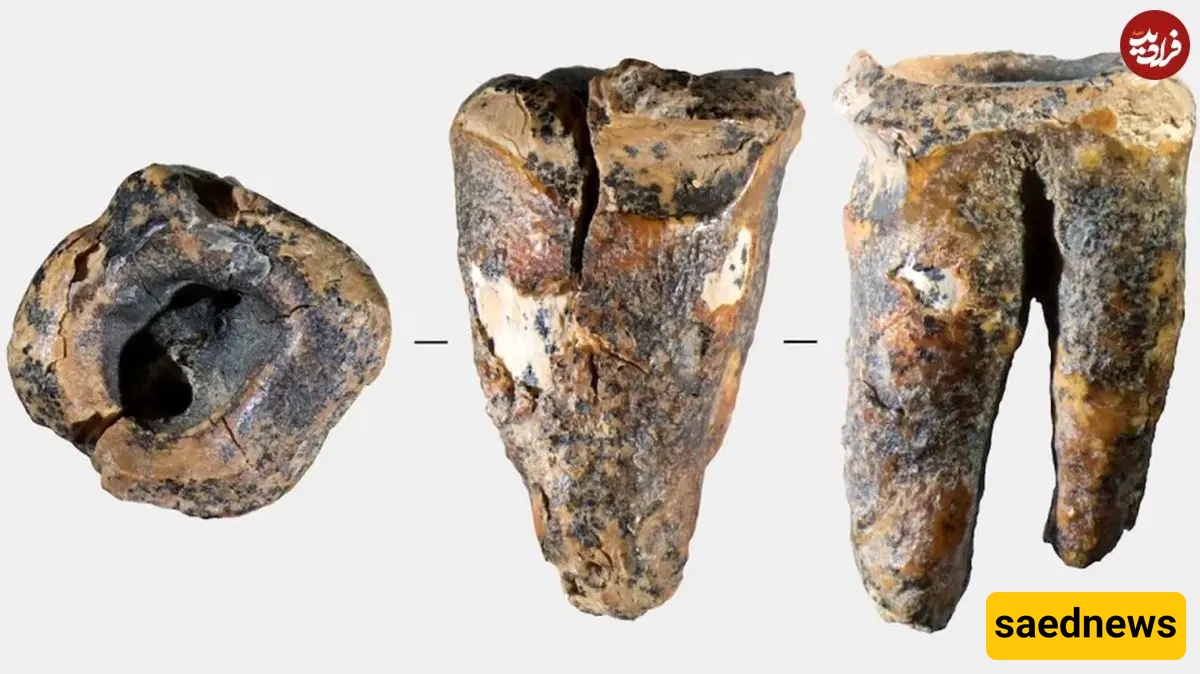
According to SAEDNEWS, microscopic analyses showed that the tooth had severe decay and grooves consistent with the movement of a stone tool. Tests on modern human teeth also showed that such marks could be produced by small stone drills. In the same cave, narrow and sharp stone tools were also found that may have been used for this purpose.
Wear marks around the cavity suggest that the individual survived for some time after the procedure and continued normal life. This discovery suggests that Neanderthals were not just simple hunters, but had a considerable understanding of the human body and medical treatment. Earlier evidence also shows that they cared for the sick, used medicinal plants, and looked after disabled individuals.
The oldest known evidence of dental treatment by Homo sapiens dates back about 14,000 years in Italy, but this discovery pushes the history of dentistry back by around 45,000 years.
Researchers believe this case is particularly important because it shows Neanderthals were capable of using precise and relatively complex methods to treat painful conditions, changing scientists’ views on their medical and cognitive abilities.