SAEDNEWS: The Best Prayer to Remove the Misfortune of the Moon in Scorpio

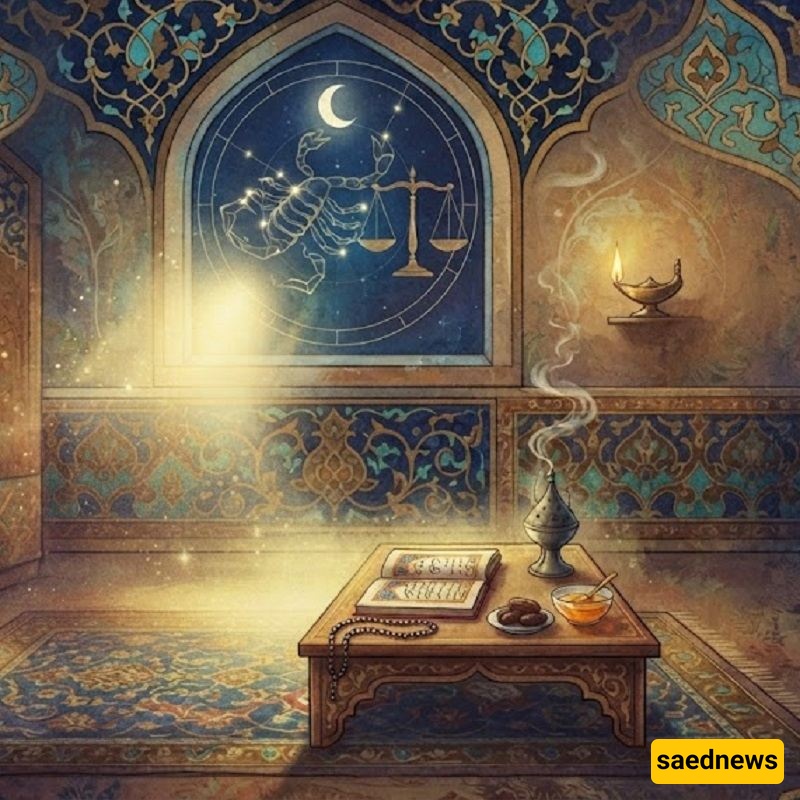
According to Saednews, In Islamic culture and traditional beliefs, certain times and astronomical events have received special attention. One such concept is Qamar in Scorpio, referring to the period when the Moon is positioned within the area associated with the zodiac sign or constellation of Scorpio. In some religious and traditional sources, it is recommended to exercise additional caution during this period when undertaking certain important activities and, when needed, seek comfort through prayer, trust in God, and charity.
This article explores the meaning of Qamar in Scorpio, different perspectives surrounding it, and prayers traditionally recited for reducing worries and seeking divine protection during this time.
Qamar in Scorpio is an astronomical term that refers to the Moon’s position in the region of Scorpio. In ancient times, astronomers and scholars studied this phenomenon as part of their observations of celestial movements, and some cultures attached specific meanings or interpretations to it.
Historical scholars, including figures such as Abu Rayhan al-Biruni and other astronomers, wrote about the movements of the Moon, constellations, and possible influences of celestial bodies.
However, opinions differ regarding whether Qamar in Scorpio has any direct effect on human events or daily life. Not all scholars, scientists, and religious authorities share the same interpretation.
Among some followers of the Shia tradition, based on certain narrations attributed to Imam Ja’far al-Sadiq, some activities during Qamar in Scorpio have been considered discouraged or requiring caution. These may include matters such as marriage contracts, travel, and certain important decisions.
At the same time, many religious scholars emphasize that no time or period can independently bring definite harm without God’s permission. Believers are encouraged to place their trust in God under all circumstances.
For this reason, prayers, charity, and good deeds during this period are generally practiced with the intention of gaining spiritual reassurance, seeking blessings, and strengthening faith.
One prayer mentioned in some general religious sources for this purpose is Du’a of the Seven Hawqalas (Hawqala Sab‘a). It is a collection of the phrase:
“La hawla wa la quwwata illa billah”
(There is no power and no strength except through Allah)
along with requests for relief from difficulties, removal of hardships, and seeking protection from God.
It is traditionally said that this prayer may be recited at the beginning of Qamar in Scorpio with the intention of relying on God and seeking relief from worries.
In the name of Allah, the Most Compassionate, the Most Merciful
There is no power and no strength except through Allah; through it, I remove every hardship.
There is no power and no strength except through Allah; through it, I untie every difficulty.
There is no power and no strength except through Allah; through it, I remove every darkness.
There is no power and no strength except through Allah; through it, I open every door.
There is no power and no strength except through Allah; through it, I seek help against every difficulty and calamity.
There is no power and no strength except through Allah; through it, I seek assistance in every matter that comes upon me.
There is no power and no strength except through Allah; through it, I seek protection from everything I fear.
I ask You, O Lord, to send blessings upon Muhammad and the family of Muhammad and his purified household,
By Your hidden kindness, O Possessor of Majesty and Honor.
Amen, Amen, O Lord of the Worlds.
One of the most well-known Islamic phrases of remembrance is:
La hawla wa la quwwata illa billahil ‘aliyyil ‘azim
This phrase expresses recognition of God’s absolute power and humanity’s dependence on divine support.
Many Muslims recite this remembrance during times of stress, difficulty, or uncertainty as a way to find inner peace and strengthen their trust in God.
Another prayer often recited for protection from difficulties is:
Bismillahir Rahmanir Rahim
Hasbiyallahu la ilaha illa huwa, ‘alayhi tawakkaltu wa huwa rabbul ‘arshil ‘azim.
Meaning:
“Allah is sufficient for me. There is no deity except Him. Upon Him I rely, and He is the Lord of the Mighty Throne.”
This verse represents reliance on God and may be recited with the intention of seeking peace, protection, and goodness.
According to some religious and traditional sources, certain practices are recommended during this period:
Remembering God and reciting prayers such as Hawqala Sab‘a are believed to bring comfort to the heart and strengthen reliance on God.
Charity is considered an important practice in Islamic tradition for seeking blessings and protection from difficulties. Many people give charity during times when they feel concerned or uncertain.
A central teaching in Islam is that people should recognize God’s control over destiny while also using wisdom, planning, and practical judgment alongside prayer.
Based on certain narrations and traditional interpretations, some activities are considered better approached with caution during this period, including:
Marriage ceremonies or signing marriage contracts
Beginning major journeys
Starting certain important projects or sensitive activities
However, these views are not universally accepted among all scholars. Many emphasize that if something is necessary, a person may proceed while placing trust in God.
Allama Muhammad Baqir Majlisi, one of the prominent Shia scholars, discussed various religious manners and recommendations related to specific times and circumstances in works such as Hilyat al-Muttaqin. Some traditional reports mention attention to certain practices during Qamar in Scorpio.
Among commonly mentioned prayers, Hawqala Sab‘a is one that is traditionally associated with this purpose. The remembrance “La hawla wa la quwwata illa billah” is also considered a highly valued Islamic phrase.
No. There are different opinions regarding its effects, and Islamic teachings emphasize that nothing happens without God’s will.
Charity is generally encouraged in Islamic tradition as a means of seeking blessings and protection. Some people choose to give charity during this period as well.
Some sources mention reciting it three times at the beginning of Qamar in Scorpio, though recommendations may vary among different traditions.
Prayers associated with Qamar in Scorpio are mainly practiced as a means of finding peace, strengthening trust in God, and seeking blessings. Among the various prayers mentioned, Hawqala Sab‘a is one of the most widely known.
Despite different beliefs regarding Qamar in Scorpio, Islamic teachings generally emphasize maintaining hope, wisdom, and reliance on God. Prayer, charity, and remembrance of God can provide emotional comfort and greater reassurance during periods of worry.