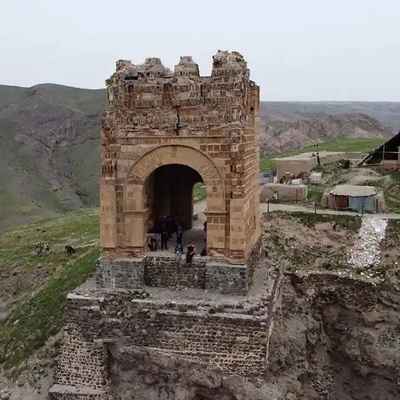
SAEDNEWS: Located in the highlands of Hashtrud, East Azerbaijan, Dahak Castle is an ancient fortress dating back over 2,000 years to the Parthian and Sassanian periods. Linked to legends from the Shahnameh, it is now recognised as one of Iran’s National Heritage Sites.
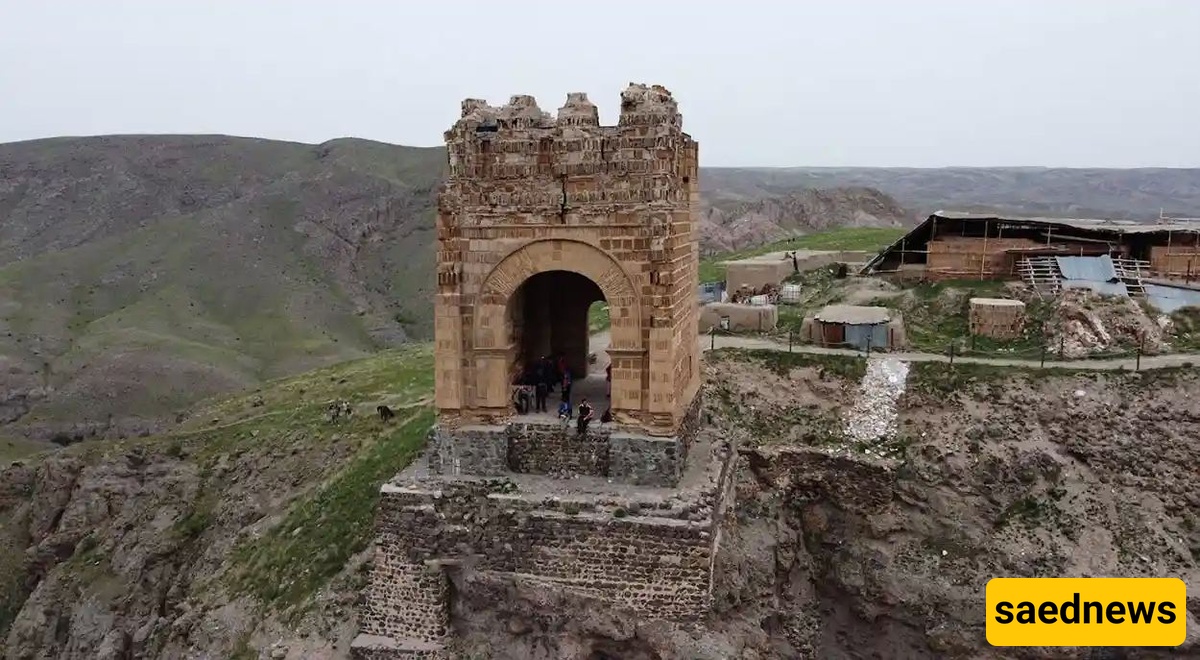
According to Saednews, Zahhak Castle is a historic fortress situated in one of the highest areas of Hashtrud. Associated with the legendary stories of the Shahnameh (the Persian Book of Kings), it is one of the most remarkable tourist attractions in East Azerbaijan Province, surrounded by beautiful natural landscapes.
The history of this ancient monument dates back to the Parthian and Sassanian periods. It was officially registered on Iran’s National Heritage List on March 17, 2008.
Zahhak Castle is one of the most fascinating historical attractions in Hashtrud, located approximately 20 kilometers southeast of the city. Hashtrud enjoys a strategic location along the Tabriz–Tehran Freeway and the connecting routes to southern cities of the province, as well as cities in West Azerbaijan and Kurdistan provinces, making it an attractive destination for tourists.
To reach Zahhak Castle, first travel to Hashtrud and then continue approximately 14 kilometers to Khorasanak Village. From there, the remaining distance must be covered on foot.
Follow the trail on the right side of the first tunnel. Continue along the dirt path until you reach the second tunnel. On the right side of the second tunnel, you will find a spring with fresh drinking water, which visitors can use before beginning the climb toward the castle.
Address: East Azerbaijan Province, approximately 20 kilometers southeast of Hashtrud, near Arablou Village, east of Khorasanak Railway Station.
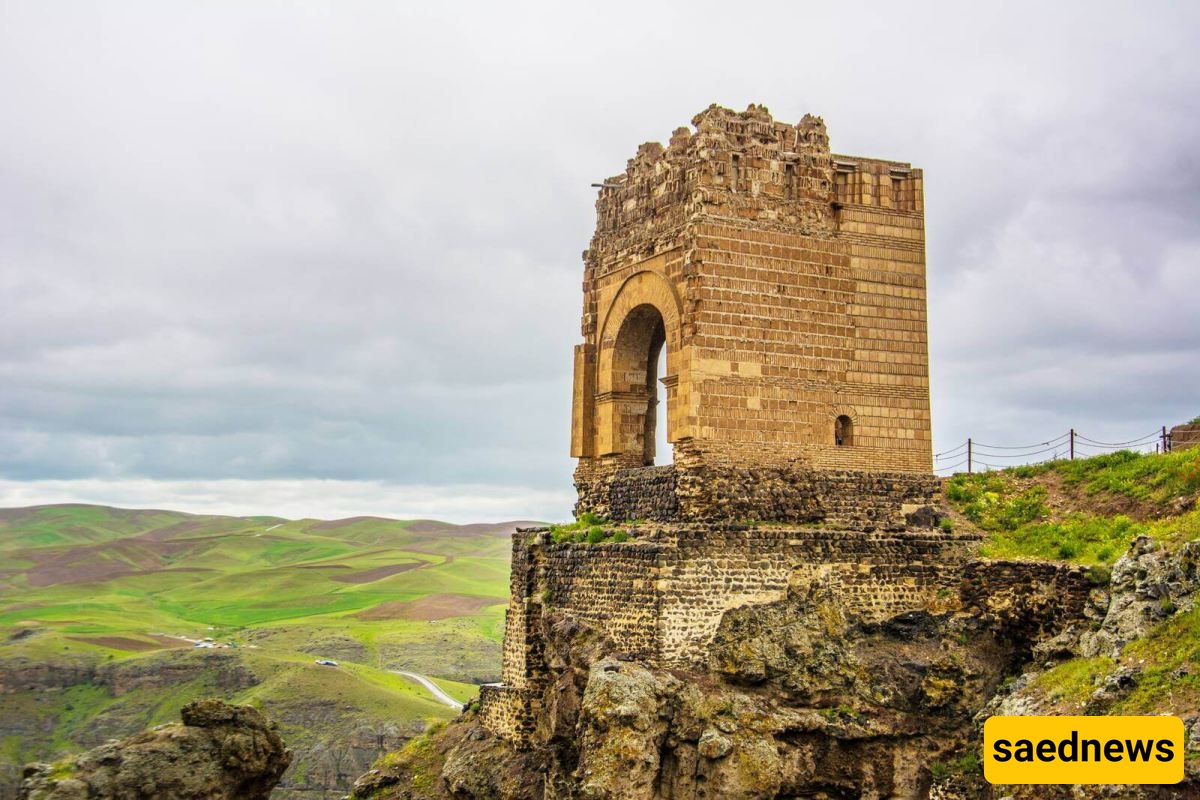
Zahhak Castle, also known as Azhdahak Castle, is more than 2,000 years old and is considered one of the surviving architectural structures from the late Parthian and Sassanian periods. Throughout history, it has been known by several names, including Azhdahak Fortress, Qiz Castle, Dash Castle, Baruas, Ruin Fortress, and Goy Castle.
Some experts believe that the fortress originally served a military purpose, while others consider it similar to other ancient Iranian castles.
Another theory suggests that Zahhak Castle may have served as a temple dedicated to Anahita, the ancient Persian goddess of love and fertility. According to ancient Iranian beliefs, Anahita resided in the highest level of heaven. For this reason, many temples dedicated to her were built on elevated locations, where they were also protected from enemy attacks.
Some researchers attribute the castle's origins to the Median period, during the reign of Azhdahak, suggesting that it remained in use until the Timurid era. However, due to its prominence during the Parthian period, most experts associate the fortress with that era.
The castle's watchtowers have survived to this day. Archaeological excavations in the area have also uncovered pottery dating back to the Parthian period.
The Indej Arch, together with the remains found at the Mil Hill in Varamin, represents examples of Parthian architecture. This architectural style later developed into more elaborate and magnificent structures in Iran, particularly in Ctesiphon.
Zahhak Castle was first surveyed by a German archaeological team in 1971.
The surviving remains include semi-cylindrical towers, the castle's entrance gate, and walls constructed using rectangular stone blocks.
Although the structure is generally attributed to the Sassanian period, pottery discovered at the site dates back to the 6th and 7th centuries AH (Islamic lunar calendar).
The castle remained inhabited and in use until the Ismaili period, when it was reportedly a prosperous settlement.
Its name comes from Zahhak, a legendary tyrant in Persian mythology who appears in Ferdowsi's Shahnameh. According to the epic, Zahhak lived in this fortress until Kaveh the Blacksmith rose against his tyranny and eventually overthrew him.
Some researchers believe that remnants of a section of the Urartian wall at this location may provide evidence supporting this historical connection.
In 1943 and 1964, the name Zahhak Castle was associated with the site by researchers who believed it corresponded to a location identified by the ancient Greek geographer Ptolemy as Phanaspa.
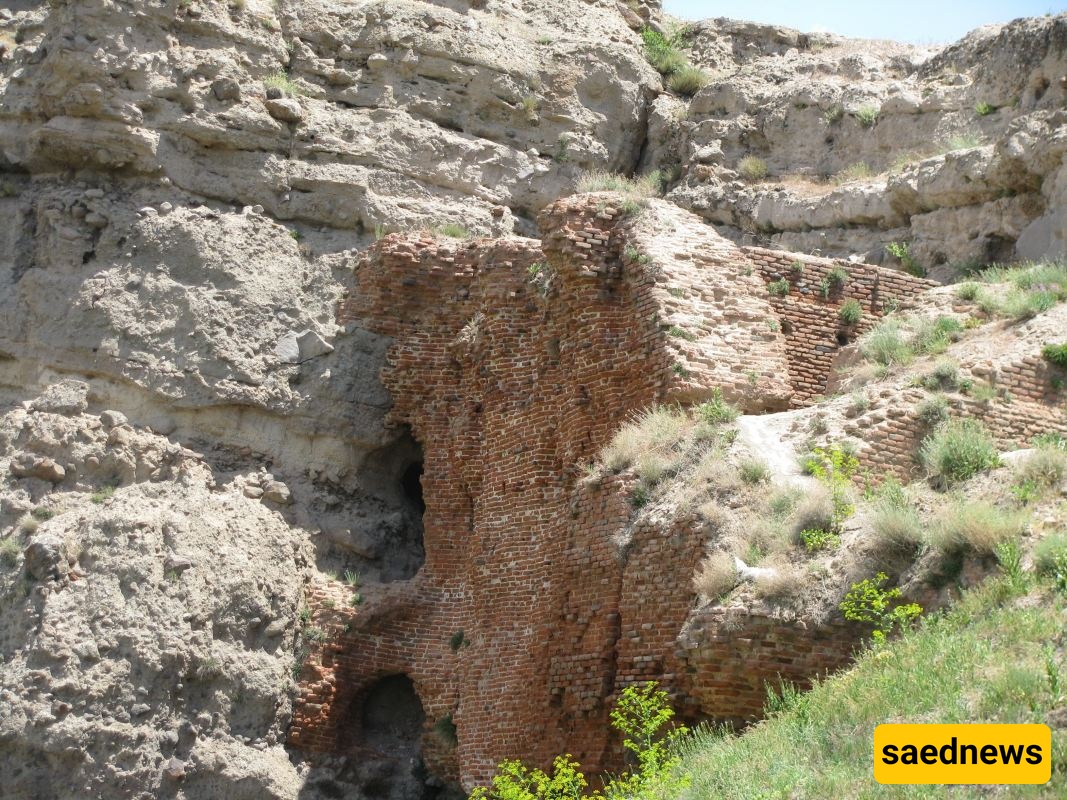
Zahhak Castle extends approximately 10 kilometers in length and 2 kilometers in width. It was built on a relatively flat hill and is believed to have functioned primarily as a defensive fortress. Its architectural design strongly reflects its military purpose.
The castle overlooks steep cliffs on three sides, and its walls feature carved decorations.
Various structures and facilities have been identified within the complex, including stone storage chambers, water reservoirs, a mill, a council hall, a bathhouse, and numerous other sections.
The only structure that has remained relatively intact is a four-arched building. Over time, its vaulted roof and one of its supporting pillars were damaged, but they were later restored.
The building was constructed using brick and plaster. Its bricks measure approximately 32 × 32 centimeters and are 10 centimeters high.
Archaeological excavations uncovered a large hall with side corridors. The interior was decorated with elaborate plasterwork and colorful designs in ochre, yellow, blue, and green.
These decorations featured human and animal figures, geometric patterns, flowers, and plant motifs.
Excavations have confirmed that the area was an important center of Parthian civilization and settlement.
Half of the castle's rooms were roofless and excavated directly into the ground, while the other half were built as cave-like chambers within the mountain. Most of these rooms contained small water pits that served as reservoirs, along with small niches carved into their walls.
The castle also contains several vertical cavities carved directly into the surrounding rocks.
Water from a spring on the slope of the opposite mountain was transported to the top of the castle through underground pipelines using moderate water pressure. The pipeline channels were approximately 50 centimeters wide and one meter deep. Many sections were made of clay, while others consisted of stone pipes.
One of the remarkable discoveries at the site is an artistic carving depicting a raven striking a bull from behind with its claws. The image bears a strong resemblance to the symbolism of Mithra and the ancient Mithraic religion.
This carving was discovered in an area measuring 121 square meters, alongside several other artworks depicting Parthian soldiers, the heads of roaring lions, a goddess, and a man surrounded by lotus flowers and rays of sunlight.
A site museum has been established at the location to display artifacts discovered during archaeological excavations.
Several facilities have also been developed to make visiting the castle easier and safer:
Concrete stairways have been constructed along the main entrance route.
Stone steps have been carved into the rocks to make climbing easier for visitors.
Safety barriers have been installed along dangerous cliffs.
A metal bridge has been built over the Qaranqu River to improve visitor safety and provide electricity to the castle.
The access road leading to the castle has been paved.
Two permanent guards are stationed in the area.
Visiting the castle requires climbing numerous steps from the bottom of the hill to the fortress. Make sure to wear comfortable walking shoes and suitable outdoor clothing.
Once you reach the top, you will be rewarded with breathtaking views of the historic fortress, the river, and the surrounding green plains. The landscape offers excellent opportunities for photography.
Avoid writing or carving messages on the castle walls, and do not leave rubbish behind. Help preserve this valuable historical site for future generations.
Spring is the best season to visit Zahhak Castle, particularly the month of Ordibehesht (April–May).
During this time, the surrounding plains become lush and green, covered with colorful wildflowers. The pleasant weather also creates ideal conditions for hiking, walking, sightseeing, and enjoying the beautiful natural scenery.
Zahhak Castle offers a unique combination of ancient Iranian history, legendary mythology, remarkable architecture, and unspoiled natural beauty, making it a fascinating destination for history enthusiasts and nature lovers alike.