SAEDNEWS: The ancient city of Pergamon lies 171 kilometers north of Izmir. Recognized for its remarkable historical and cultural significance, Pergamon was added to the UNESCO World Heritage List in 2014.
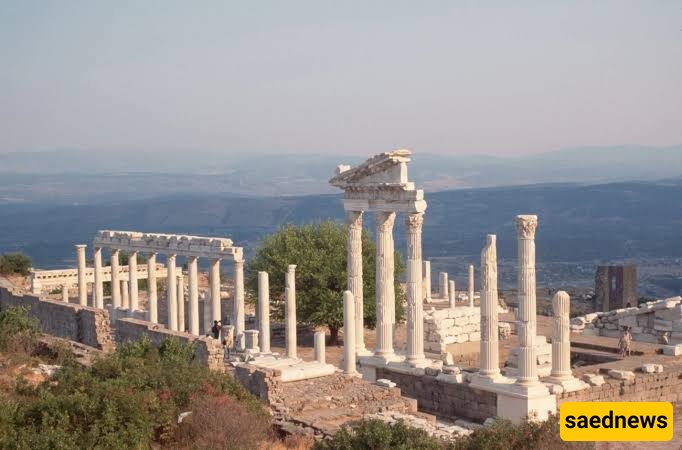
According to Saednews, Perched on a hill overlooking the modern city of Bergama, the Acropolis of Pergamon is an ancient Greek city that became an important center of power during the 2nd century BC. The site is particularly famous for the Pergamon Altar and its monumental architecture, featuring impressive elevated columns.
Throughout history, Bergama has been one of the major cultural and artistic centers of several civilizations. In recognition of its outstanding historical importance, the ancient city of Pergamon was added to the UNESCO World Heritage List in 2014.
One of the most appealing features of the area is the series of scenic hills surrounding the ancient city, offering impressive views of the ruins and the modern landscape.
While visiting Bergama, be sure to explore the Bergama Archaeological Museum, located in the city center. Archaeological excavations in Bergama began in the 1870s, and extensive research has since revealed much of the ancient settlement.
Many of the artifacts discovered during these excavations are displayed in the Bergama Archaeological Museum, which is regarded as one of Turkey's earliest archaeological museums. The collection provides valuable insight into the civilizations and cultures that once flourished in Pergamon.
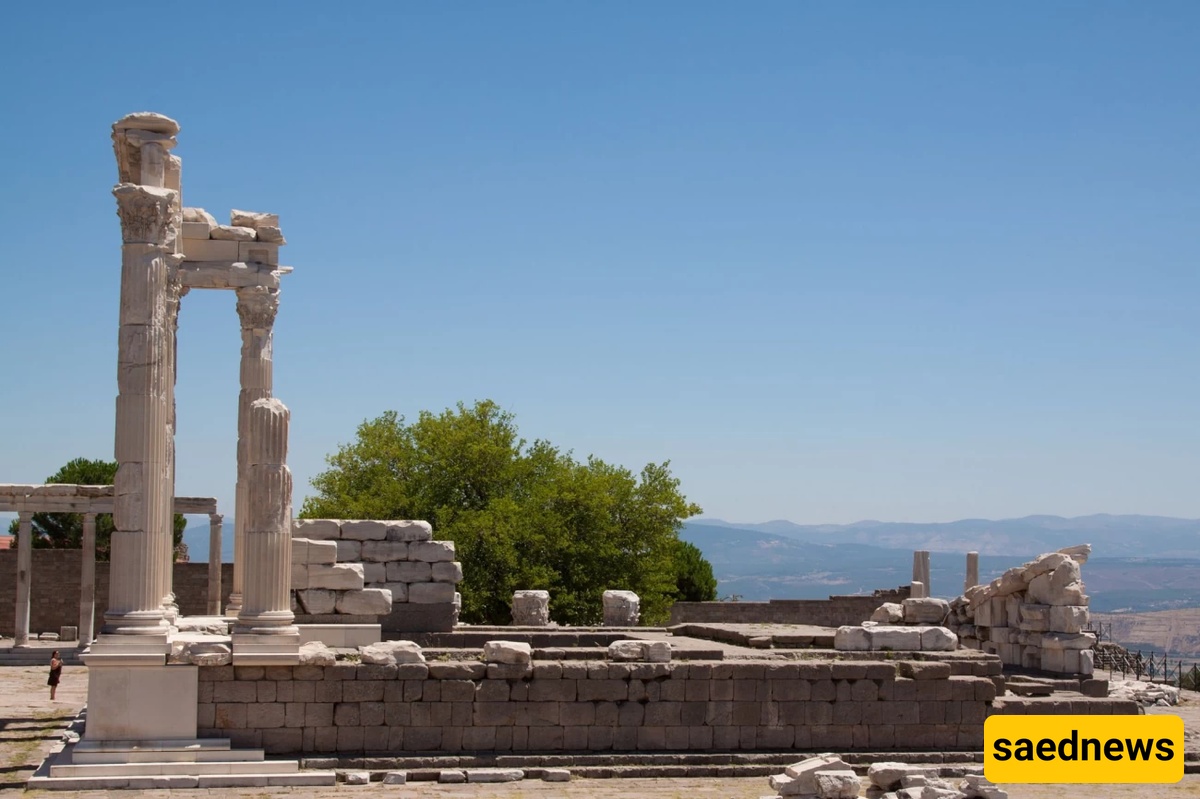
The Library of Pergamon was once one of the most remarkable libraries of the ancient world. It was considered the second-largest library in the Greek world after the famous Library of Alexandria.
The library played an important role in Pergamon's intellectual and cultural development and reflected the city's status as a major center of learning.
Beyond the library stands the Trajaneum, a monumental complex characterized by its striking white marble columns. Although only partially reconstructed, the structure remains an impressive part of the Acropolis.
The complex was built during the 2nd century AD under the Roman emperors Trajan and Hadrian and was dedicated to the worship of the deified emperors.
Below the Temple of Athena lies the ancient theatre, dramatically built into the steep slope of the hill. Its location provides both a remarkable architectural setting and expansive views over the surrounding landscape.
The theatre is one of the most distinctive surviving structures of the Acropolis and demonstrates the architectural skill of the ancient inhabitants of Pergamon.
Near the theatre is the famous Altar of Zeus, constructed around 190 BC. It was built to commemorate the Pergamene victory over the Gauls and became one of the finest examples of Hellenistic monumental art.
The altar was once decorated with an extraordinary frieze depicting the battle between the gods and the giants, along with numerous remarkable Hellenistic sculptures. Many of these famous artworks are now displayed at the Pergamon Museum in Berlin.
Located on the plain below the Acropolis, the Asclepion was one of the most advanced medical centers of the ancient world. The sanctuary was dedicated to Asclepius, the Greek god of medicine.
Medical and therapeutic practices at the Asclepion included hot baths, dream interpretation, early forms of psychotherapy, massage, and the use of water from a sacred spring. Visitors entered the complex through a passage connected to a tree-lined avenue leading toward the medical facilities.
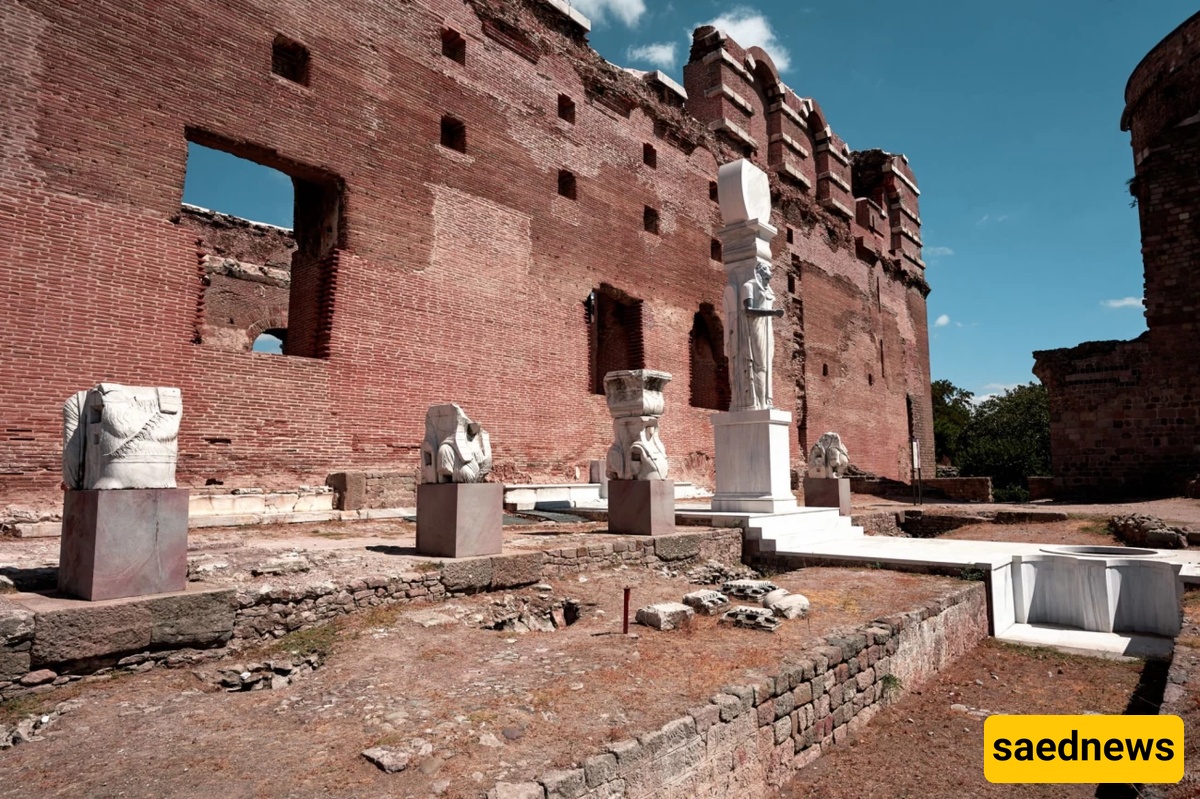
Today, visitors can explore the remains of the ancient library, theatre, treatment areas, and other structures. At the center of the complex is a pool associated with a sacred spring that, according to historical accounts, once flowed there.
Pergamon offers a fascinating journey through Greek, Roman, and Hellenistic history. From its dramatic hilltop Acropolis and ancient theatre to the remains of the Asclepion, the site provides a remarkable glimpse into the cultural, architectural, and scientific achievements of the ancient world.