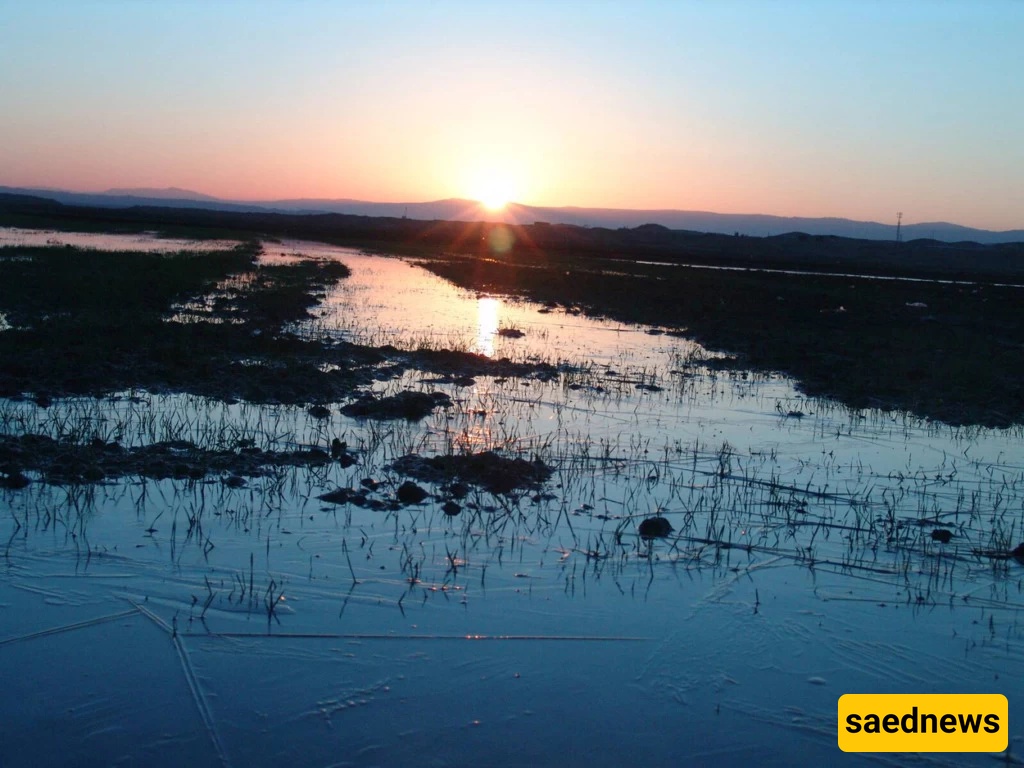
SAEDNEWS: The Jokandan Wetland lies at the heart of a protected area and is renowned for its remarkable diversity of valuable animal and plant species.
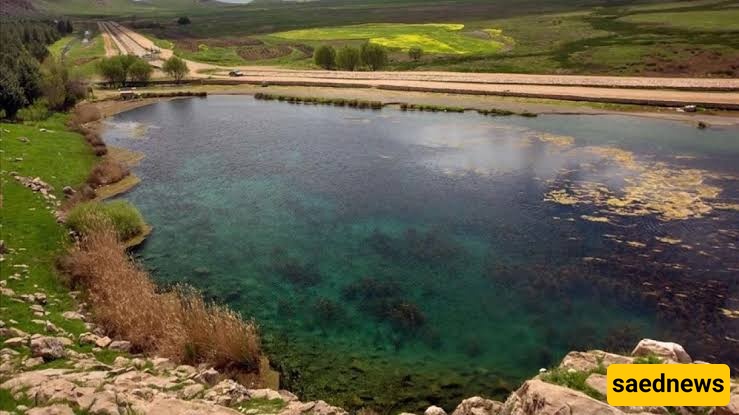
According to Saednews, Joukandan Wetland is located along the northern coast of Joukandan Rural District and covers an area of approximately 235 hectares. During the winter, migratory birds travel to the wetland, adding to the natural beauty and ecological value of the area.
The wetland extends across parts of Qanbar Mahalleh, Diraakri, Shanderman Mahalleh, Bisim, and Poshteh villages. It stretches for about 6 kilometers, with an average width of approximately 200 meters. The remarkable diversity of plant and animal species found in the area has increased its ecological importance, and the wetland has been incorporated into the protected Lisar and Joukandan region.
The depth of Joukandan Wetland varies considerably, reaching approximately 4 meters at its deepest point and around 3 meters at its shallowest point. Its water supply comes from three small local rivers. The Caucasian alder (Alnus subcordata) was once one of the dominant tree species in the wetland. However, most of these trees were cut down over the past three decades, and traces of the former vegetation can still be found in the area.
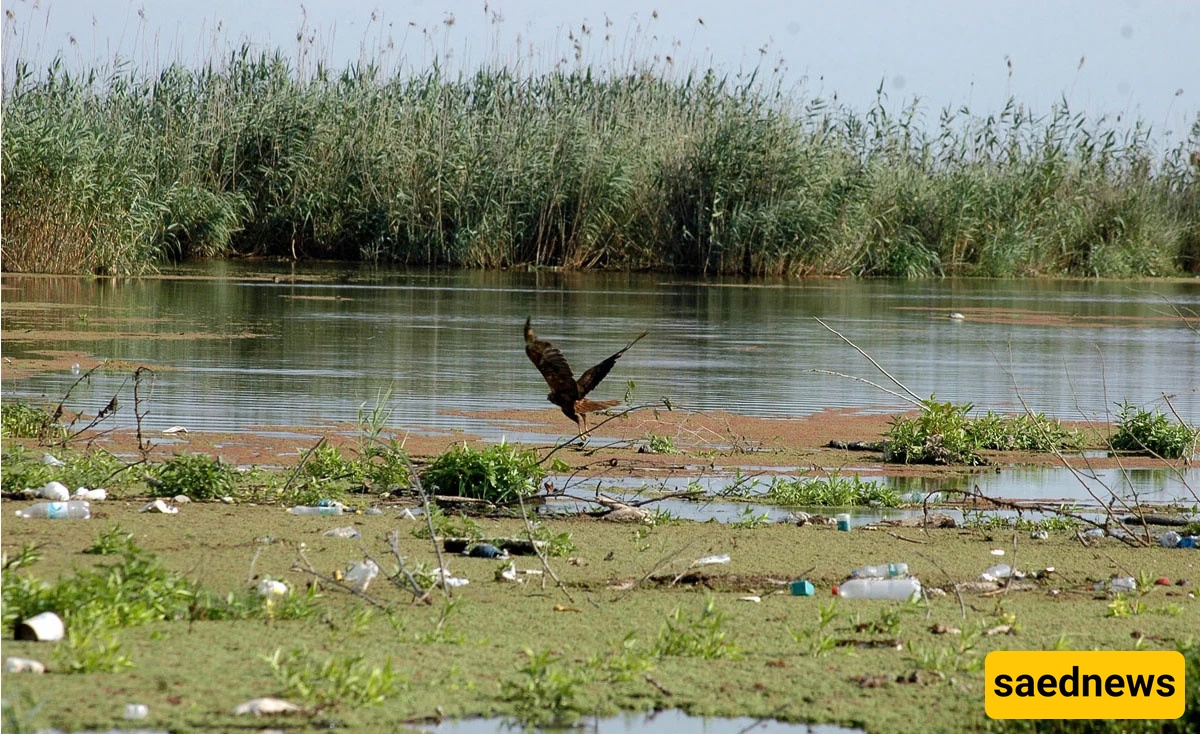
According to available descriptions, roughly half of the surrounding area is covered by forest. Alongside its scenic woodlands, the region is associated with two major rivers and lies near the Caspian Sea. The wider landscape is also connected with the highlands surrounding Lake Neor.
Joukandan Wetland is regarded as one of the distinctive wetlands of Gilan Province. It was formed during the 1970s as a result of the advancement of water from the Caspian Sea and is supplied through three separate water channels.
During severe storms, seawater may enter parts of the wetland. The wetland also receives water from the Joukandan, Qaleh-Bin, and Sildar Lisar rivers. However, sediment accumulation has blocked some of the waterways leading into Joukandan Wetland, affecting the flow of water into the area.