SAEDNEWS: If you would like to learn more about the Beijing Confucius Temple, join us in this article.
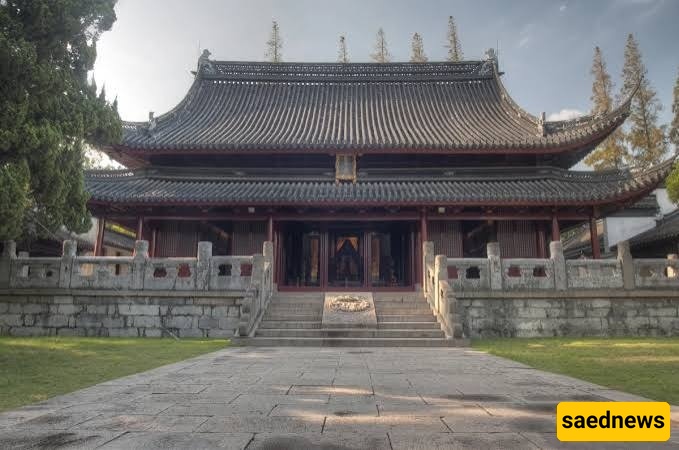
According to Saednews, Beijing, the capital city of China, is one of the largest and busiest cities in the world, as well as one of the most fascinating destinations for travelers. Every year, millions of visitors from around the globe come to this vibrant city to explore its diverse historical, cultural, and architectural attractions. Among Beijing’s many historic landmarks is the Beijing Temple of Confucius, a remarkable site dedicated to one of China’s greatest philosophers and thinkers, Confucius, whose teachings have influenced Chinese society and many parts of the world for centuries.
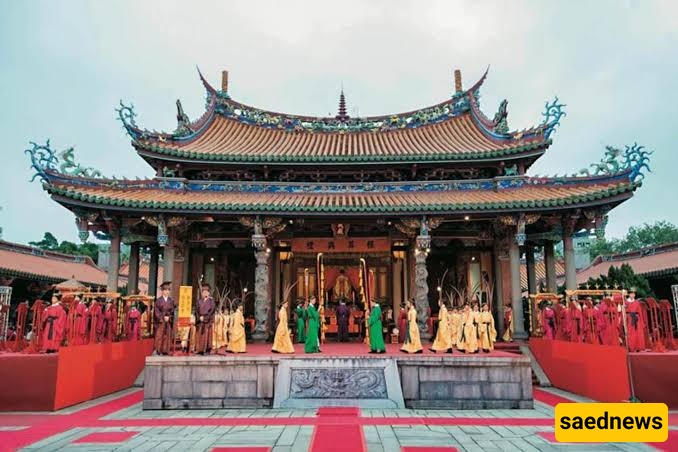
The Beijing Temple of Confucius is the second-largest Confucius temple in China, following the temple located in Qufu, the birthplace of Confucius. Throughout history, especially during the Yuan, Ming, and Qing dynasties, important ceremonies honoring Confucius were held here as a symbol of respect for his wisdom and philosophy.
Today, the temple has been transformed into a museum that preserves and displays valuable cultural treasures, including engraved stone tablets, bronze and jade artifacts, paintings, calligraphy works, ancient musical instruments, and traditional Chinese coins.
Every September, a special ceremony celebrating Confucius’ birthday takes place at the temple. The event features traditional music and performances inspired by the Qing Dynasty.
The Beijing Temple of Confucius and the Imperial Academy are located on Guozijian Street in Dongcheng District. The historic complex consists of two main sections: the temple area on the left and the Imperial Academy on the right.
Confucius, known as Kongzi in Chinese, was a great philosopher, educator, and thinker who lived during the ancient state of Lu. He founded Confucianism, a school of thought that deeply influenced Chinese culture, education, ethics, and government systems.
Confucius believed that learning and personal improvement were essential for creating a harmonious society. His teachings continue to be studied and followed in China and many other countries today.
One of his famous statements was:
“At fifteen, I set my heart upon learning.”
During his lifetime, society was experiencing disorder and instability. Confucius searched for ways to restore harmony by studying the values of ancient rulers such as Emperor Yao and Emperor Shun. He believed that knowledge could transform society and that every person had something valuable to teach.
At the age of 30, Confucius established a private school that welcomed ordinary people. He believed education was the foundation of moral development and that learning helped individuals achieve higher ethical standards.
Confucius promoted the idea that everyone had the right to receive education, regardless of social background. He was one of the earliest figures in Chinese history to introduce the concept of equal and accessible education.
Confucius also developed ideas about leadership and government. He believed that a country should be governed through morality rather than force.
According to his philosophy, a virtuous ruler would become like the North Star, with society naturally following his example.
His ideal society was known as Datong, a vision of a world where people lived together in peace, cooperation, and harmony. In such a society, officials would help the ruler govern with both ethical principles and respect for law.
One of the central ideas of Confucian philosophy is harmony. Confucius believed that balance should exist between humans and nature, between individuals, and within each person.
He taught that when people live in harmony with the natural world, they can find balance and purpose in life. His ideas about creating a respectful relationship with nature remain influential even today.
The Beijing Temple of Confucius was built in 1302 during the Yuan Dynasty. Until 1911, Chinese officials used this temple to pay tribute to Confucius.
The complex was expanded and renovated twice during the Ming and Qing dynasties. Today, the temple covers an area of approximately 20,000 square meters.
Between 1981 and 2005, part of the Capital Museum’s art collection was also housed within this historic site.
Located near the Imperial Academy on Guozijian Street, the temple represents a combination of traditional Chinese architecture, history, and philosophy.
The temple complex contains four main courtyards. Its most important structures include:
Xianshi Gate (Gate of the First Teacher)
Dacheng Gate (Gate of Great Achievement)
Dacheng Hall (Hall of Great Achievement)
Chongshengci (Hall of Worship)
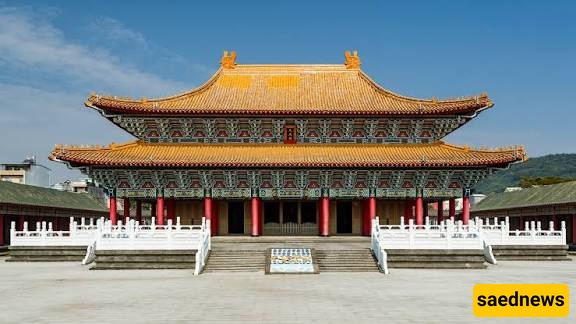
The Dacheng Hall is the main building of the temple, where ceremonies honoring Confucius were traditionally held.
Inside the temple, 198 stone tablets stand on both sides of the front courtyard. These tablets contain the names of 51,624 successful scholars (Jinshi) from the Yuan, Ming, and Qing dynasties.
Fourteen additional stone inscriptions from the Ming and Qing periods provide valuable information about ancient Chinese history.
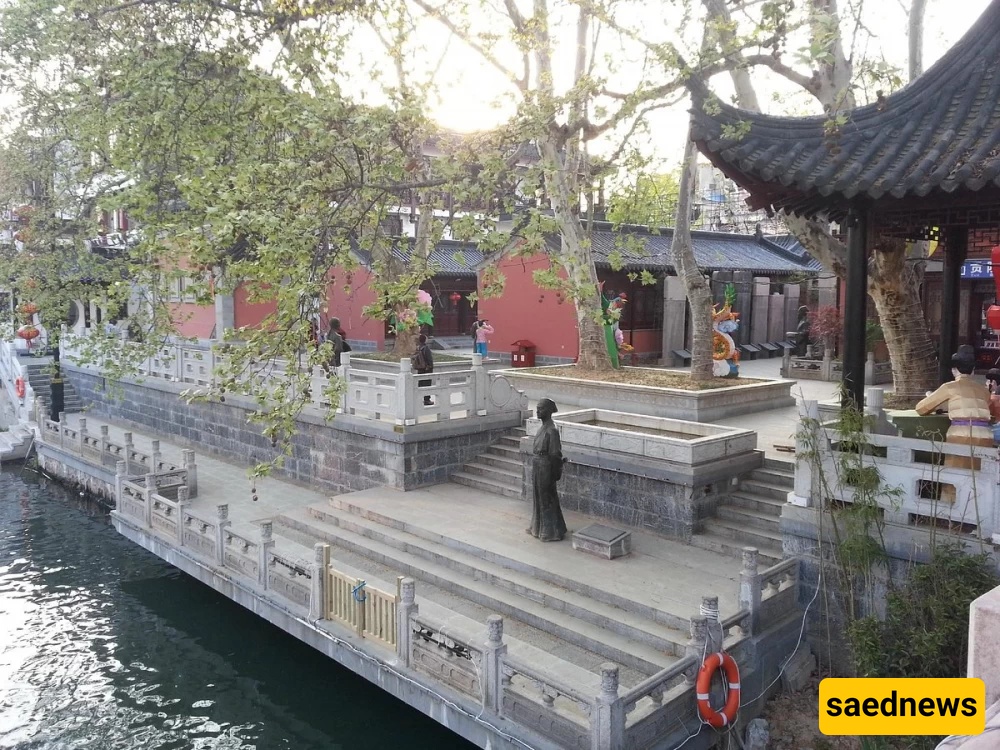
The temple contains a collection of engraved stone columns created between 1736 and 1795 during the Qianlong era of the Qing Dynasty. These stone works are located near Dacheng Gate.
The Dacheng Hall also houses a large collection of ancient Chinese musical instruments.
Among the temple’s impressive artworks is the famous carving known as:
“Two Flying Dragons Playing with a Pearl Among Clouds.”
This rare design is unusual because dragon images were traditionally associated with Chinese emperors and were commonly used in imperial buildings.
The Beijing Temple of Confucius is home to many ancient trees, including a famous 700-year-old cypress tree known as Chu Jian Bai, meaning “the cypress that recognizes evil.”
According to local legend from the Ming Dynasty, a corrupt official once passed beneath the tree and his hat became caught on its branches. Since then, people have believed that the tree has the ability to distinguish between good and bad individuals.
Main Sections of the Beijing Temple of Confucius
Xianshi Gate is the main entrance of the temple. It features traditional decorative arches and pillars. Although it was restored several times during the Ming and Qing dynasties, it still preserves the architectural style of the Yuan Dynasty.
The temple displays 198 Jinshi stone tablets located near Dacheng Gate. These tablets honor individuals who achieved the highest rank in imperial examinations.
Among them:
3 tablets belong to the Yuan Dynasty
77 tablets belong to the Ming Dynasty
118 tablets belong to the Qing Dynasty
Dacheng Gate is the second entrance of the temple. It contains ten engraved stone columns dating back to ancient periods and represents an important architectural feature of the complex.
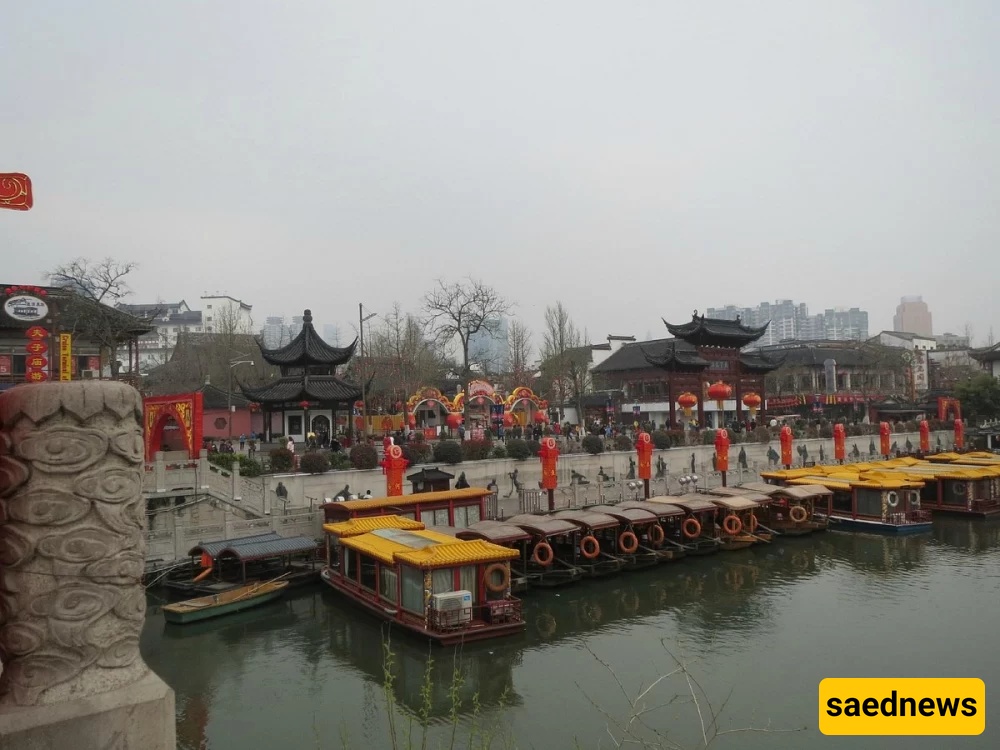
The temple contains 14 important stone tablets from the reigns of Emperor Kangxi, Emperor Yongzheng, and Emperor Qianlong. These inscriptions provide valuable historical records from imperial China.
An ancient well located in the western courtyard is known as the Ink Well. According to local tradition, students who traveled to Beijing for imperial examinations used water from this well to clean their ink stones. They believed this practice would help them write successful examination papers.
Dacheng Hall is the central and most important structure of the temple. It features magnificent architecture, an impressive roof design, and memorial tablets dedicated to Confucius.
Chongshengci, also known as Qishengci, was built in 1530 to honor and worship the parents and ancestors of Confucius.
Visiting the Beijing Temple of Confucius
The Beijing Temple of Confucius is open to visitors throughout the year.
Entrance Fee: Approximately 30 yuan per person.
Opening Hours:
May to October: 8:30 AM – 6:00 PM
November to April: 8:30 AM – 5:00 PM
The best seasons to visit are spring (March and April) and autumn (September and October), when the weather is pleasant and the surroundings are especially beautiful.
Since the temple remains a respected cultural and spiritual site for many Chinese visitors, wearing appropriate clothing is recommended.
How to Reach the Beijing Temple of Confucius
The temple can easily be reached by public transportation.
Visitors can take:
Bus No. 13 or 684 and get off at Guozijian Station.
Bus No. 116 or 117 and get off at Yonghegong (Yonghe Lamasery) Station.
Take Subway Line 2 or Line 5 and get off at Yonghegong Station.
Exit through Exit G, then walk south along Yonghegong Street for about four minutes. Continue west along Guozijian Street, where the entrance to the Beijing Temple of Confucius can be found.
Travel Guide to the Beijing Temple of Confucius
The Beijing Temple of Confucius is more than a historic building; it is a place where visitors can discover the roots of Chinese philosophy, education, architecture, and cultural traditions. With its ancient stone inscriptions, impressive halls, traditional ceremonies, and peaceful