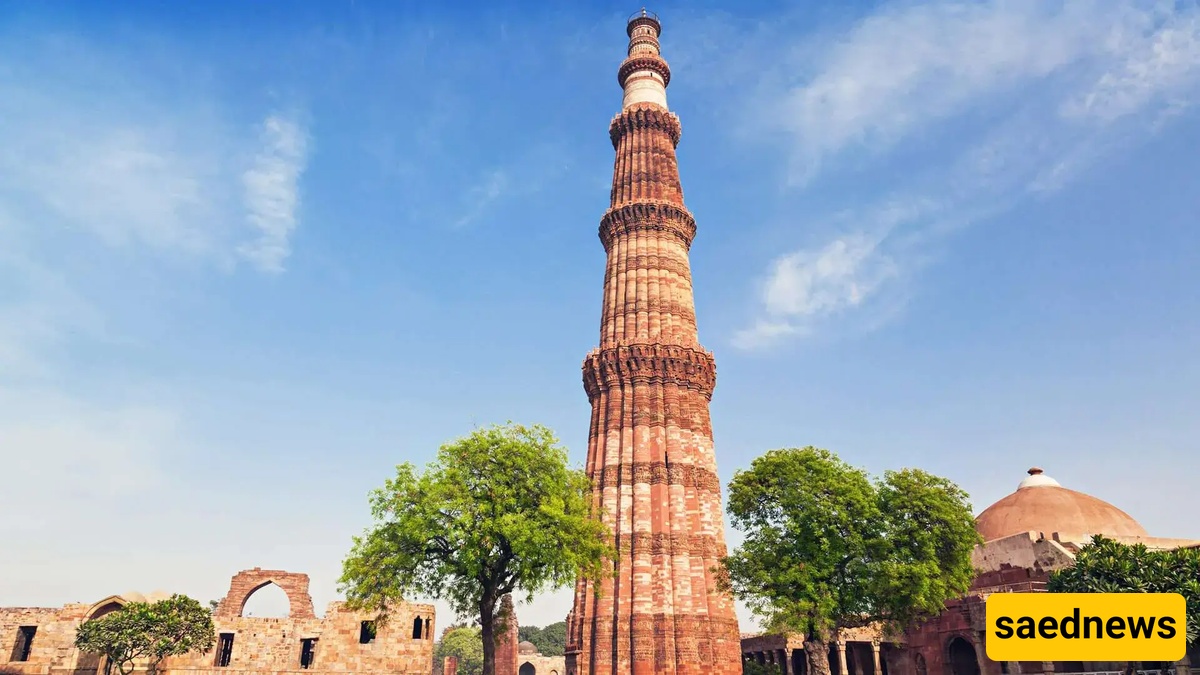
SAEDNEWS: Qutub Minar is a famous historical monument in Delhi, India. It is the world's tallest brick minaret and a renowned symbol of Indo-Islamic architecture.
According to Saednews, India is one of the most populous countries in Asia, stretching between the golden shores of the Indian Ocean and the snow-capped peaks of the Himalayan Mountains. Renowned for its extraordinary cultural diversity, India is home to people from countless ethnic and linguistic backgrounds living together in harmony. This rich cultural mosaic has earned the country the nickname "the Land of 72 Nations."
The country is also home to more than 30 UNESCO World Heritage Sites, making it one of the world's most fascinating travel destinations. Among these remarkable landmarks is Qutub Minar, the tallest brick minaret on Earth and one of the finest examples of Indo-Islamic architecture.
Located in the historic Mehrauli district of New Delhi, Qutub Minar is one of India's most iconic monuments. Standing proudly at 73 meters (240 feet), the towering minaret has become a symbol of Delhi's rich medieval heritage and remains one of the country's most visited historical attractions.
The monument forms the centerpiece of the Qutub Minar Complex, a UNESCO World Heritage Site that preserves some of the earliest surviving Islamic monuments in India.
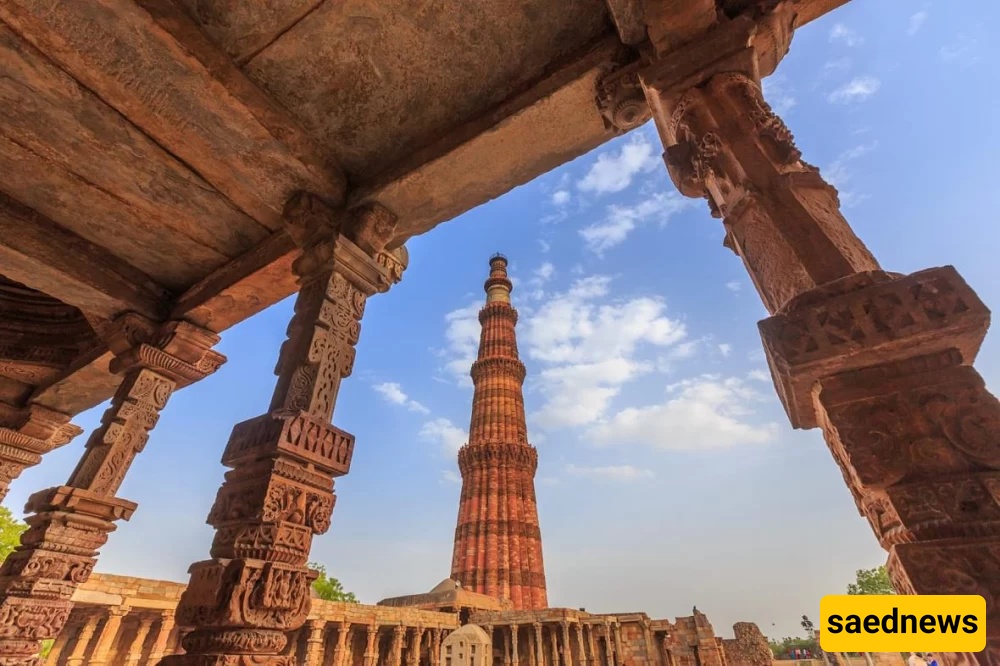
Qutub Minar dates back nearly 800 years. Construction began in the late 12th century after the establishment of Muslim rule in northern India. Historical sources suggest that the minaret was built to commemorate the victory of Muslim rulers and to symbolize the establishment of their authority in the region.
Some historians believe the minaret originally belonged to the Quwwat-ul-Islam Mosque, the first Islamic mosque built in Delhi around 1192 CE. While much of the mosque has suffered damage over the centuries, many of its remarkable architectural elements remain preserved within the complex.
There has long been debate regarding the exact completion date of Qutub Minar. Some historical accounts place its completion around 1230 CE, while others suggest that work continued until approximately 1316 CE. Despite these differing opinions, its historical importance remains unquestioned.
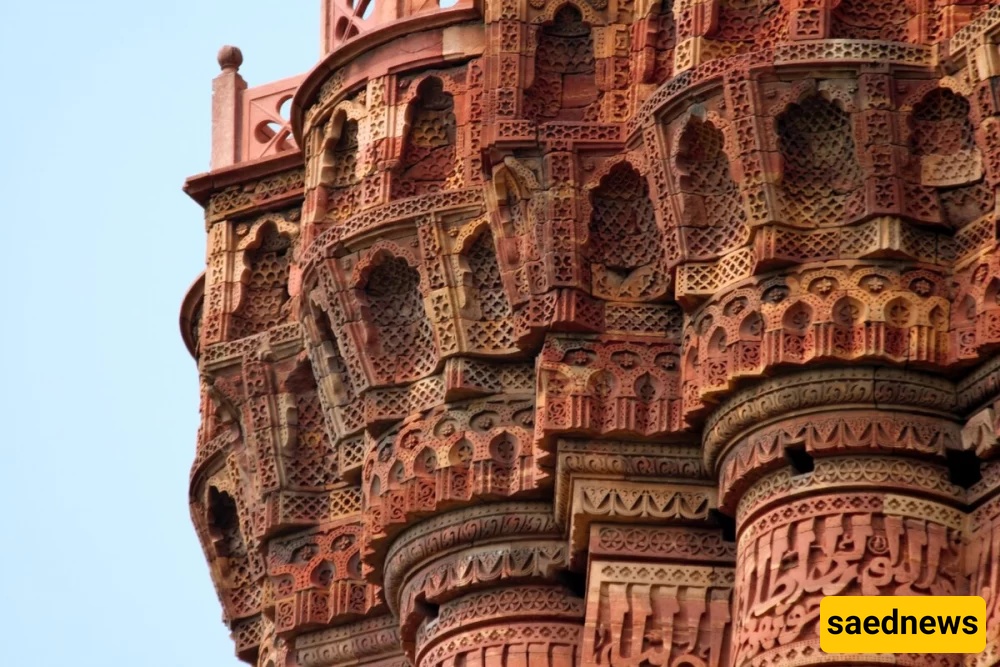
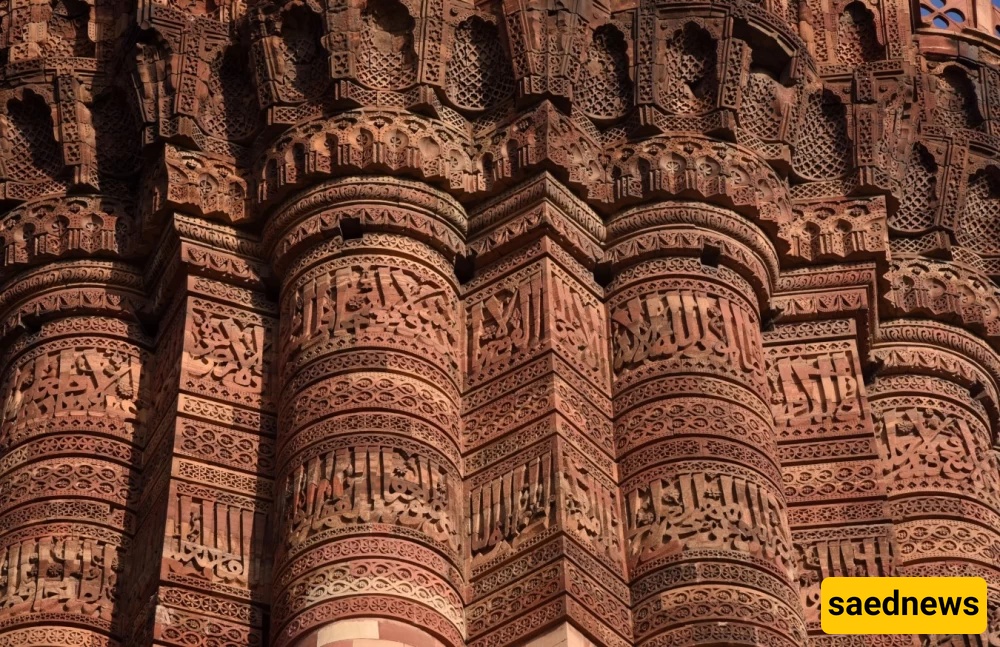
Qutub Minar is an outstanding masterpiece of medieval Islamic architecture. Built primarily from red sandstone, marble, brick, and sandstone, the monument displays intricate craftsmanship that continues to impress visitors centuries after its construction.
The minaret features:
Height: 73 meters (240 feet)
Base diameter: 14.3 meters
Top diameter: 2.7 meters
Five distinct stories
379 spiral steps leading upward
Each level is separated by beautifully designed projecting balconies supported by decorative stone brackets. The exterior walls are richly adorned with intricate geometric patterns, floral motifs, Arabic calligraphy, and verses from the Holy Quran, showcasing the exceptional artistic skill of the period.
The Qutub Minar Complex contains several remarkable monuments that provide visitors with a deeper understanding of Delhi's medieval history.
Situated northeast of Qutub Minar, the Quwwat-ul-Islam Mosque is recognized as the first mosque constructed in India. Built between 1193 and 1197 CE, it remains one of the country's oldest surviving Islamic places of worship. Although parts of the mosque have deteriorated over time, its impressive stone carvings and historical significance continue to attract visitors.
Within the courtyard of the Quwwat-ul-Islam Mosque stands the famous Iron Pillar, one of India's greatest metallurgical achievements. Dating back to the 4th or 5th century during the Gupta Empire, the pillar is celebrated for its remarkable resistance to corrosion. Ancient inscriptions carved into its surface provide valuable insights into India's early history.
The Alai Gate serves as the grand southern entrance to the Qutub Complex. Commissioned in the early 14th century by Sultan Alauddin Khalji, it is regarded as one of the finest examples of early Indo-Islamic architecture, featuring elegant domes, arches, and intricate decorative stonework.
Near Qutub Minar stands the unfinished Alai Minar. Sultan Alauddin Khalji intended this ambitious tower to surpass Qutub Minar in height, symbolizing his power and achievements. Construction halted after his death, leaving behind a massive circular structure approximately 27 meters tall.
West of the Quwwat-ul-Islam Mosque lies the Tomb of Sultan Iltutmish, one of the most influential rulers of the Delhi Sultanate. Built in 1235 CE before his death, the square-shaped mausoleum is richly decorated with Islamic carvings and inscriptions. Its beautifully carved marble cenotaph remains one of the architectural highlights of the complex.
Qutub Minar is easily accessible by Delhi Metro, public buses, and taxis, making it convenient for travelers exploring the capital city.
Opening Hours: 7:00 AM – 5:00 PM
Recommended Visit Duration: 2–5 hours
Admission Fee:
Indian citizens: ₹30
Foreign visitors: ₹500
Location:
Qutub Minar Complex, Mehrauli, New Delhi, Delhi, India
Qutub Minar is much more than the tallest brick minaret in the world. It represents the beginning of Islamic architecture in India and preserves centuries of history, art, and engineering. Its elegant carvings, towering height, and surrounding monuments offer visitors an unforgettable journey through Delhi's medieval past.
Whether you're passionate about architecture, history, photography, or UNESCO World Heritage Sites, Qutub Minar is an essential destination for anyone visiting India's capital city.