SAEDNEWS: Bodbe Monastery, a historic pilgrimage site in Georgia’s Kakheti region, is a unique destination for pilgrims and travelers, offering impressive architecture and breathtaking natural landscapes. Its spiritual significance, cultural heritage, and scenic surroundings make it one of the most remarkable places to visit in Georgia.
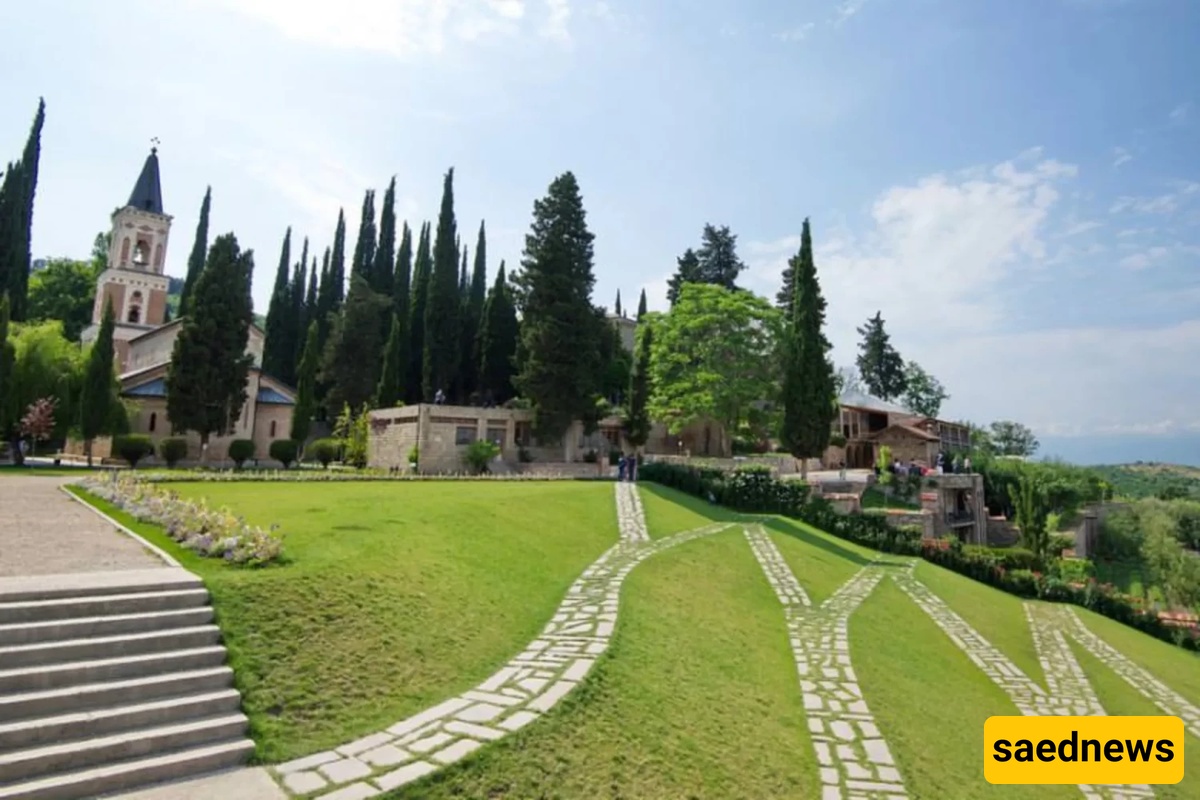
According to Saednews, Bodbe Monastery, a revered pilgrimage site in Georgia’s Kakheti region, holds exceptional significance due to its connection with Saint Nino, the woman credited with bringing Christianity to Georgia. Founded in the 9th century and surrounded by the breathtaking landscapes of the Alazani Valley, the monastery attracts pilgrims, history enthusiasts, and travelers with its spiritual atmosphere, historic architecture, and spectacular views.
Also known as the Monastery of Saint Nino, Bodbe Monastery is one of Georgia’s most important religious and historical landmarks. It is located in the Kakheti region, approximately 2 kilometers from the town of Sighnaghi, often called the “City of Love.” Because of its association with Saint Nino, the monastery remains one of the country’s most significant places of worship and pilgrimage. Beyond its religious importance, Bodbe is also admired for its cultural heritage, architectural beauty, and natural surroundings.
Although the present monastery complex was established in the 9th century, its roots reach back to the 4th century and the life of Saint Nino. According to Georgian tradition, after successfully spreading Christianity throughout Georgia, Saint Nino withdrew to the Bodbe area of Kakheti, where she lived a peaceful life of prayer and passed away around 338–340 AD.
Following her death, King Mirian III of Iberia, who ruled from 284 to 361 AD and was among the first Georgian rulers to embrace Christianity, ordered the construction of a small church at the site of her burial. Over the centuries, this humble religious structure developed into a larger monastery complex that became a central spiritual destination for Georgian Christians.
Throughout its long history, Bodbe Monastery experienced periods of prosperity, destruction, restoration, and renewal.
During the medieval period, especially under the rulers of Kakheti, Bodbe Monastery gained great importance. Georgian kings considered it a prestigious religious center and selected it as a place associated with royal ceremonies, including coronation traditions.
In 1615, the forces of Shah Abbas I of Persia attacked Bodbe Monastery, causing extensive damage. However, King Teimuraz I of Kakheti, who ruled from 1605 to 1648, restored the monastery and revived monastic life.
During this period, Bodbe became an important center of education and religious scholarship. A theological school was established, and the monastery developed one of the largest collections of religious manuscripts in Georgia.
After Georgia became part of the Russian Empire in 1801, Bodbe Monastery continued to function under imperial protection. In 1823, restoration work was carried out, and new frescoes were added to the church.
However, in 1837, Russian Orthodox Church authorities transformed the monastery into a local parish church, ending its traditional monastic activities.
In 1924, the Soviet government closed Bodbe Monastery and converted it into a hospital. This was one of the most difficult periods in the monastery’s history, as many parts of the complex suffered neglect and deterioration.
After the collapse of the Soviet Union in 1991, Bodbe Monastery was reopened as a women’s monastery. Extensive restoration projects were carried out between 1990 and 2000, followed by additional work in 2003. These efforts helped restore the monastery’s religious role and preserve its historical significance.
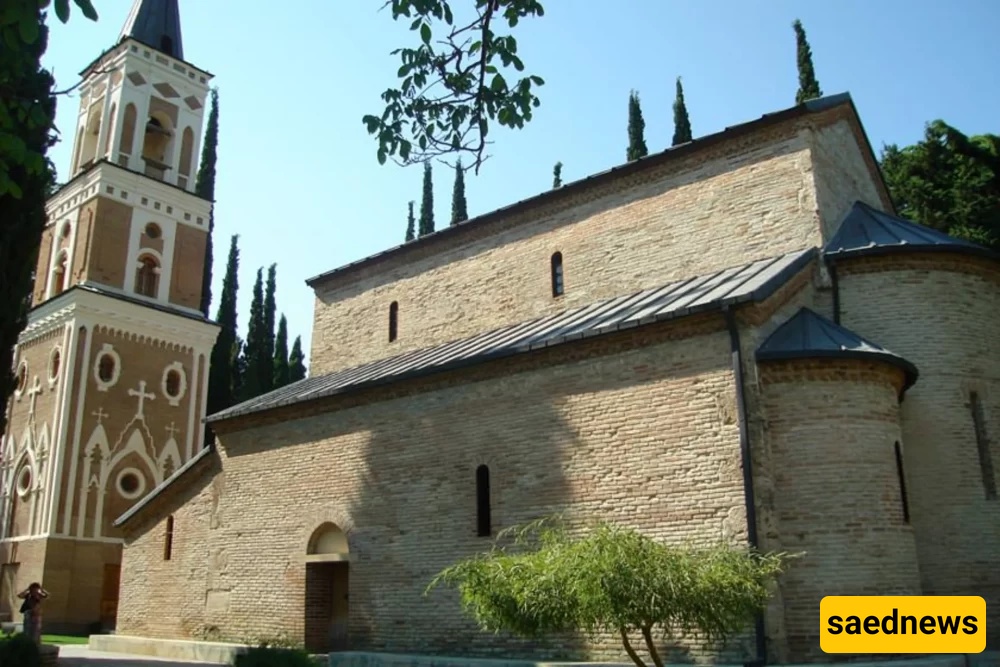
Bodbe Monastery is an impressive architectural complex consisting of the main church, the women’s monastery buildings, gardens, and surrounding religious structures. Its design reflects different periods of Georgian architectural history.
The central church is a three-nave basilica with three prominent apses, originally constructed between the 9th and 11th centuries. Over time, the building underwent several renovations, resulting in changes to its original structure. Despite these modifications, many elements of early Georgian feudal architecture remain visible.
The interior of the church is decorated with frescoes depicting religious themes and scenes from the life of Saint Nino. Some paintings have been damaged over the centuries, but many still preserve their artistic and historical value. Several frescoes were added during the 17th and 19th centuries.
One of the most sacred parts of Bodbe Monastery is the tomb of Saint Nino, located inside a dedicated chamber within the complex. For Georgian Orthodox Christians, this site represents a deeply spiritual destination and attracts thousands of visitors each year.
Pilgrims often wait in line to enter the burial chamber and pay their respects at the resting place of the saint who played a defining role in Georgia’s Christian history.
The monastery stands among tall cypress trees on a hillside overlooking the magnificent Alazani Valley. From this elevated position, visitors can enjoy panoramic views of the Greater Caucasus Mountains.
The peaceful gardens surrounding the monastery provide a perfect setting for reflection, photography, and relaxation. The monastery’s brick walls give the complex a fortress-like appearance, while small local shops nearby sell traditional products, handmade crafts, and regional souvenirs.
Religious and Cultural Importance
Saint Nino, known as the “Equal to the Apostles,” played a crucial role in the Christianization of Georgia. In the 4th century, through her teachings, miracles, and dedication, she helped convert King Mirian III and Queen Nana to Christianity.
Her mission transformed Georgia into one of the earliest Christian nations in the world. Because Bodbe Monastery contains her burial place, it remains one of the most important religious destinations in the country.
Beyond its religious role, Bodbe Monastery has historically served as a center of culture and learning. During the 17th and 18th centuries, notable Georgian writers, scholars, and manuscript creators, including Zakaria Bodbeli, Onofre Bodbeli, and Ioane Makashvili, contributed to its intellectual tradition.
The monastery also supported artistic education, including embroidery and painting, helping preserve and promote Georgian cultural heritage.
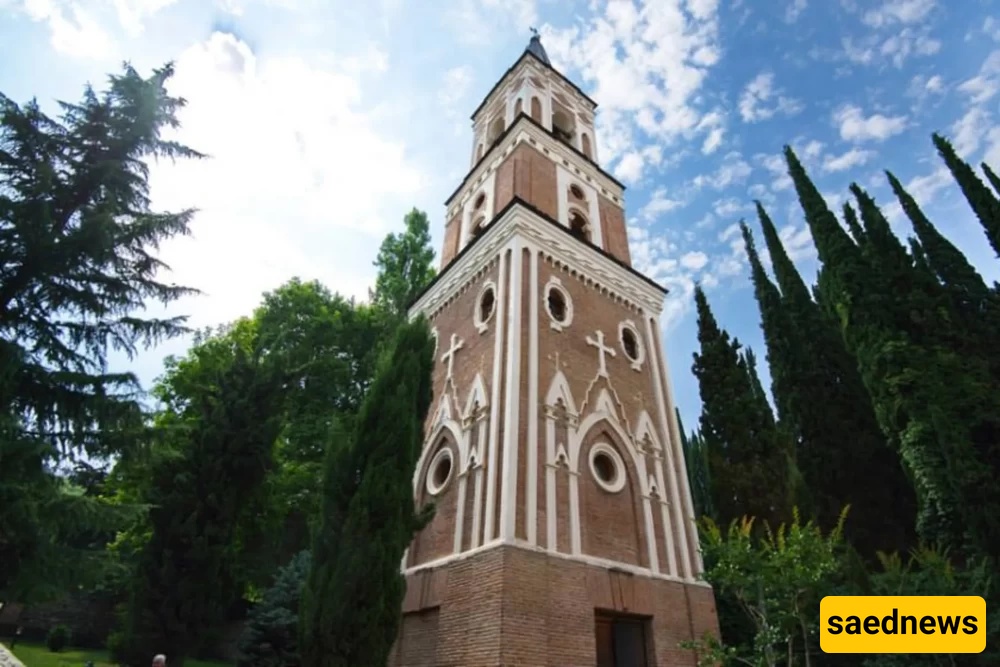
Bodbe Monastery attracts not only religious visitors but also travelers interested in history, architecture, and nature. Its main attractions include:
The monastery’s location above the Alazani Valley provides unforgettable views of the Caucasus Mountains and surrounding countryside, making it a favorite destination for photographers.
The quiet environment, religious ceremonies, and historic surroundings create a unique sense of tranquility for visitors.
Situated only about 2 kilometers from Sighnaghi, Bodbe Monastery is easily accessible by car and through organized tours. The winding mountain road leading to the monastery adds to the beauty of the journey.
Nearby shops offer regional products such as Kakhetian wine, handmade crafts, traditional foods, and religious souvenirs, allowing visitors to experience local culture.
Today, Bodbe Monastery remains an active women’s monastery under the administration of the Bodbe Diocese. It continues to be one of Georgia’s most important pilgrimage destinations and welcomes visitors from around the world.
Despite its preserved beauty and restored structures, the monastery faces ongoing challenges, including the conservation of ancient frescoes and the management of large numbers of visitors during peak seasons. Continuous preservation efforts remain essential to protect this valuable part of Georgia’s religious and cultural heritage.
Standing above the beautiful landscapes of Kakheti, Bodbe Monastery represents the deep connection between Georgia’s faith, history, and identity. With its sacred association with Saint Nino, remarkable architecture, peaceful gardens, and breathtaking views, it remains one of the most inspiring destinations in the country.
For travelers seeking a place where spirituality, history, and natural beauty meet, Bodbe Monastery offers a memorable journey into the heart of Georgia’s cultural heritage.