SAEDNEWS: An ancient rock-carved temple in Azarshahr dating back to the Parthian and Sassanian eras, later continuing as a sacred site after Islam. Originally a Mithraic temple, it became known as “Ghadamgah” and remains a place of pilgrimage for Muslims.
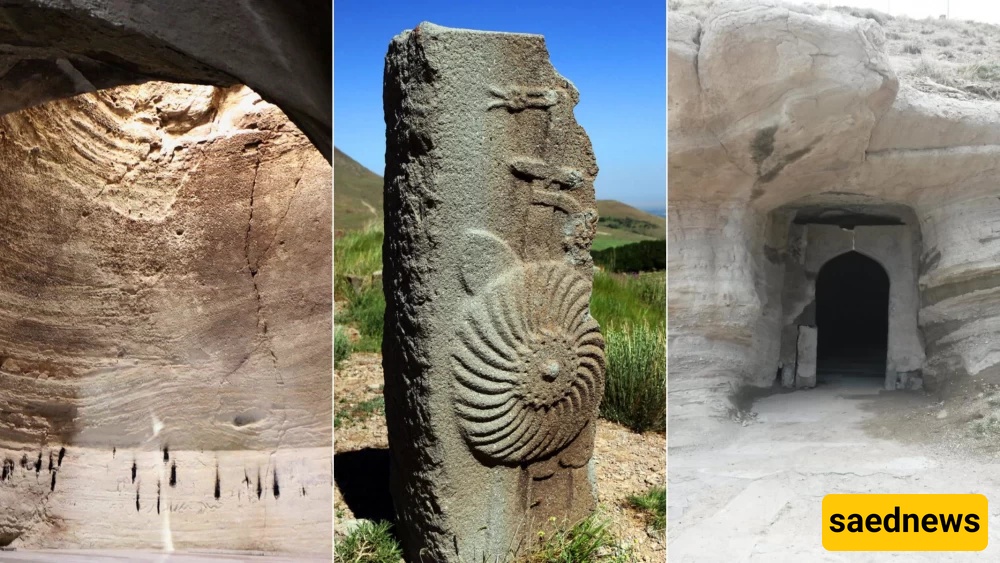
According to Saednews, The ancient Qadamgah Temple in East Azerbaijan Province is located 12 kilometers south of Azarshahr County. It lies on the slopes of Qebleh Dagh Mountain at an altitude of 1,800 meters, after passing the village of Kharaju and about two kilometers beyond the village of Badamyar.
The history of the Qadamgah Temple dates back to pre-Islamic times, specifically to the Parthian era. Some sources and discovered inscriptions also suggest that construction of this temple began during the Sassanid period. The architectural structure clearly indicates that it was originally a place of worship for Mithraism (Mehri worship) and was later used as a Zoroastrian religious site.
However, the sanctity of this temple today is not only related to its ancient Iranian religious function. After the arrival of Islam, it also remained a sacred place. In fact, the name “Qadamgah” (meaning “place of footsteps”) was given to it in the Islamic period.
According to local belief, the site contains the footprints of holy figures and Imams, which is why it became known as Qadamgah. As this belief spread, many people visited the site for pilgrimage, helping preserve its sacred status.
Like many ancient Zoroastrian temples, this structure is a cave with its entrance facing the sun, allowing worshippers to perform rituals. In ancient times, building materials and advanced construction tools were not available, so the cave was carved entirely by hand using simple tools.
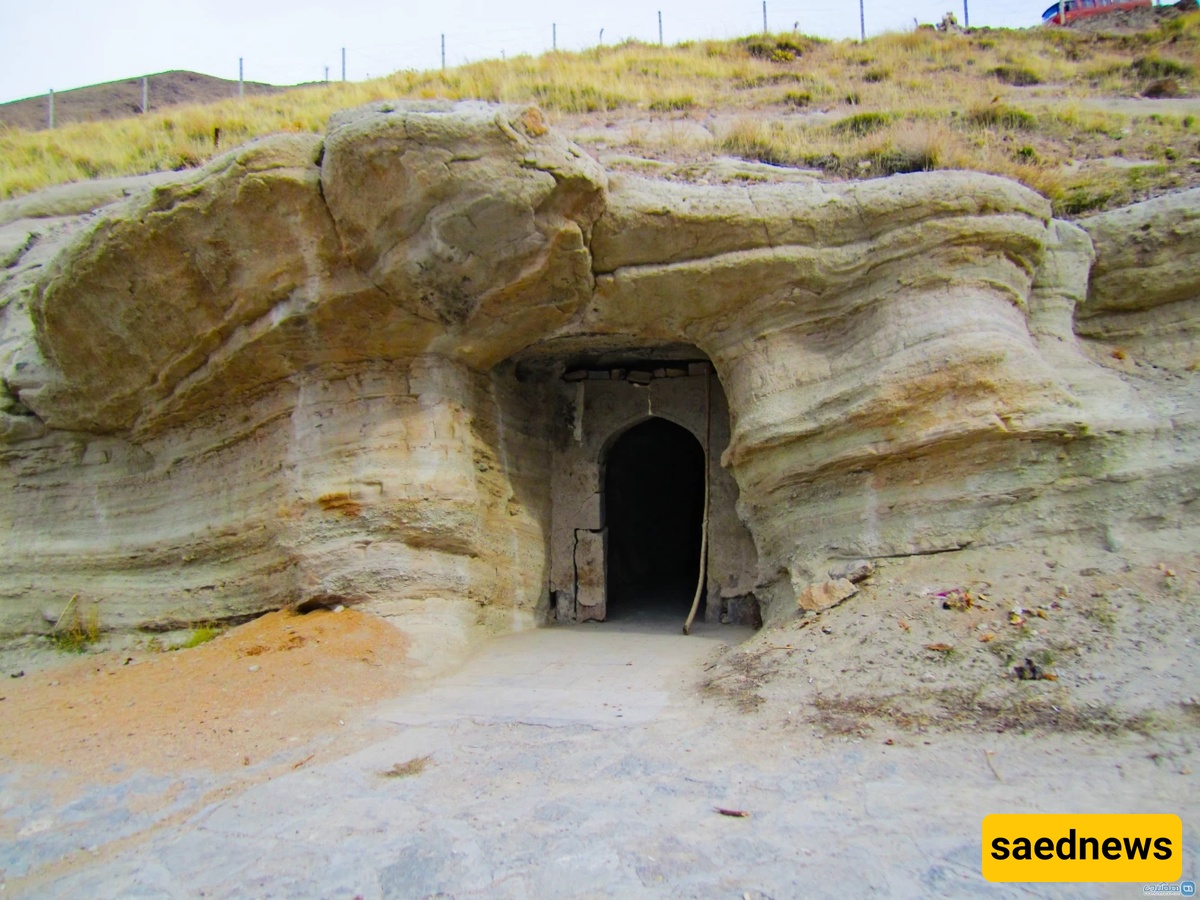
At first, the entrance of the cave is quite small. However, once inside, you enter a large hall with a diameter of nearly 15 meters. One of the remarkable features of the temple is its dome-shaped ceiling, which has an opening that allows natural light into the hall.
This opening was not only used for light but also served as a vent for smoke from ritual fires lit during worship. On the stone walls, traces of smoke from thousands of years of religious ceremonies can still be seen.
Some walls also contain carved niches that were likely used for offerings. Overall, the interior structure is similar to other ancient Zoroastrian temples in Iran.
The surrounding area of the temple is lush and natural, offering a beautiful landscape. It is an ideal place for photography and enjoying a peaceful natural environment. After exiting the cave, visitors can directly experience the pristine surroundings.
Below the temple, there is also a historical cemetery, with some gravestones dating back to the Safavid period. This burial ground was likely used due to the sacred status of the area. However, it belongs to the post-Islamic era and mainly contains graves of local Muslims from different periods.
First, depending on your starting point, you should head toward Azarshahr. After reaching the city, continue toward the village of Badamyar. After traveling about 10–15 kilometers, you will reach the village.
Note that vehicles cannot reach very close to the temple site, so you will need to walk for about 20–30 minutes. The path is relatively smooth and not very difficult. It is recommended to take a local guide familiar with the area.
After this short hike, you will reach the foothills of the mountain and the Qadamgah Temple.
If you want to visit in ideal weather conditions and enjoy the surrounding scenery, spring and autumn are the best seasons. In spring, the area becomes lush and filled with flowers and blossoms, creating excellent photography opportunities.
In summer, the cave can still be visited and the nature enjoyed to some extent. However, visiting in winter is not recommended due to very cold weather and heavy snowfall, which makes the paths difficult, especially for hiking.