SAEDNEWS: Developmental psychology is a branch of psychology that examines systematic changes in human behavior, cognition, emotions, and social relationships from conception through the entire lifespan.

According to Saednews, Have you ever wondered why infants experience the world so differently from adults? Or how our personalities develop and change over time? The answers to these questions can be found in a fascinating branch of psychology known as Developmental Psychology.

This field of science examines systematic and lasting changes in human behavior, cognition, emotions, and social relationships from conception through the end of life. Developmental psychology not only helps us understand developmental processes but also provides parents, teachers, therapists, and policymakers with tools to improve quality of life at every stage of development.
In this article, we will explore the definition of developmental psychology, its historical development, major theories, different stages of human development, and its practical applications. Join us as we take a journey into the remarkable world of human development.
Developmental psychology, also known as developmental or life-span psychology, is a branch of psychology that examines how and why people change throughout their lives. These changes generally occur across three major domains:
Physical and motor development: Changes in body structure, brain development, sensory-motor abilities, and overall health.
Cognitive development: Changes in mental processes such as learning, memory, language, thinking, reasoning, and problem-solving.
Social-emotional development: Changes in relationships with others, identity, self-concept, emotions, and emotional regulation.
One of the primary goals of developmental psychologists is to describe typical changes at different ages, explain the causes of these changes, and ultimately identify conditions that can support healthy development.
Before the twentieth century, children were often viewed simply as smaller versions of adults. However, the ideas of thinkers such as John Locke, with his concept of the child as a “blank slate,” and Jean-Jacques Rousseau, who emphasized natural development, helped establish the foundation for the scientific study of childhood.
G. Stanley Hall, often referred to as the father of child psychology, collected extensive data about children through questionnaires in the late nineteenth century.
Sigmund Freud, through his psychosexual theory, emphasized the importance of childhood experiences in shaping adult personality.
Jean Piaget revolutionized our understanding of children's cognitive development by demonstrating that children think in qualitatively different ways at different stages.
Erik Erikson developed his psychosocial theory, describing human development as a process that continues through eight stages across the lifespan.
In recent decades, developmental psychology has increasingly adopted a life-span perspective, extending its focus beyond childhood and adolescence to include adulthood, aging, and the final stages of life.

To better understand the processes of human development, different theorists have proposed a variety of conceptual frameworks. The most influential include the following.
Freud proposed that personality develops through five psychosexual stages: oral, anal, phallic, latency, and genital. He emphasized the role of the unconscious mind and internal conflicts in personality development.
Although many aspects of Freud's theory are criticized today, his emphasis on the importance of early childhood experiences has continued to influence psychological thought.
Erikson expanded Freud's ideas and described development as occurring through eight stages across the lifespan. Each stage involves a psychosocial conflict that must be addressed.
Examples include:
Infancy: Trust vs. mistrust
Early childhood: Autonomy vs. shame and doubt
Adolescence: Identity vs. role confusion
Old age: Integrity vs. despair
Piaget proposed that children experience cognitive development through four distinct stages:
Sensorimotor stage (0–2 years): Understanding the world through the senses and physical actions.
Preoperational stage (2–7 years): Development of symbolic thinking, although thinking remains relatively egocentric.
Concrete operational stage (7–11 years): Development of logical reasoning about concrete objects and situations.
Formal operational stage (11 years and beyond): Development of abstract and hypothetical thinking.
Lev Vygotsky emphasized the role of culture and social interaction in cognitive development. He introduced the concept of the Zone of Proximal Development (ZPD), referring to the difference between what a child can accomplish independently and what the child can accomplish with assistance from a more knowledgeable or skilled person.
Bowlby demonstrated that the early emotional bond between an infant and a primary caregiver, traditionally often described as the mother, provides an important foundation for later relationships.
Attachment patterns, including secure, insecure-avoidant, insecure-ambivalent, and disorganized attachment, can have significant implications for social and emotional development.
Kohlberg divided moral reasoning into three broad levels:
Preconventional morality
Conventional morality
Postconventional morality
His framework suggests that moral reasoning can become increasingly complex as individuals mature.

Developmental psychology examines human development across several major periods.
Childhood provides the foundation for many aspects of later development. During this period:
The brain and nervous system undergo rapid development.
Motor skills develop progressively, from rolling over to walking and running.
Language emerges and vocabulary expands rapidly.
Basic concepts such as numbers, time, and causality become increasingly understood.
Attachment to parents and caregivers develops, while relationships with peers begin to become increasingly important.
Adolescence involves substantial biological, cognitive, and social changes, including:
Physical maturation and hormonal changes
Development of abstract and hypothetical-deductive thinking
Exploration of identity and independence
Increasing influence of peers and development of romantic relationships
Possible identity-related difficulties and engagement in risk-taking behaviors
Adulthood can be divided into several periods.

This period often involves a focus on career development, intimate relationships and marriage, parenthood, and the development of a professional identity.
Middle adulthood may involve reassessing personal achievements and goals, caring for children and aging parents, and passing values and knowledge to the next generation. Some individuals may also experience what is commonly described as a midlife crisis, although this is not a universal developmental experience.
This stage may involve retirement and changes in physical abilities, while opportunities for cognitive, emotional, and personal growth can continue. From an Eriksonian perspective, later life involves the conflict between integrity and despair, often accompanied by reflection on one's life and experiences.
Human development is the result of a complex interaction between nature, including heredity, and nurture, including environmental influences. Several factors contribute to this process:
Genetic factors: These contribute to individual characteristics and predispositions, including aspects of temperament, cognitive abilities, and talents.
Environmental factors: Nutrition, prenatal care, parenting practices, education, peers, culture, and socioeconomic circumstances can all influence development.
Critical periods: Certain developmental windows may be particularly sensitive to environmental influences, such as aspects of language development during early childhood.
Reciprocal influence: People are influenced by their environments, but they also influence their environments through their choices, behavior, and interactions.
Knowledge of developmental psychology has a wide range of practical applications.
Developmental principles can help educators design age-appropriate curricula, use effective teaching methods, such as play-based learning for young children, and identify potential learning difficulties.
Developmental psychology can provide parents with age-appropriate strategies, help them understand children's emotional needs, and support the prevention or management of behavioral difficulties.
Developmental knowledge can contribute to the assessment and treatment of developmental and psychological conditions, including autism spectrum disorder, attention-deficit/hyperactivity disorder (ADHD), and attachment-related difficulties.
Developmental psychology can inform policies and programs related to child protection, mental-health screening, early intervention, and the quality of care provided to older adults.
Understanding developmental needs across different stages of adulthood can help organizations address employees' motivational and career needs and design more appropriate career-development pathways.

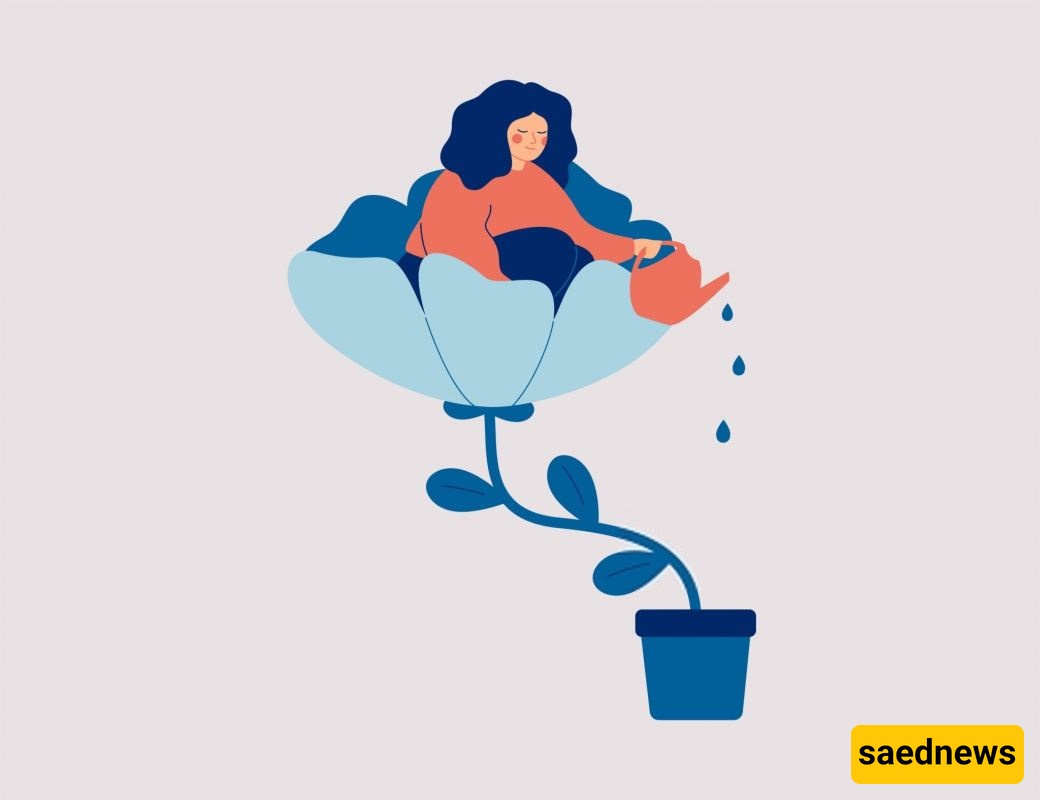
Developmental psychology provides a window into the dynamic nature of human beings. It teaches us that development does not simply stop at childhood and that every stage of life presents its own opportunities and challenges. From the earliest bonds formed during infancy to the reflection and life review that can accompany old age, each period contributes to a broader developmental journey.
Understanding the principles of developmental psychology can help parents support healthy development in their children, enable teachers to use more effective educational approaches, and remind us that meaningful change is possible at every age.
As Erikson's theory suggests, personality and identity continue to develop throughout the lifespan, with each stage presenting new developmental challenges and opportunities.
By studying developmental psychology, we can gain a deeper understanding not only of other people but also of our own developmental journeys. This field reminds us that human beings are not static; rather, we are continually developing, adapting, and becoming.