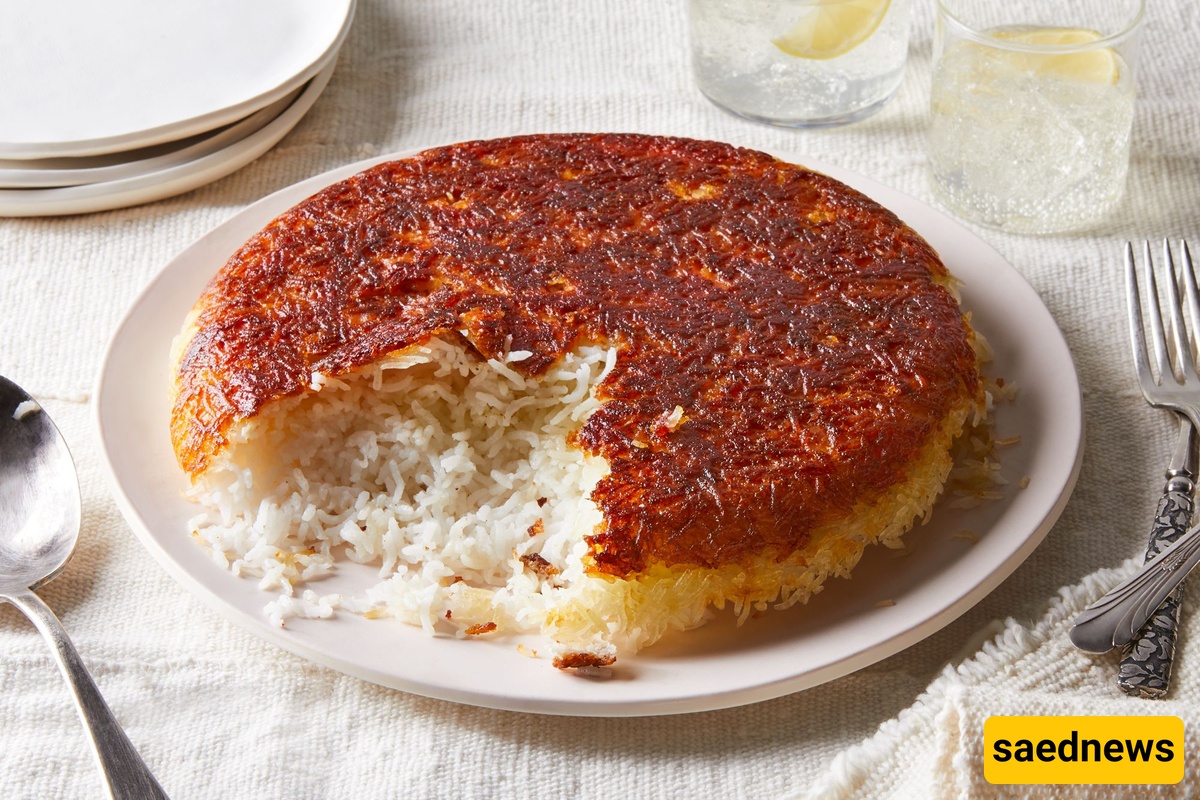
SAEDNEWS: Overly hard tahdig can result from excessive heat, too much cooking time, insufficient oil or moisture, or an unsuitable pot. Small adjustments in temperature, cooking time, and ingredients can help create a crisp but pleasantly tender tahdig.

According to SAEDNEWS, tahdig should be golden and crunchy rather than extremely hard. Several cooking details can affect its final texture.
High heat can quickly remove moisture from the bottom layer of rice and cause it to become overly dry and hard. Starting with moderate heat and reducing it after the pot becomes hot can help.
Leaving the rice on the stove for an extended period allows the bottom layer to lose more moisture. Even if it does not look burnt, prolonged cooking can make tahdig unusually firm.
A small amount of oil or butter may prevent the rice from developing an evenly crisp texture. Using an adequate amount helps the bottom layer brown without becoming excessively dry.
Very thin pots can transfer heat too aggressively to the bottom of the rice. A heavier pot distributes heat more evenly and can reduce the risk of an excessively hard tahdig.
Compressing the rice strongly against the bottom of the pot can create a dense layer. Keeping the bottom layer relatively loose allows heat and oil to distribute more evenly and produces a lighter crunch.