SAEDNEWS: Through seemingly spontaneous changes, or as a result of illness or injury, the color of our eyes can change in surprising and fascinating ways.
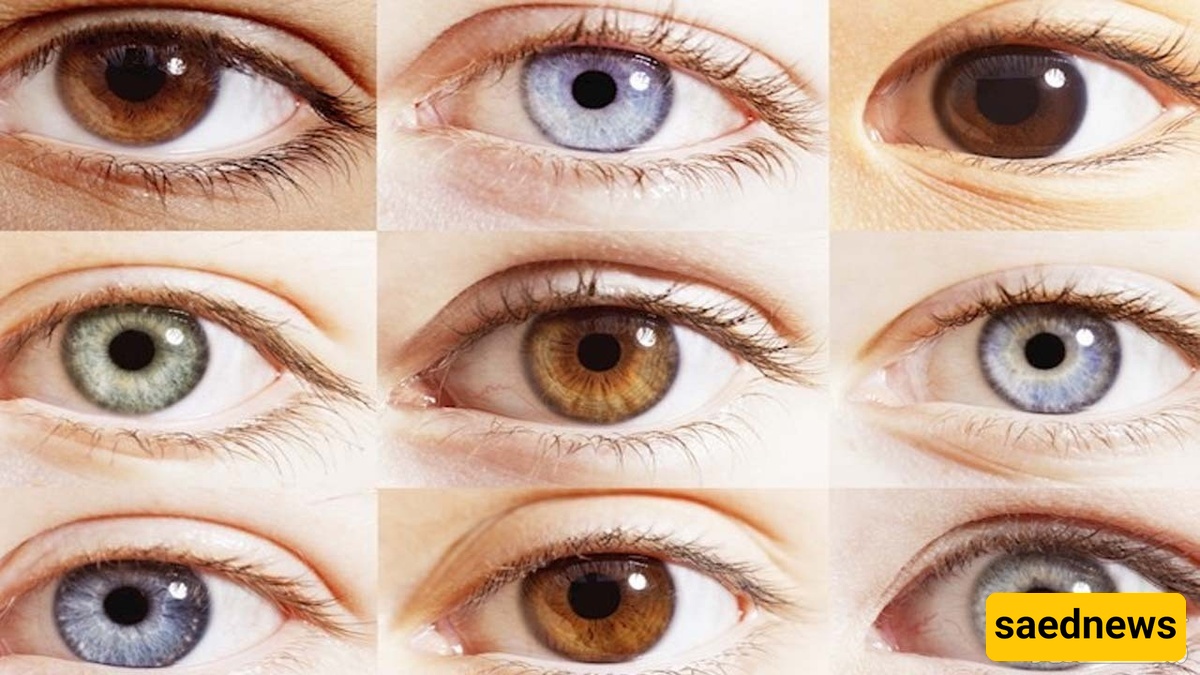
According to Saed News, citing Bitoteh, we may think of our eye color as one of our most distinctive physical characteristics — a feature that defines us just like the shape of our nose or ears. However, the surprising fact is that eye color does not always remain the same throughout life. In reality, a wide range of external factors, from infections to injuries and sun damage, can cause changes. Sometimes, eye color even appears to change on its own.
Evidence suggests that whether or not a baby’s eye color changes depends largely on their original eye color. In a study led by Casey Ludwig, an ophthalmologist at the Byers Eye Institute at Stanford University, researchers examined 148 infants born at Lucile Packard Children’s Hospital in California and recorded their iris colors at birth. About two-thirds of the babies were born with brown eyes, while around one-fifth had blue eyes.
Two years later, Ludwig and her colleagues found that among the 40 blue-eyed infants studied, 11 had developed brown eyes by the age of two, three had hazel eyes, and two had green eyes. Of the 77 babies born with brown eyes, almost all still had brown eyes at age two.
This suggests that blue eyes are much more likely to change during early childhood than brown eyes. But why does this happen?
A clue lies in the fact that when babies’ eye colors changed, they usually became darker rather than lighter. In Ludwig’s study, about one-third of infants experienced a change in eye color during the first two years of life, and in most cases, the color became darker. Only five out of the 148 children studied (3.4 percent) had eyes that became lighter as they aged.
The tendency toward darker eye color may be due to the accumulation of protective pigment in the iris.
This type of relatively common and healthy color change is mostly limited to early childhood. Another study in the United States, which followed more than 1,300 twins from infancy into adulthood, found that eye color changes usually stopped by the age of six. However, in some cases (10 to 20 percent of the participants), changes continued into adolescence and adulthood.
Among non-identical twins, it was more common for their eye colors to become different from each other later in life. David Mackey, a professor of ophthalmology at the Lions Eye Institute at the University of Western Australia, says this indicates that genetics plays a role in the tendency for eye color to change.
After becoming curious about this phenomenon, Mackey discovered that these two studies represented almost all of the research conducted on childhood eye color changes. He realized that it is not unusual for parents to expect their baby’s eye color to change.
He explains:
“I heard parents and their friends say that their baby’s eyes were blue at birth, but they would change in the coming years. I couldn’t find data about this. Eventually, I found those two papers. They were relatively small studies, but they showed that eye color does change.”
Although the available data is limited and these studies were conducted only in the United States, eye color changes appear to be more common among people of Northern European ancestry, Pacific Island populations, and people of mixed ancestry.
Similar patterns have also been observed in childhood hair color changes among these groups. Mackey explains:
“You see photographs of some children who are blond as infants, but when they grow older, their hair becomes dark brown. The pigment in hair can gradually increase over time, probably due to an increase in the number of pigment-producing cells and their movement into those areas.”
Mackey believes a similar process may occur with eye color because pigment levels can increase during the months or years after birth.
He says:
“The main pigment in the eye is called melanin, and it is the distribution of melanin that creates different eye colors. They can be simply classified: you have blue eyes, and some people talk about gray eyes, which are actually a type of blue. Then you have hazel and green combinations, followed by brown, which can range from light brown to very dark brown. All of these differences are related to the amount of melanin present.”
Humans are not the only creatures whose eye color can change. Perhaps the most dramatic example is the seasonal change in reindeer eyes, which shift from a golden turquoise color in summer to dark blue in winter.
This change does not occur in the iris but instead happens in a mirror-like structure behind the retina called the tapetum lucidum.
The tapetum lucidum reflects light, giving the retina a better chance to capture it. Humans do not have this structure because it is mainly found in animals that are active at night and require enhanced low-light vision.
As a reindeer’s iris widens in the darkness of the Arctic winter, pressure inside the eye increases. This pressure pushes the collagen fibers in the tapetum lucidum closer together, causing them to reflect blue light.
Receiving more of the intense blue Arctic light helps reindeer see during the dark winter months.
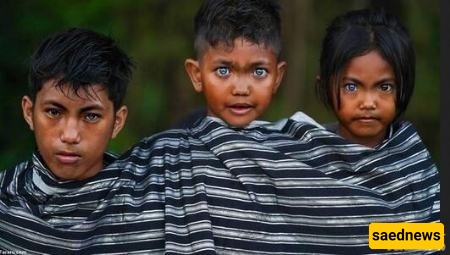
Although many eye color changes are harmless, some can be linked to more serious conditions, such as injuries, infections, or damage caused by sunlight.
One of the most famous examples of an eye appearance change caused by injury was the left eye of David Bowie. The striking difference between his darker left eye and pale blue right eye was the result of a head injury that caused his pupil to remain permanently enlarged.
This condition is called anisocoria. The injury did not actually change the blue color of Bowie’s iris; instead, the enlarged pupil made his left eye appear darker.
Mackey says it is also possible for the iris itself to change color after an injury. This can happen when significant bleeding enters the eye and stains parts of it, or when pigment deposits accumulate in one area.
In many cases, infection is the main cause of eye color changes.
A well-known example of true heterochromia — a condition where the two irises have different colors — is actress Mila Kunis, whose right eye is brown and left eye is green.
Kunis’s heterochromia was caused by an iris infection that destroyed some of the pigment in her left eye.
Mackey explains:
“Some infectious diseases can cause pigment loss. One of these is Fuchs heterochromic iridocyclitis, which is caused by a viral infection and is often associated with rubella (German measles). This virus, which tends to live in the eye, can become active later in life and cause pigment loss in that area.”
Other viruses can also grow inside the eye and sometimes affect pigment production. In an extremely rare case, the eye color of an Ebola survivor changed from blue to green. Researchers discovered that the virus remained in the fluid inside the eye even after it had been eliminated from other parts of the body.
Sometimes, changes in eye color do not affect the entire iris but appear only in small areas.
Light-colored spots called Brushfield spots can appear in the irises of people with Down syndrome, while brown spots known as Lisch nodules are a common sign of a genetic disorder called neurofibromatosis type 1.
Just like on the skin, freckles and moles can also appear on the iris and other parts of the eye.
Mackey says:
“You may have a freckle that is harmless, but in some people, these can develop into tumors and become a serious problem.”
Although eye color changes are usually harmless, Mackey warns that people should pay attention to unusual or unpleasant changes in their eye color.
A sudden change in eye color, especially when accompanied by pain, vision problems, inflammation, or other symptoms, may indicate an underlying medical condition and should be evaluated by an eye specialist.