SAEDNEWS: How to Quickly Cook Slow-Cooking Lentils

According to Saednews, Lentils are one of the most widely used legumes in Iranian cuisine. They are popular because of their high nutritional value, affordability, and versatility. They are used in dishes such as lentil soup, lentil rice, soups, and various stews. However, one common problem when cooking lentils is that some varieties take a long time to become tender. This can increase cooking time, consume more energy, and even affect the final quality of the dish.
Sometimes, despite hours of cooking, lentils remain firm and do not soften evenly. But is the cooking method always responsible? Not necessarily. Factors such as the freshness of the lentils, storage conditions, water quality, lentil variety, and preparation before cooking can all affect how quickly they become tender.
In this article, we explore practical ways to cook hard-to-soften lentils more quickly, helping you prepare tender, flavorful lentils without compromising the quality of your dish.
Before looking at ways to speed up the cooking process, it is helpful to understand why some lentils take longer to soften. Several factors can contribute to longer cooking times.
One of the main reasons lentils remain firm is their age. Lentils that have been stored for a long time gradually lose their natural moisture, causing their outer layer to become harder.
As a result, water takes longer to penetrate the center of the lentil. Even extending the cooking time may not always produce the desired texture.
When buying lentils in large quantities, it is therefore important to consider the harvest date, storage conditions, and overall product quality.
Lentils vary in size, color, and texture, and these differences can affect how quickly they cook.
For example:
Red lentils (split red lentils) cook quickly because they do not have their outer skin.
Green and brown lentils generally require more time to become tender.
Canadian lentils are often favored in commercial kitchens because of their relatively uniform size and quality.
Iranian lentils may have different cooking times depending on the growing region, climate, and seed variety.
Choosing the right type of lentil is therefore the first step toward reducing cooking time.
Soaking is one of the simplest and most effective ways to help lentils cook faster.
To soak lentils:
Sort and rinse the lentils.
Place them in lukewarm water for about 2 to 6 hours.
Drain and discard the soaking water before cooking.
Soaking helps soften the outer layer of the lentils and allows water to penetrate the inside more easily.
In professional kitchens and large-scale food preparation, proper soaking can significantly reduce cooking time.
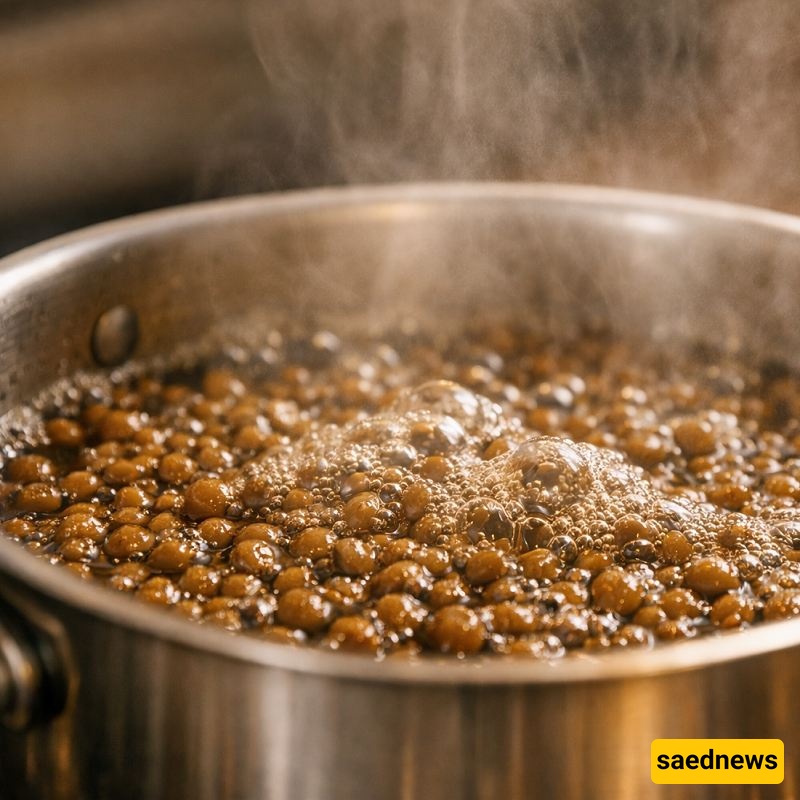
A common mistake is adding dry lentils directly to cold water.
For faster cooking:
Heat the water first.
Add the lentils to the hot water.
Once the water begins to boil, reduce the heat.
This shortens the time needed to bring the lentils to cooking temperature.
If you are dealing with particularly hard-to-cook lentils, a pressure cooker can be one of the most effective options.
Under typical conditions:
Regular pot: approximately 45–90 minutes
Home pressure cooker: approximately 20–30 minutes
Commercial pressure cooking equipment: considerably less time for large quantities
In restaurants and catering operations, suitable cooking equipment can reduce both preparation time and energy consumption.
Baking soda can make the cooking water slightly alkaline, which may help break down the fibrous structure of the lentils and speed up softening.
However, only a very small amount should be used.
Too much baking soda may:
Alter the flavor of the lentils
Cause them to become overly soft or mushy
Affect the appearance and texture of the finished dish
For this reason, baking soda is best reserved for situations where the lentils are exceptionally difficult to cook.
A common belief in cooking is that adding salt too early can make legumes take longer to soften.
For a better texture, it is generally preferable to:
Allow the lentils to become mostly tender first.
Add salt and seasonings afterward.
Ingredients such as:
Tomato paste
Lemon juice
Vinegar
are acidic and may slow the softening process if added at the beginning of cooking.
It is better to add these ingredients after the lentils have already gone through most of the cooking process.
If your lentils have been cooking for a long time but are still firm, you can try the following:
Add a little boiling water.
Use a very small amount of baking soda.
Reduce the heat to a gentle simmer.
Avoid adding acidic ingredients until the lentils are tender.
Increasing the heat dramatically is usually not an effective solution. It may cause the outside of the lentils to become mushy while the center remains firm.
Sometimes the problem is not the lentils themselves but the quality of the water.
Hard water contains relatively high levels of minerals such as calcium and magnesium. These minerals can interfere with the softening of legumes and may increase cooking time.
If your lentils consistently take too long to cook, try preparing them once with filtered or purified water and compare the results.
To help your lentils cook more efficiently, avoid these common mistakes:
❌ Using old lentils without checking their cooking quality
❌ Adding tomato paste at the beginning of cooking
❌ Cooking over excessively high heat
❌ Using too little water
❌ Mixing lentils of different ages or qualities in the same batch
No. Lentils can be cooked without soaking, but soaking may reduce cooking time and help produce a more even texture.
The most common reasons are old lentils, hard water, or poor-quality lentils. The variety and storage conditions can also affect cooking time.
Yes. A small amount of baking soda can help reduce cooking time, but using too much is not recommended because it can affect the flavor, texture, and appearance of the lentils.
For small quantities, soaking the lentils and then using a pressure cooker is one of the fastest options. For large quantities, commercial pressure-cooking equipment can provide faster and more consistent results.
Cooking hard-to-soften lentils quickly is not simply a matter of increasing the cooking time or turning up the heat. Choosing fresh lentils, soaking them properly, using suitable water, controlling the cooking temperature, and adding salt and acidic ingredients at the right time are all important factors in achieving tender lentils more efficiently.
If your lentils regularly take a long time to cook, start by checking the quality and age of the product. Then use practical techniques such as soaking, pressure cooking, and properly timing the addition of salt and acidic seasonings.
With these simple methods, you can achieve tender, evenly cooked lentils with a pleasant texture while reducing the overall preparation time.