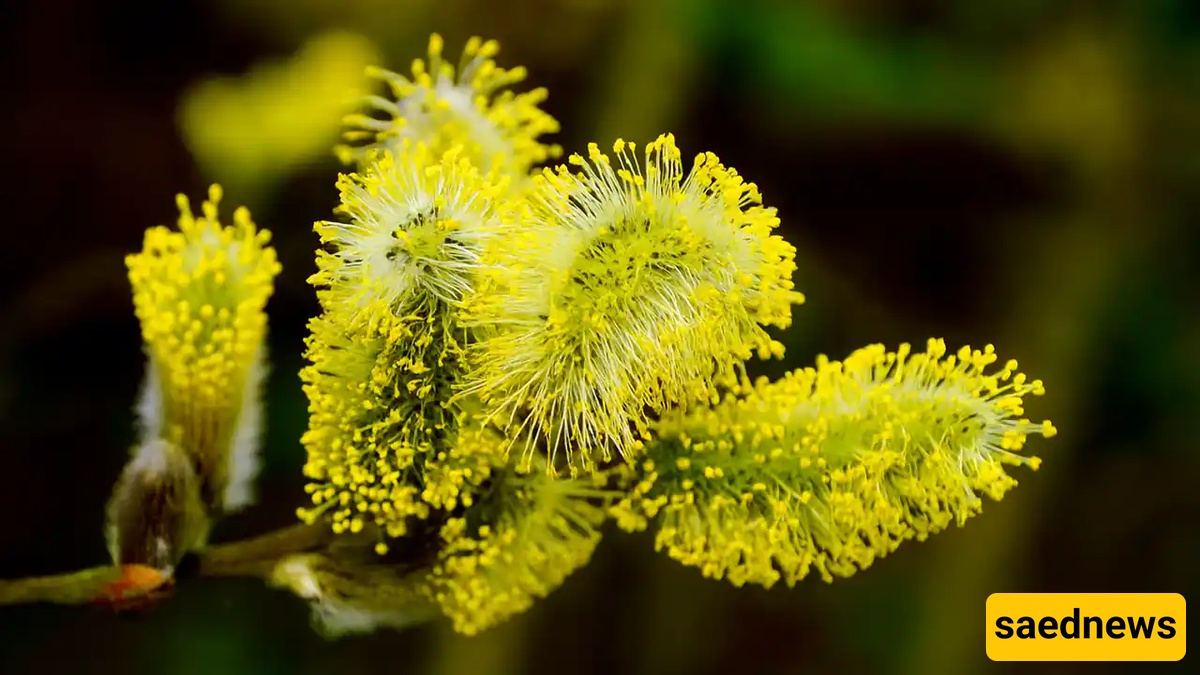
SAEDNEWS: Bidemeshk is an ornamental tree or shrub from the willow family that has pale yellow, catkin-like flowers. This tree can reach a height of up to 9 meters.
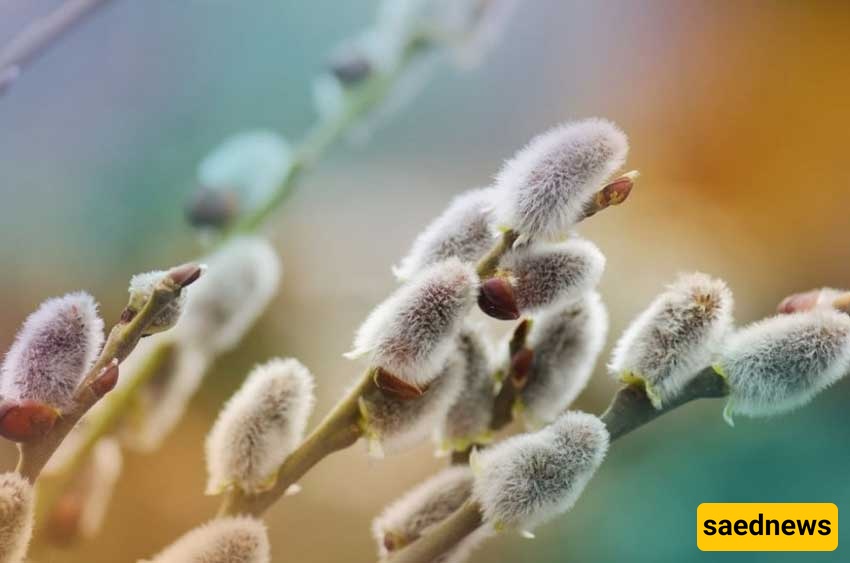
According to Saednews, Willow myrtle (Bidmeshk) is a shrub belonging to the willow family. It is an ornamental dioecious plant that sometimes grows as a tree, but its height generally does not exceed 8 meters.
There are sharp protrusions on the bark and wood of this tree.
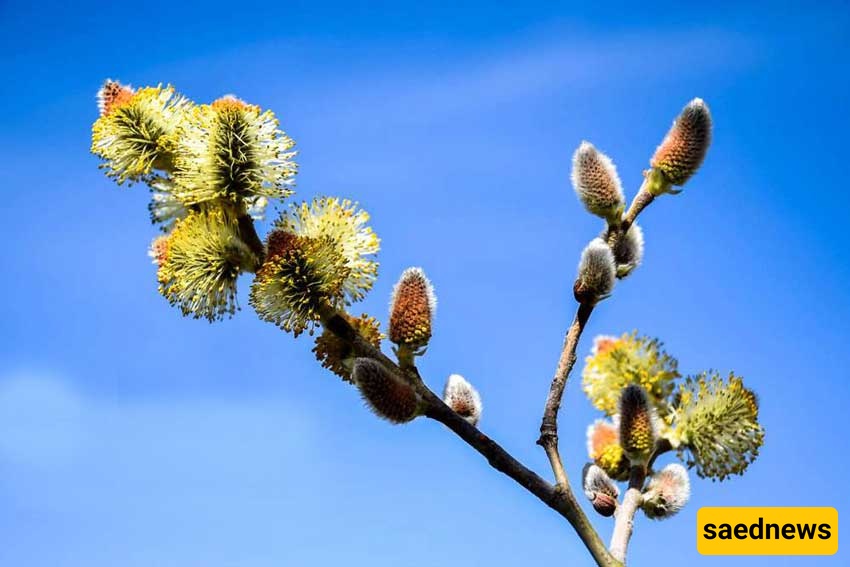
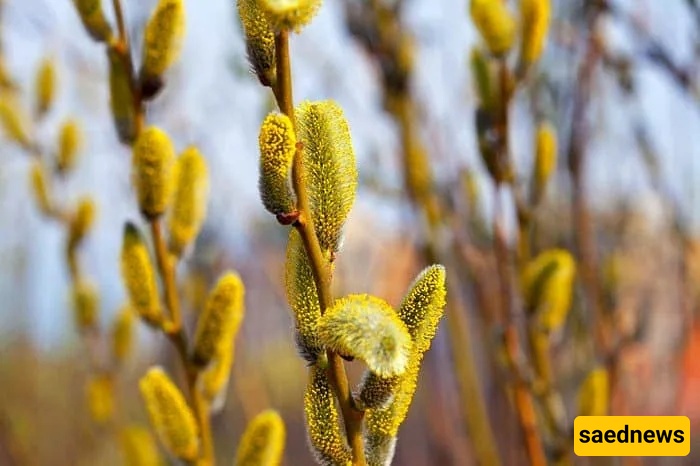
Bidmeshk is an ornamental tree or shrub from the willow family, producing pale yellow catkin-like flowers. Its height can reach up to 9 meters. Therefore, it is smaller than the common willow, but its catkins contain a fragrant essential oil.
The flowers appear as catkins before the leaves open and are fragrant. The best quality flowers are those with a deeper yellow color. This shrub is native to Iran.
The leaves differ between male and female plants. The upper side of the leaf is dark green, while the underside is hairy and lighter in color.
Leaves of female trees are usually oval-shaped and broader than those of male trees.
The plant has large, green, oval, and broad leaves. Sharp protrusions are also present on the bark and beneath it.
This plant attracts insects such as honeybees; therefore, pollination is carried out by insects.
The bark of the tree contains the glycoside salicin. In addition, wax, gum, oxalates, and tannins are also present in the bark.
The use of salicin glycoside has been found effective in controlling acute rheumatoid arthritis, in doses of 2 grams every three to four hours.
This tree is propagated by cuttings. For this purpose, a branch with a diameter of about 2–3 cm is cut in a way that it has at least three buds.
The top of the last bud is cut diagonally.
If a rooting hormone is available, the cuttings are dipped into it (available in Tehran markets for around 10,000 to 14,000 tomans), then planted in soil with the correct orientation.
Bidmeshk does not tolerate dry soils well, and soil moisture greatly supports its growth. Naturally, this plant grows near water sources such as rivers.
Although mature trees can tolerate short periods of drought, they will not grow properly, and such conditions may reduce the number of catkins in the next growth cycle.
Bidmeshk grows in regions where winter temperatures drop to around –23°C and can tolerate summer temperatures up to about 35°C without problems.
Bidmeshk prefers full sun but can also tolerate partial shade. It grows best in direct sunlight when the soil is heavy and moist. Low light causes the stems to become long and thin.
This plant is not very demanding regarding soil type and can grow in both light and heavy clay soils. However, it does not prefer alkaline soils and grows better in slightly acidic to neutral pH conditions.
Bidmeshk seeds have a very short viability period. They are sown superficially in spring. In addition to seed propagation, it can also be propagated using mature or semi-mature hardwood cuttings from the current season.
Bidmeshk responds very well to pruning. Every spring or every other year, before leaf emergence, it can be cut back to about 30 cm above the ground. This helps control its size and stimulates vigorous growth of long, arched stems bearing abundant catkins in spring.
Common pests include aphids and scale insects. Diseases such as rust and powdery mildew may occasionally affect the plant.
The distillate must have a strong aroma; a strong scent indicates higher concentration. Otherwise, its effectiveness is low. The smell should be pleasant; a bad odor indicates spoilage or contamination.
It should be completely clear; cloudiness may indicate contamination.
It is better stored in glass containers, as many plastic containers are not food-safe.
It should be kept in glass bottles away from light, heat, and sunlight to preserve its fragrance and essential oils.
The container must be tightly sealed; otherwise, the aroma gradually evaporates.