SAEDNEWS: The Garmon is a free-reed instrument with an air reservoir, similar to an accordion but slightly different. Commonly used in East Azerbaijan, it plays a key role in the region’s traditional music.
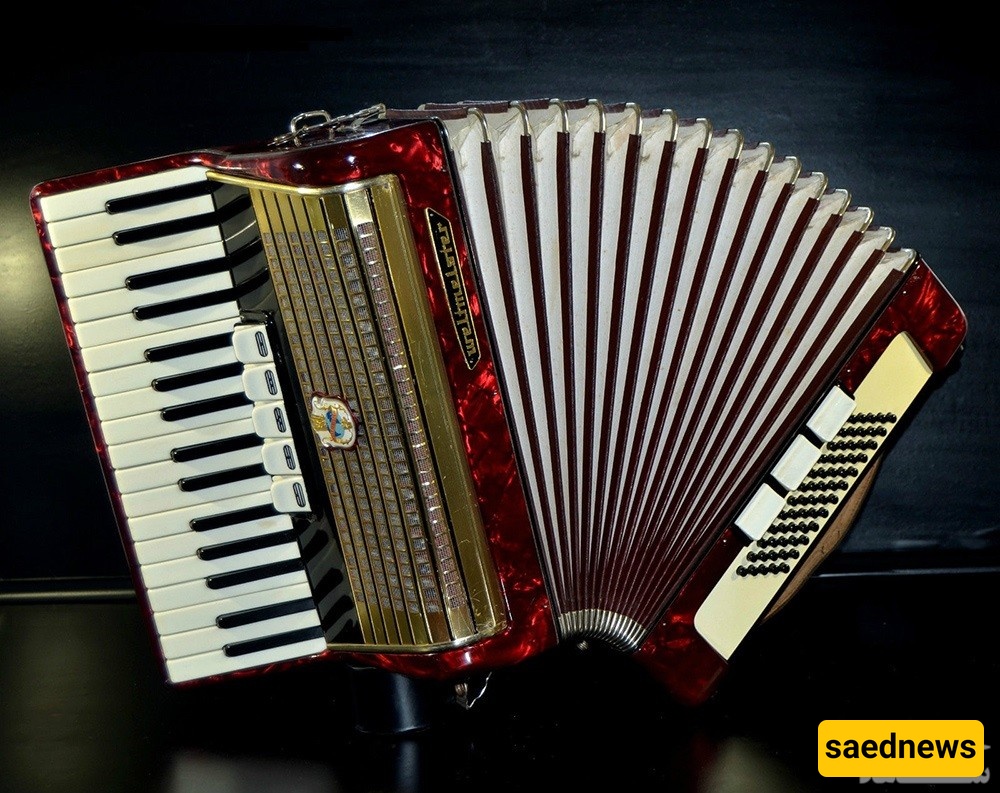
According to the Mo’in Dictionary, the term Garmon (also spelled Garman, Qarmon, or Qarman) refers to a keyed musical instrument resembling a small box. It is played by holding it in the hands and pressing its keys with the fingers. The Garmon is a free-reed aerophone with an air reservoir. This instrument is inspired by the accordion, which is a non-Iranian instrument.
In 1885, Bluborodov invented the first Russian Garmon design, which enabled playing chromatic scales (including the black keys).
This type of Garmon was later produced by Chalkov and became popular in Russia. It was initially called Harmonia or Harmon, but due to the difficulty of pronouncing the letter “H” in Caucasian languages, it became known as Qarmonia or Garmon. Russia has historically been the largest center for Garmon production.
Russian Garmon Variants:
Some notable types include Marin, Tatar, Arkhip, Karpushkin, Vitka, Valentin, Stalbov, and Kabardin. These variants are often named after the regions where they are used.
With the Garmon’s arrival in Azerbaijan during the second half of the 19th century, it became integrated into Azerbaijani music. The renowned Azerbaijani musician Ahed Ali An, known as Kurahed, perfected the chromatic scale of the Garmon. In Azerbaijani orchestras, particularly for national dances, it became recognized as a complete instrument under the name Azerbaijani Garmon. It is also considered a handcrafted art of East Azerbaijan, as the entire instrument is handmade. In Azerbaijani, the Garmon is called Garmon.
In Iran, the instrument is known as the Garmon, a keyboard-based instrument similar to the accordion. Its origins trace back to Russia and the Caucasus, eventually reaching Iran and becoming widespread in East Azerbaijan.
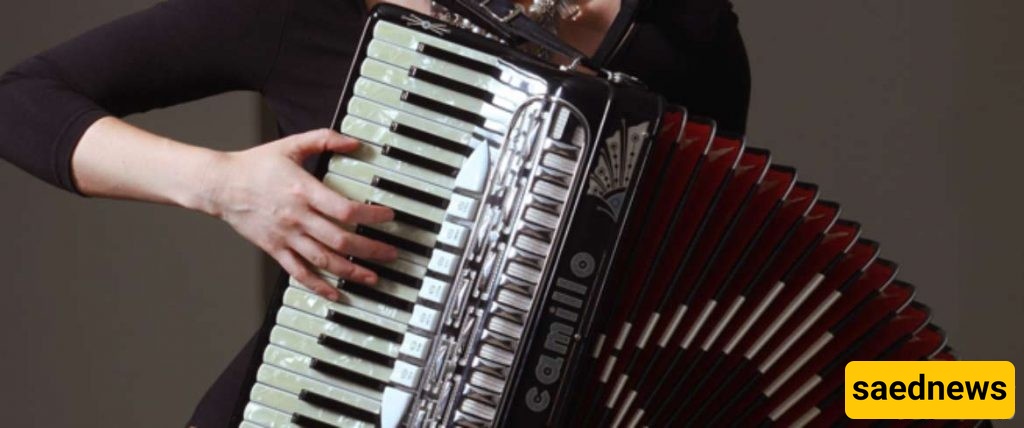
The main components include:
Straps: For holding the instrument close to the body.
Right-hand keys (griff): For playing the melody.
Left-hand keys: For producing bass notes and chords, complementing the right-hand keys.
Bellows: To provide air to the instrument.
Left-hand strap: For operating the bellows with the left hand.
Differences from the accordion:
The Garmon is tuned slightly lower than the bass accordion.
Its tuning is inspired by Azerbaijani tar.
The melodic range is about 2.5 octaves.
Right-hand keys: 30 keys; left-hand keys: 30 keys.
Played primarily with four fingers of the right hand, although the thumb is sometimes used for fast passages and ornaments.
Maintenance:
The Garmon should be kept away from moisture and cold air, at temperatures above 20°C, and the bellows should be operated gently.
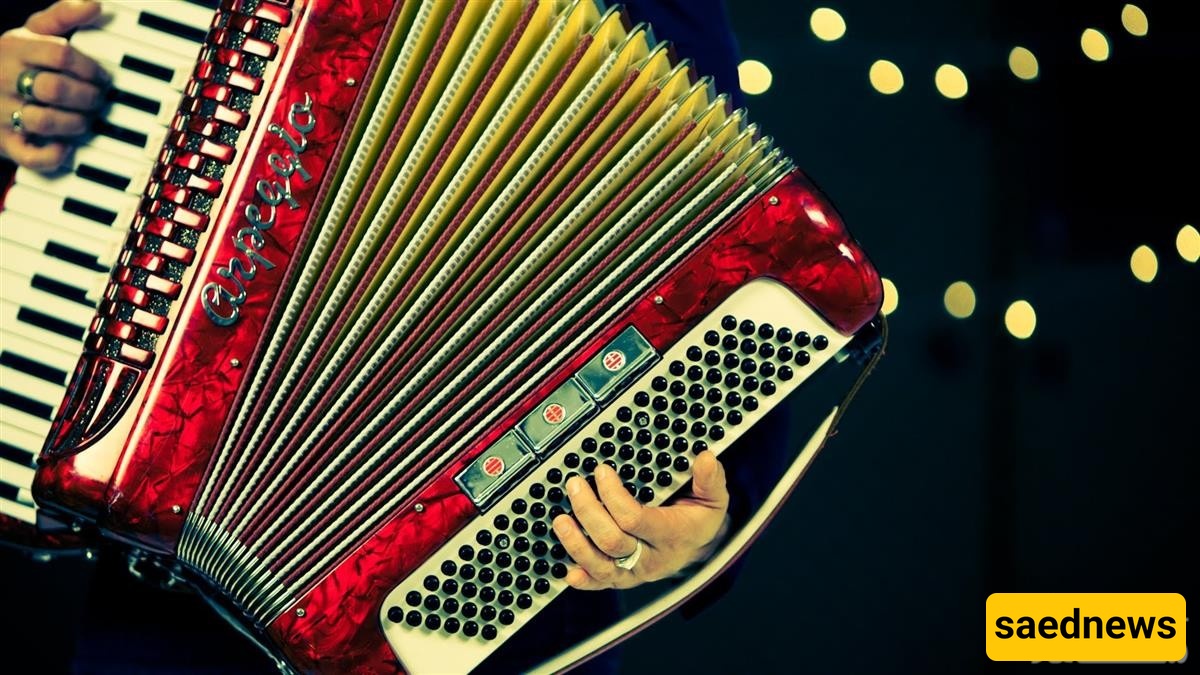
The Garmon consists of a bellows for air supply and two boxes on either side.
Right-hand box: Piano-style keys.
Left-hand box: Button-style keys.
Inside both boxes are mechanisms that activate the reeds. Each key is connected to multiple reeds. The reed rows, known as planka, are usually four, five, or six in number. The playing techniques of the Garmon differ slightly from those of the accordion.
The left-hand buttons produce single notes only, acting as drones.
The tuning is generally tempered but slightly lower than standard pitch, making it a transitional instrument.
Its range slightly exceeds two octaves.
Garmons are primarily made of walnut wood, with high-quality models using limewood for the body. Decorative elements often include mother-of-pearl inlays.
The Garmon is slightly smaller.
Its keys are smaller and sometimes rounded, unlike piano-style accordion keys.
Playing techniques differ slightly from those of the accordion.
Notable East Azerbaijan Garmon Makers:
Rasul Eqbali
Naser Pour Jologir
Dariush Khodadad Lashgari
Their instruments conform to standards of Garmons made in Baku.
Prominent Performers and Teachers:
Javad Alivandi
Yaghoub Esfandi
Yousef Abdolazimzadeh
Other artists, such as Gholamreza Karimzadeh, Mokhtar Khiabani, Mehdi Safarpour, and Rahim Shahriari, have popularized Azerbaijani music and the Garmon through concerts in Iran and abroad.
Famous Azerbaijani (Baku) Garmon Players:
Aftandil Esrafilov
Zakir Mirzayev
Khanlar Jafarov
Anvar Sadeghov
Golbahar Shakarli
Gohar Rzayeva
In Ahar, the instrument was almost forgotten, but former masters like Kiomarth (Abi) Javaheri, Miroualh Mousavi, and Mohammad Reza Sahbafar helped preserve its tradition.
The Garmon is widely used in celebrations and Azerbaijani weddings, particularly in tribal and rural communities, providing lively melodies and accompaniment for traditional dances.