SAEDNEWS: Potatoes are rich in starch. When you cut them, starch molecules are released onto their surface. When exposed to heat and a hot metal surface, this starch acts like glue, causing the potatoes to stick firmly.
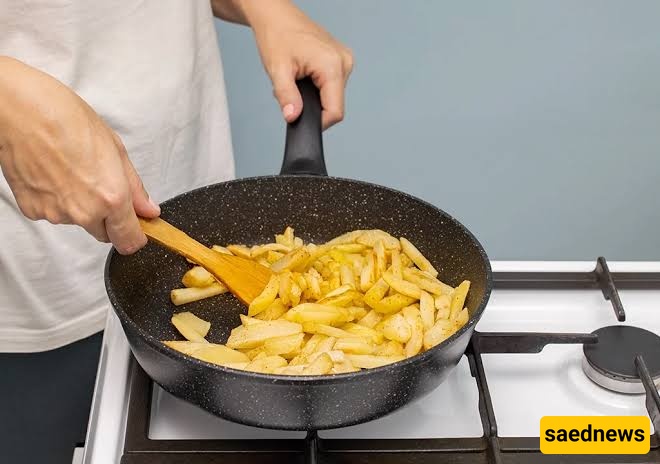
According to Saednews, You’re craving a plate of crispy, golden French fries. You carefully cut the potatoes, pour oil into a pan, and eagerly wait to hear that satisfying sizzle as you add them. But instead of frying to perfection, the potatoes stick to the bottom of the pan. That’s why “How can I keep potatoes from sticking to the pan?” is one of the most common questions in home cooking.
The good news is that this problem can be solved. In this article, we’ll get straight to the point and explore practical ways to turn this kitchen nightmare into an enjoyable cooking experience.
Before looking at the solutions, it helps to understand the main causes. Potatoes sticking to a pan is usually the result of several factors, but the pan itself is often one of the biggest culprits.
Let’s be honest: you can’t expect excellent results when using the wrong equipment. Cheap, old, and damaged pans are among the main reasons food, especially potatoes, sticks to the cooking surface.
Damaged nonstick coating: Pans with numerous scratches or worn-out nonstick coatings lose their effectiveness and become more likely to trap potatoes. Potato starch readily sticks to uneven metal surfaces.
Uneven heat distribution: Pans made from thin, low-quality metal do not distribute heat evenly. In hot spots, potatoes may burn and stick before they cook properly, while in cooler areas, they may become soft and mushy.
Unsuitable cookware: Stainless steel pans are excellent kitchen tools, but frying potatoes in them requires a specific technique, which we’ll explain below. Without the right approach, sticking is likely.
Therefore, the first and most important step in preventing potatoes from sticking is to reconsider your choice of pan.
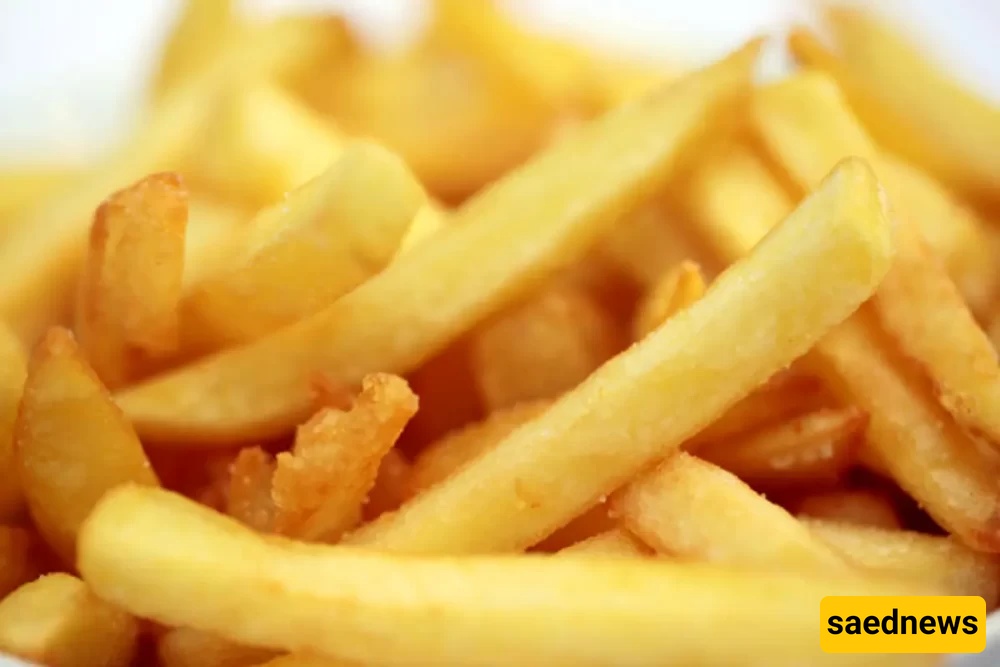
Potatoes are rich in starch. When you cut them, starch molecules are released onto their surfaces. When exposed to heat and a hot metal surface, this starch can act like glue, causing the potatoes to stick firmly to the pan.
Adding potatoes to oil that isn’t hot enough can quickly lead to disappointing results. Properly heated oil helps the potatoes begin frying and develop a crust, reducing the likelihood of sticking.
When the oil is too cold, potatoes may absorb more oil, become soggy, and cling to the bottom of the pan.
Adding too many potatoes at once creates two major problems. First, it significantly lowers the oil temperature. Second, the potatoes begin to steam rather than fry.
Excess moisture in the pan is the enemy of crispiness and can contribute to soggy potatoes that stick together or to the pan.
Now that we understand the main causes, let’s look at a few simple, practical techniques that can help you avoid this problem.
A good-quality pan can do more than prevent potatoes from sticking; it can improve the results of many other dishes, too.
Nonstick pans: Look for high-quality pans with durable granite-style, ceramic, or PTFE-based nonstick coatings. These are excellent for everyday cooking and make frying easier.
Cast-iron pans: When properly seasoned, cast iron offers excellent heat retention and can develop a naturally nonstick cooking surface. Fried potatoes cooked in cast iron can have exceptional flavor and texture.
If you’re looking for a durable, high-quality frying pan, the article recommends Kafchak, a cookware retailer offering various professional cast-iron, granite-coated, and nonstick pans.
The secret to restaurant-style fries often lies in the preparation. Follow these steps to reduce sticking:
Wash away excess starch: After cutting the potatoes into strips, place them in a large bowl of cold water. Gently stir them with your hands until the water becomes cloudy. That cloudiness comes from excess starch. Drain the water and repeat the process once or twice more, until the water is much clearer.
Dry the potatoes thoroughly: Never skip this step! Wet potatoes are a major problem when frying in hot oil. Spread them on a clean kitchen towel or paper towels and dry them completely. The drier the potatoes, the better the chance of achieving a crispy texture.
Place the empty pan over medium heat and allow it to warm slightly. Then add the oil and let it heat thoroughly.
To check whether the oil is ready, carefully add a small potato strip. If tiny bubbles immediately form around it and you hear a gentle sizzle, the oil is likely hot enough to begin frying.
Avoid letting the oil smoke, as excessive heat can burn the potatoes and degrade the oil.
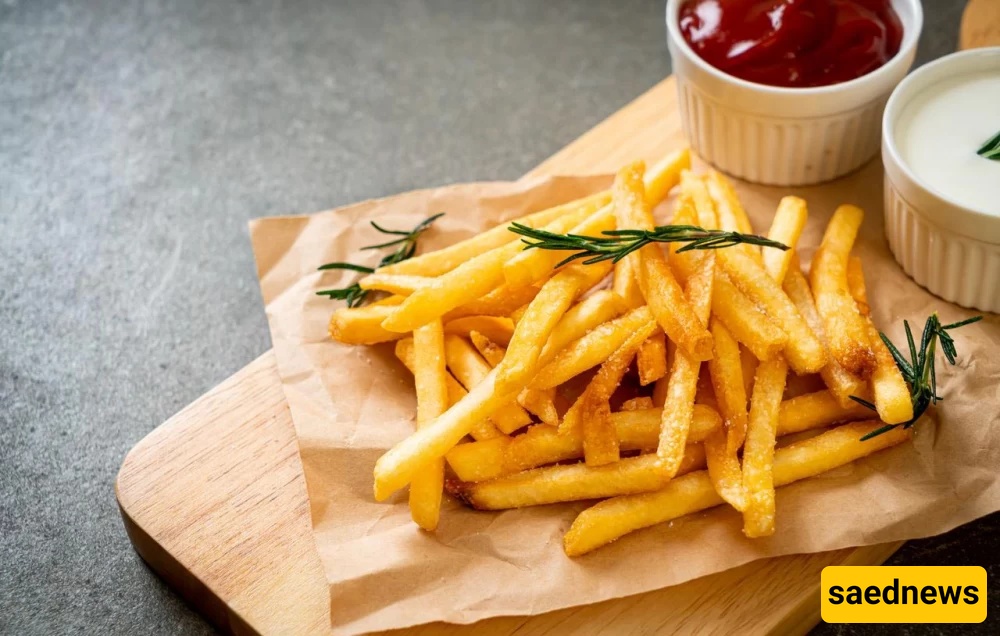
As mentioned earlier, fry the potatoes in several batches rather than overcrowding the pan.
Leave enough space between the strips for the hot oil to circulate freely. This helps maintain the temperature and allows the potatoes to fry instead of steam.
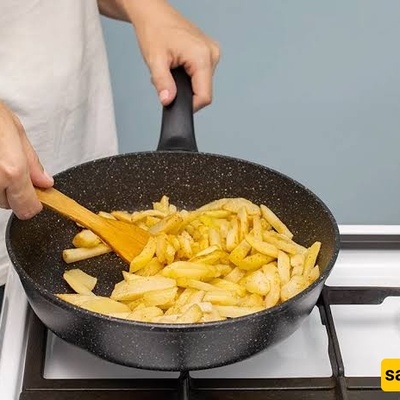
One of the biggest mistakes is stirring the potatoes immediately after adding them to the hot oil.
Instead, let them cook undisturbed for at least 2–3 minutes, depending on their thickness and the oil temperature. During this time, a golden, crispy crust can form on the underside, making the potatoes easier to release from the pan.
Once the potatoes have developed a crust, gently turn them with a spatula and continue frying until golden and crispy.
In most cases, the problem comes down to a few simple factors: excess starch, insufficiently heated oil, wet potatoes, an overcrowded pan, or damaged cookware.
For the best results, wash and thoroughly dry the potatoes, heat the oil properly, fry in small batches, and avoid moving the potatoes before they have had time to develop a crust.