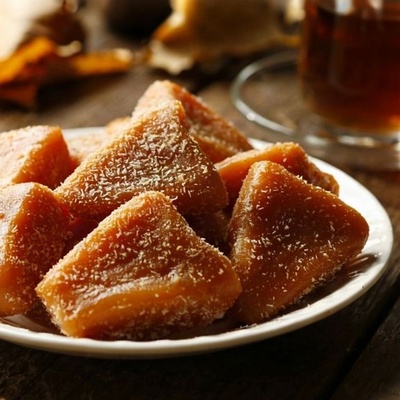
SAEDNEWS: Persimmon Basloq is a traditional and popular autumn sweet that can be easily made with simple ingredients without using an oven.
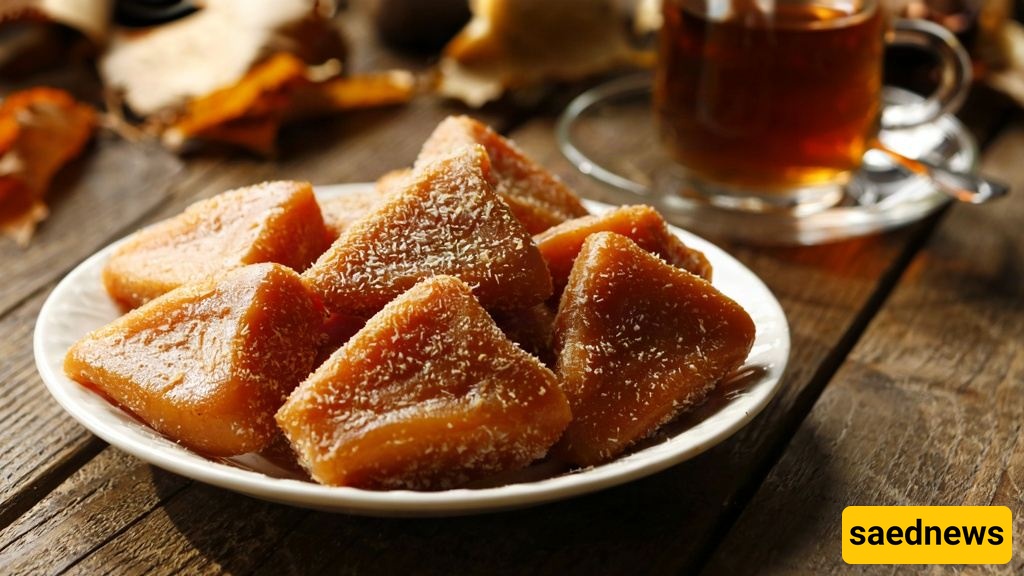
According to Saednews, Persimmon baslogh is a delicious, budget-friendly sweet that is perfect for autumn and winter. It is made with ripe persimmons, starch, sugar, and butter. No oven is needed; the mixture is cooked on the stovetop and then chilled in the refrigerator until firm enough to cut into pieces.
In this article, you will learn how to make persimmon baslogh step by step. If you are looking for a simple yet professional way to prepare this traditional-style persimmon sweet, keep reading.
The ingredients are simple and commonly found in most kitchens. This recipe makes approximately 24 pieces.
Strained persimmon purée: 3 cups (250 ml per cup)
Wheat starch (or flower starch): 1–1½ cups, depending on the consistency of the persimmons
Sugar: 1–1½ cups, depending on the sweetness of the fruit
Butter: 50 g
Vanilla extract: 1 teaspoon
Desiccated coconut: As needed, for coating
Tip: Adjust the amount of starch and sugar according to the sweetness and water content of your persimmons. If the fruit is very sweet, reduce the sugar slightly.
Wash and peel the persimmons. Remove any seeds, if present. Place the fruit flesh in a blender or food processor without adding water, and blend until smooth.
Pass the purée through a sieve to remove any fibers or large pieces. Measure out 3 cups of strained persimmon purée using a 250 ml measuring cup.
Pour the starch into a saucepan and gradually add some of the persimmon purée, stirring continuously until the starch dissolves completely and no lumps remain.
Add the remaining purée and sugar, then mix well until everything is thoroughly combined.
Complete this step before placing the saucepan over the heat. If lumps remain despite stirring, strain the mixture once more.
Place the saucepan over low heat and begin stirring continuously. Make sure to scrape the bottom and sides of the pan with a spoon or spatula to prevent the mixture from sticking or burning.
As the mixture thickens, stirring will become more difficult. Continue cooking until it is no longer runny and moves like a thick paste when stirred.
To check the consistency, drag your spoon across the bottom of the saucepan. If the trail remains visible for one or two seconds before the mixture fills it in, the mixture has reached the right consistency.
Allow approximately 60–90 minutes for cooking, but do not rely on time alone. If the mixture is still as runny as pudding and pours easily from a spoon, it needs more cooking. Otherwise, it may not firm up enough to cut after chilling.
Once the mixture has thickened completely, add the butter and vanilla extract. Stir well until the butter melts and is fully incorporated.
Remove the saucepan from the heat.
Choose a shallow dish and lightly grease the bottom and sides with a little oil or butter.
Pour the baslogh mixture into the dish and smooth the surface with the back of a spoon.
Aim for a thickness of approximately 1.5–2 cm. If the layer would be too thick in your dish, divide the mixture between two dishes.
Let the mixture cool slightly, but do not leave it at room temperature for several hours. Once the initial heat has subsided, place the dish in the refrigerator. Cover it after it has cooled.
Refrigerate the dish for approximately 8–10 hours, or until the baslogh is completely cold and firm.
If you are preparing this sweet for a gathering, it is best to make it the day before.
Check the texture before removing it from the dish. If it is still soft and does not hold its shape when pressed gently, do not cut it yet. See the tips below for advice on correcting a mixture that has not set properly.
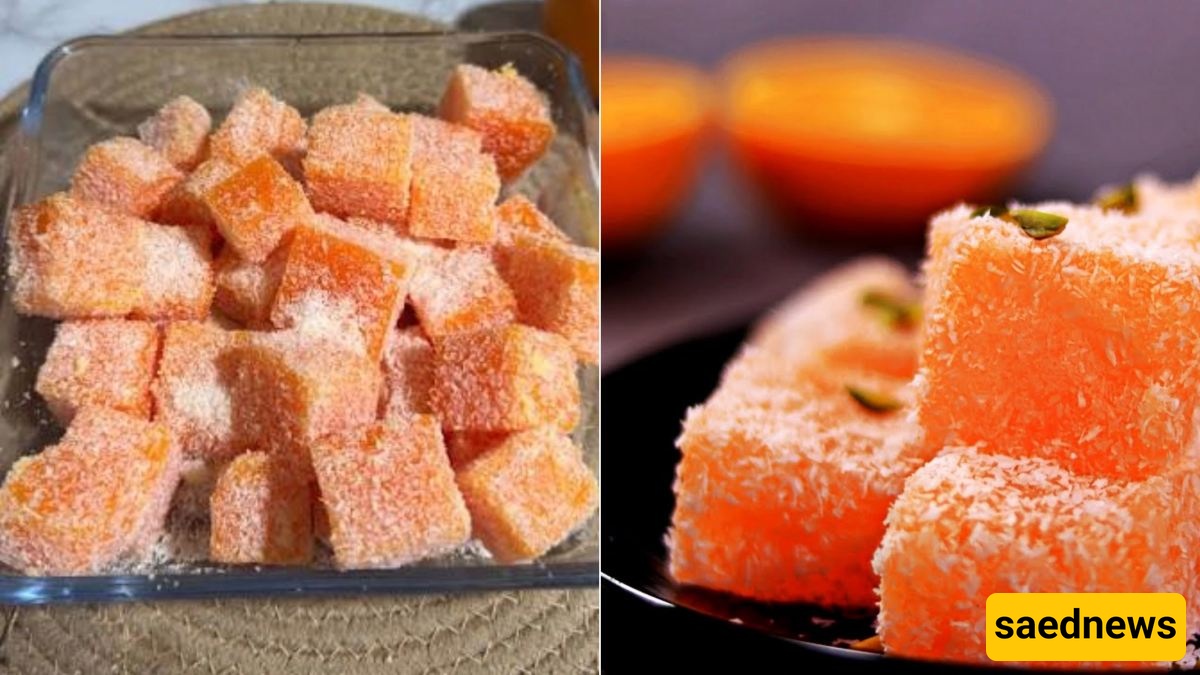
Once fully chilled, cut the baslogh into approximately 24 equal-sized pieces using a sharp knife.
To prevent sticking, lightly grease the knife blade with a little oil. Clean the blade after every few cuts for neater results.
Place the desiccated coconut on a plate. Roll each piece of baslogh in the coconut until all sides are coated.
Arrange the finished pieces on a serving plate.
Use fully ripe, sweet persimmons. Unripe fruit can have an astringent taste and negatively affect the flavor of the sweet.
If the persimmons are particularly watery, drain some of the excess liquid from the purée using a fine sieve or clean cloth.
The consistency of the mixture is the most important factor in making successful baslogh.
Overcooked: The sweet may become excessively firm and dry.
Undercooked: The mixture may remain soft and difficult to cut.
Properly cooked: The trail left by a spoon on the bottom of the saucepan remains visible for one or two seconds.
Stir continuously throughout cooking, making sure the spoon reaches the bottom and corners of the saucepan.
Using a heavy-bottomed saucepan can help prevent scorching. If the mixture begins to burn, transfer the unburnt portion to another saucepan without scraping in the burnt residue.
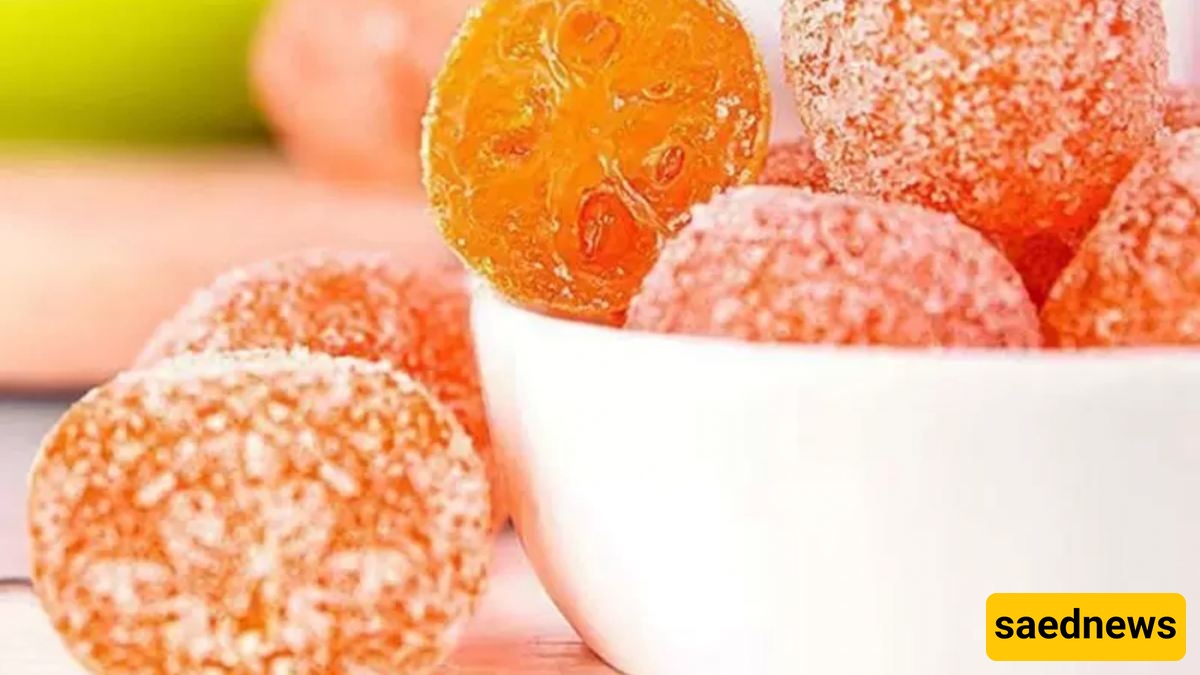
Always allow the baslogh to chill completely before cutting. Use a sharp knife and lightly oil the blade to reduce sticking.
Wipe the blade clean after every few cuts to achieve smooth, neat pieces.
Store persimmon baslogh in an airtight container in the refrigerator. Homemade baslogh can generally be kept refrigerated for 5–7 days.
For longer storage, you can freeze the pieces. Thaw them in the refrigerator for several hours before serving.
Persimmon baslogh is a simple, oven-free homemade sweet that makes the most of seasonal fruit. With ripe persimmons, a few basic ingredients, and enough time to cook and chill the mixture properly, you can prepare a delicious treat with a soft yet sliceable texture.
Serve it with tea or coffee, or arrange it on a dessert platter for family gatherings and special occasions.