SAEDNEWS: If you want your pasta to be neither undercooked and hard nor overly soft and mushy, you need to adjust the cooking time based on the type of pasta, the method of steaming, and the quality of the pasta.
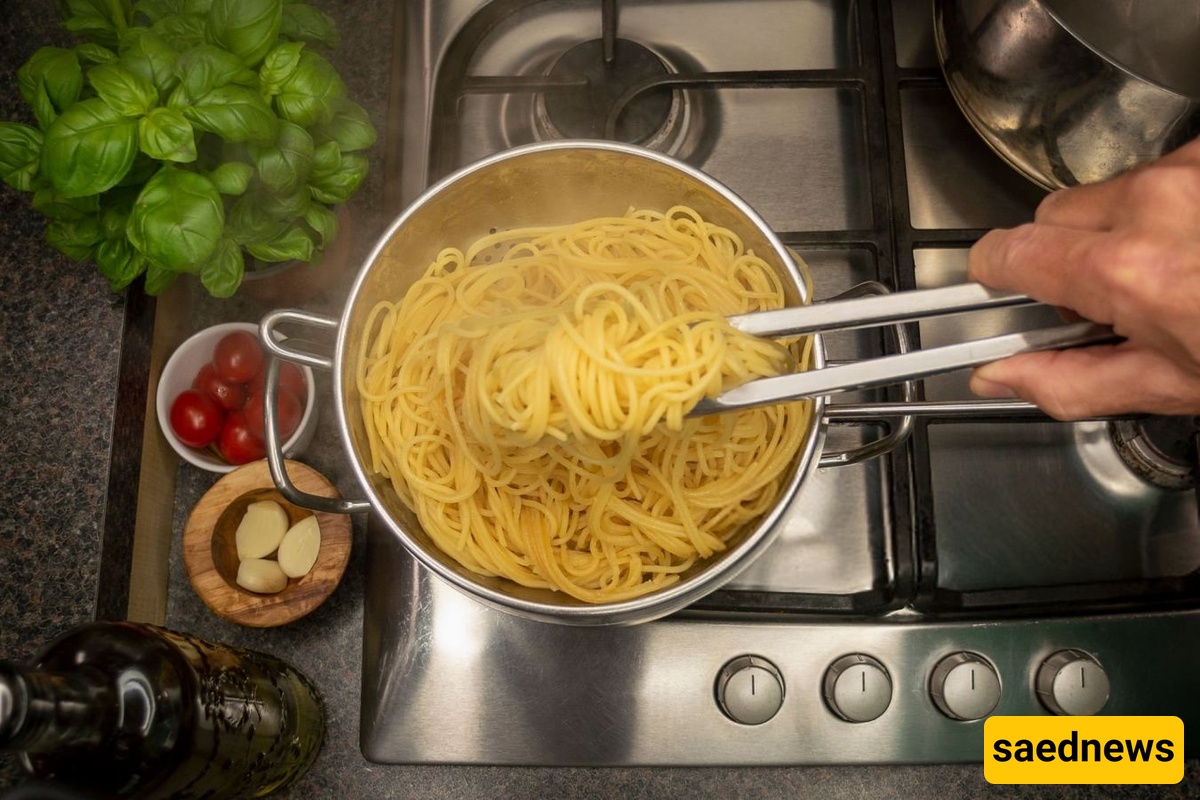
According to Saednews, A common question for many cooks is: How many minutes should pasta be boiled to achieve the ideal texture? It should be neither raw and hard nor overly soft and mushy. The answer depends on several factors, from the thickness of the pasta to the final cooking method, such as steaming or serving immediately.
Pasta is made from durum wheat flour and water. During cooking, the starch in the flour absorbs water, causing the pasta to soften. If the cooking time is too short, the center of the pasta remains undercooked. If it is cooked for too long, the pasta absorbs too much water and its structure begins to break down, resulting in a soft, sticky, and mushy texture.
To achieve perfectly cooked pasta, there needs to be a careful balance between tenderness and firmness. In Italian, this texture is called “al dente,” meaning that the pasta is tender but still offers a slight resistance when bitten. Although many Iranian dishes are traditionally enjoyed more thoroughly cooked, it is still important to prevent the pasta from becoming mushy.
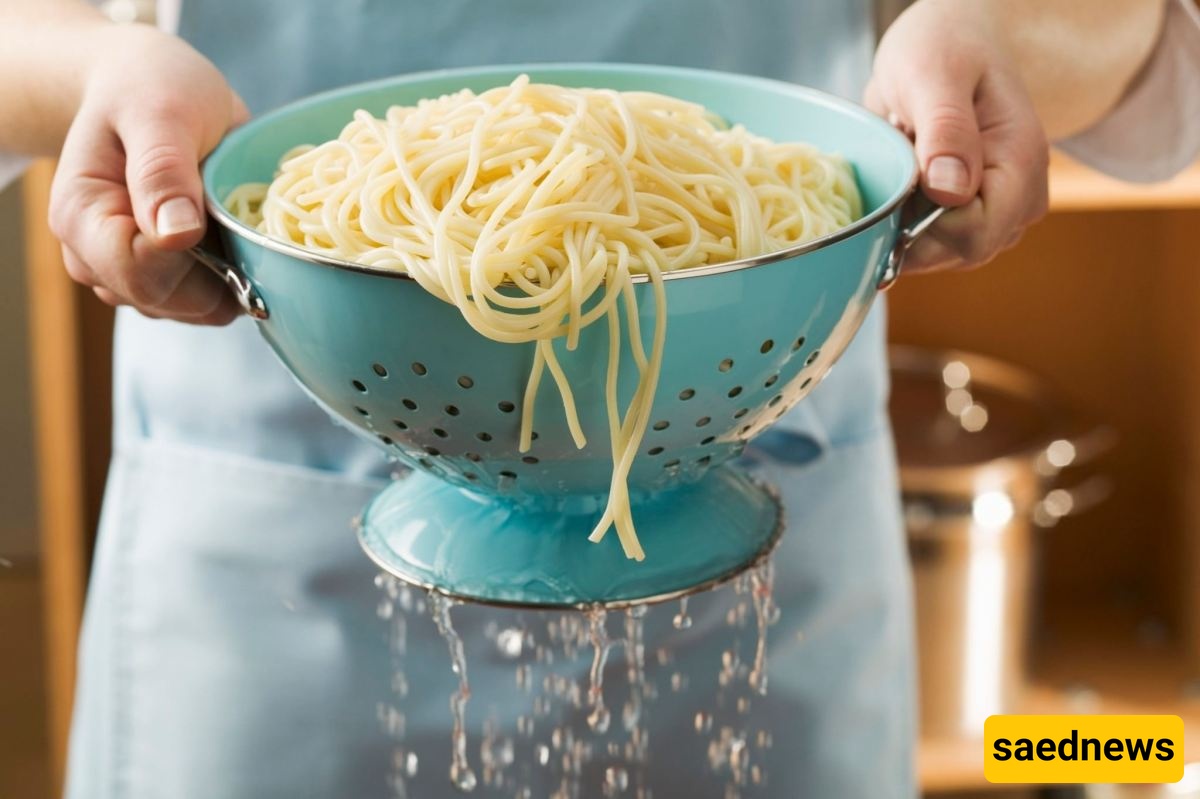
Based on the factors mentioned above, the following table provides approximate boiling times for common types of dried pasta. These times are calculated from the moment the water returns to a boil after the pasta is added.
Type of Pasta | Approximate Boiling Time |
|---|---|
Thin spaghetti | 5–7 minutes |
Regular spaghetti | 7–9 minutes |
Thick spaghetti | 9–11 minutes |
Small-shaped pasta | 7–10 minutes |
Large and thick-shaped pasta | 10–13 minutes |
Dried lasagna sheets | About 8–10 minutes |
Fresh pasta | About 2–4 minutes |
Important: If you plan to prepare pasta in the traditional Iranian style with fried meat sauce and tomato paste and then let it steam, drain the pasta about 2 minutes earlier than the cooking time indicated on the package. The pasta will continue cooking during the 20–45 minutes of steaming. If it is already fully cooked when drained, it may eventually become overly soft and mushy.
For the best results, follow these steps carefully:
Use a large, spacious pot. It should be big enough to give the pasta plenty of room to move freely in the water. Cooking pasta in a small pot is one of the main reasons the pieces stick together and cook unevenly.
Fill the pot with water to about two-thirds of its capacity and place it over high heat. Once the water reaches a full boil, add salt.
A standard ratio is approximately 7–10 grams of salt per liter of water. Salt not only seasons the pasta but also slightly increases the boiling temperature of the water and contributes to the final texture.
Gently place the pasta into the boiling water. If you are cooking long pasta, such as spaghetti, place one end into the water first. After a few seconds, once the submerged portion softens, gently press the rest of the pasta into the pot.
Immediately after adding the pasta, stir it with a wooden spoon or spatula to prevent it from sticking to the bottom of the pot. Repeat this several times during the first few minutes.
Once the water returns to a boil, reduce the heat slightly so that the water continues cooking at a gentle, steady boil.
Starting from around the fifth minute, remove one strand or piece of pasta with a fork and allow it to cool slightly. Taste it.
The ideal pasta should have a soft exterior while the center still offers a small amount of resistance. Once it reaches this stage, drain the pasta in a colander and rinse it quickly.
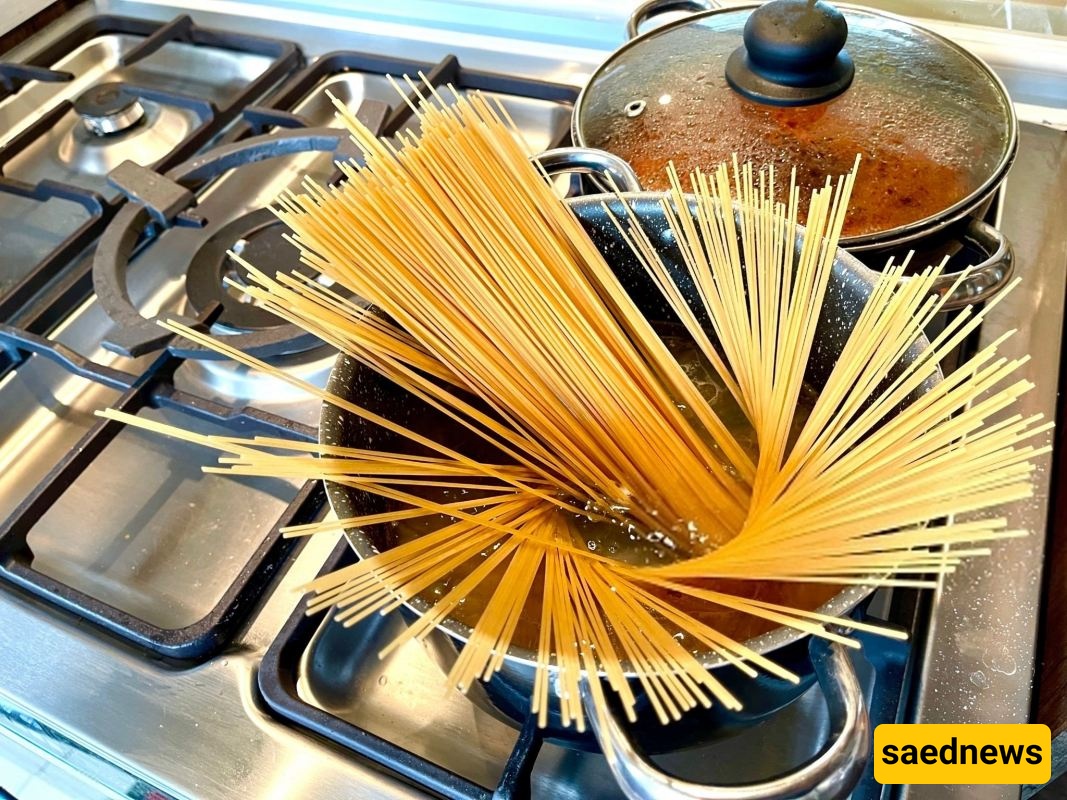
The best and most accurate way to determine whether pasta is cooked is simply to taste a piece. Instead of throwing pasta against the ceiling or wall, just take out one piece and try it.
Signs that pasta is ready to be drained include:
The pasta does not break easily when bent.
The outside has become slightly translucent and is no longer floury in appearance.
The center is no longer hard, but it is not mushy either.
The pasta retains its shape and has a slightly elastic texture when eaten.
The steaming time depends on the amount of food, the type of pot, and your personal preference:
Without a crispy bottom layer (tahdig) or with a thin tahdig: about 20–30 minutes
With a thick tahdig or a large quantity of pasta: about 35–45 minutes
When steaming the pasta, reduce the heat under the pot to very low. If the heat is too high, the tahdig may burn while the pasta on top becomes overly soft.
The heat should be just high enough to create a gentle amount of steam inside the pot.