SAEDNEWS: Gijavash Tare is one of the most fragrant and authentic traditional stews from Gilan, prepared with distinctive wild mountain herbs. In this article, you’ll learn the complete method for cooking this classic local dish.
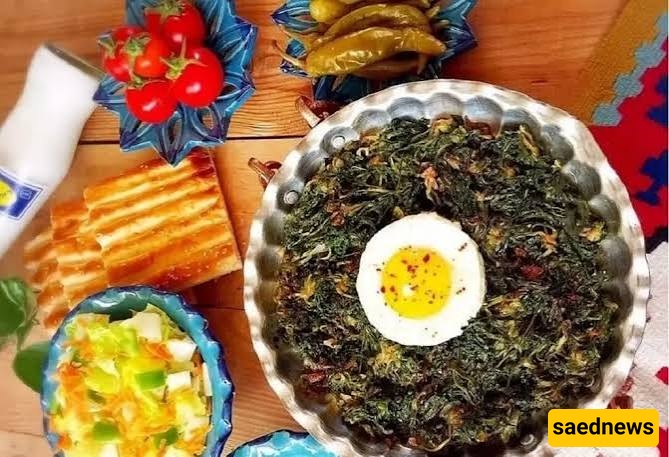
According to Saednews, To prepare Gijavash Tare, first thoroughly wash the local Gijavash and leek greens, then finely chop them. Mix the herbs with eggs, salt, pepper, and, if desired, a small amount of flour until you have a smooth mixture. Pour the mixture into a pan containing hot oil and spread it either as a kuku (herb-and-egg omelet) or in a thin layer. Once one side is fried, turn it over and cook the other side until golden and fully set. Gijavash Tare is usually served warm with bread, fresh herbs, or yogurt.
Gijavash Tare is one of the most authentic and aromatic traditional dishes of Gilan Province, prepared with distinctive wild mountain herbs. As a representation of northern Iranian culinary culture, this dish is especially valued among Gilan families not only for the traditional qualities of its fragrant herbs but also for its unique flavor and gentle character. The main ingredient is Gijavash, a herb that grows in the mountainous areas of Gilan and has an aroma reminiscent of a combination of wild herbs and garlic. Served alongside Iranian kateh rice and salted fish or fish roe (ashpal), this dish offers a memorable taste of northern Iran. Below is a traditional method for preparing Gijavash Tare.
Gijavash: 200 g
Eggs: 3
Fresh garlic leaves: 100 g
Vegetable oil: as needed
Salt, black pepper, and turmeric: as needed
Gijavash plays the central role in this dish. Along with it, a small amount of parsley, cilantro, and dill can be used to create a more balanced aroma and flavor. Fresh or dried garlic is another essential flavoring ingredient. You will also need three eggs, enough authentic Gilan olive oil or vegetable oil, turmeric, salt, and black pepper.
Clean the herbs thoroughly, wash them well, and allow them to dry completely. The herbs should be chopped very finely and evenly so that the finished dish has a cohesive texture. Finely mince the garlic so it is ready for sautéing. Place the prepared herbs in a colander or basket to ensure that any remaining moisture drains away completely.
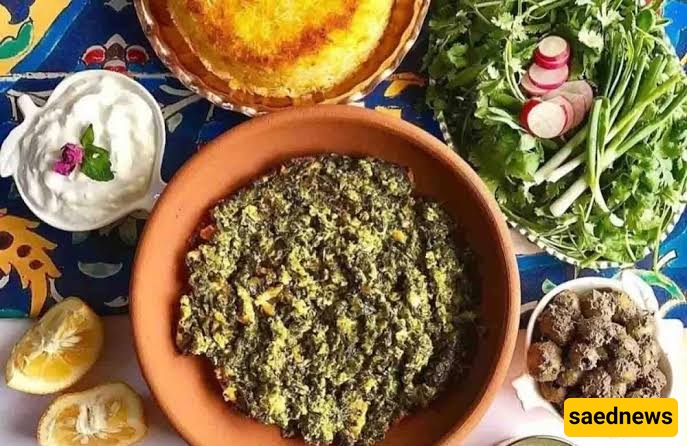
Heat some oil in a large frying pan or suitable pot, then add the chopped garlic. As soon as the garlic becomes fragrant, add the turmeric and sauté briefly until its color develops. Add the chopped herbs and cook them over medium heat. The herbs should be sautéed until they become slightly darker and release their full aroma. Be careful not to burn them or dry them out excessively.
Once the herbs have been thoroughly sautéed, add about one small glass of boiling water to the pan. Cover the pan and reduce the heat, allowing the herbs to cook gently in the steam until completely tender. At this stage, the flavors of the herbs, garlic, and turmeric will blend together, creating the base for the dish.
Season with salt and black pepper according to taste. Allow the added water to evaporate completely so that the final mixture becomes thick rather than watery.
In a separate bowl, beat the eggs well with a little salt and pepper until smooth. Slowly pour the beaten eggs over the cooked and sautéed herbs. Let the eggs set slightly before gently mixing them with the herbs.
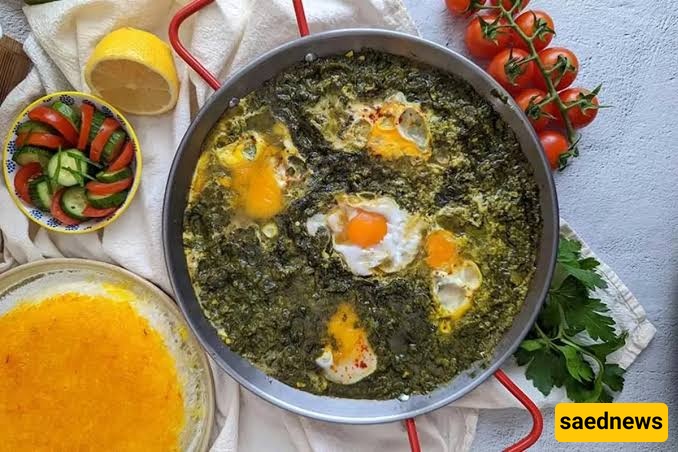
Keep the heat low so the eggs cook gradually and the mixture becomes fully set. Avoid overcooking the eggs, as they should remain tender while holding together with the herbs.
Transfer the finished Gijavash Tare to a serving dish and, if desired, garnish it with a few pieces of pickled garlic or salted fish. The traditional accompaniment is Iranian kateh rice, preferably served with local butter or regional oil.
With its combination of garlic and aromatic mountain herbs, Gijavash Tare is a flavorful and satisfying northern Iranian dish that makes an excellent choice for a traditional main meal.