SAEDNEWS: Cashews are a type of nut that, in addition to their delicious taste, offer a wide range of exceptional health benefits. Stay with us until the end of this article to discover more.
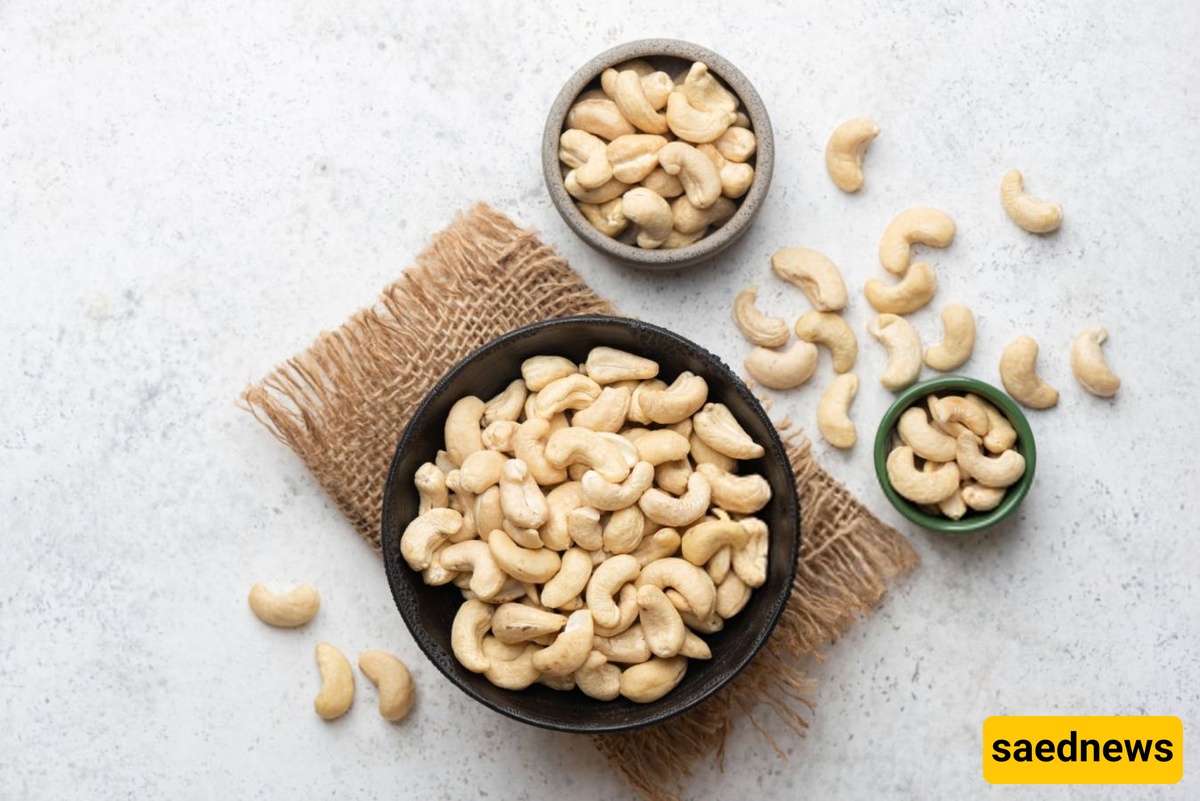
According to Saednews, Cashews are the subject of our discussion. Also known as cashew nuts, they are among the most popular nuts in many countries due to their distinctive and delicious taste. Cashews are kidney-shaped nuts that grow beneath the fruit of the cashew tree.
Although cashews are native to southeastern Brazil, they are now enjoyed by people all over the world. In the 16th century, Portuguese explorers introduced cashews to India and several African countries.
Today, India, Tanzania, Mozambique, Nigeria, and Brazil are among the major producers of cashews. In some countries, including Brazil and Nigeria, cashews are processed into a delicious, smooth cashew butter by grinding and pressing the nuts.
Every 100 grams of dry-roasted, unsalted cashews contains approximately 574 calories.
Nutrient | Amount per 100 g |
|---|---|
Calories | 574 kcal |
Carbohydrates | 32.69 g |
Protein | 15.31 g |
Fat | 46.35 g |
Water | 1.70 g |
Fiber | 3.00 g |
Sugar | 5.01 g |
Cholesterol | 0.00 mg |
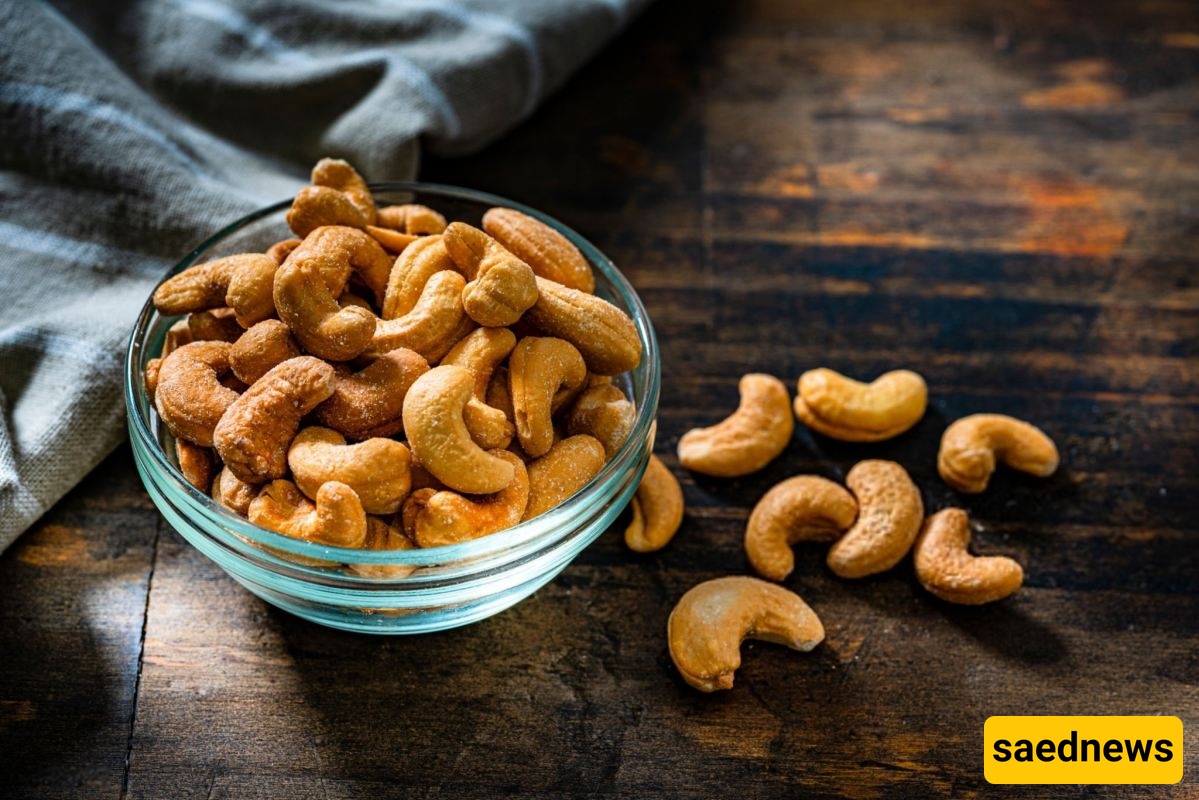
Every 100 grams of dry-roasted, salted cashews contains approximately 574 calories.
Nutrient | Amount per 100 g |
|---|---|
Calories | 574 kcal |
Carbohydrates | 32.69 g |
Protein | 15.31 g |
Fat | 46.35 g |
Water | 1.70 g |
Fiber | 3.00 g |
Sugar | 5.01 g |
Cholesterol | 0.00 mg |
Every 100 grams of raw cashews contains approximately 553 calories.
Nutrient | Amount per 100 g |
|---|---|
Calories | 553 kcal |
Carbohydrates | 30.19 g |
Protein | 18.22 g |
Fat | 43.85 g |
Water | 5.20 g |
Fiber | 3.30 g |
Sugar | 5.91 g |
Cholesterol | 0.00 mg |
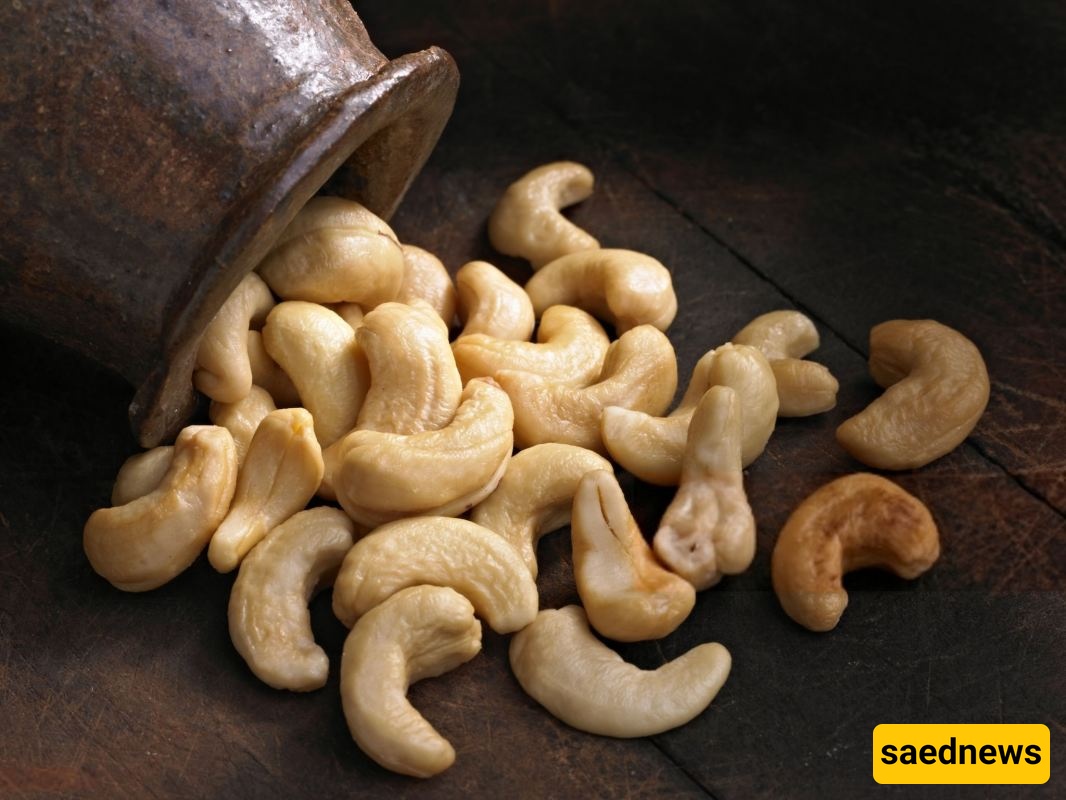
Cashews contain beneficial unsaturated fats, including oleic acid, as well as antioxidants. They also provide magnesium, an important mineral that supports normal cardiovascular function and healthy blood pressure.
The magnesium found in cashews plays an important role in nerve and muscle function. Adequate magnesium intake is essential for overall nervous system health.
Cashews contain protein, fiber, and healthy fats, which may help slow digestion and support balanced blood sugar levels when consumed as part of a healthy diet.
Despite being relatively high in calories, cashews can be included in a balanced weight-management plan. Their combination of protein, fiber, and healthy fats may help promote fullness and reduce appetite.
Portion control is important because cashews are energy-dense.
Cashews provide important nutrients, including copper and other minerals involved in the body's antioxidant defenses. These nutrients help protect cells from oxidative stress caused by free radicals.
Cashews contain dietary fiber, which contributes to normal digestive function and may help support regular bowel movements when consumed as part of a fiber-rich diet.
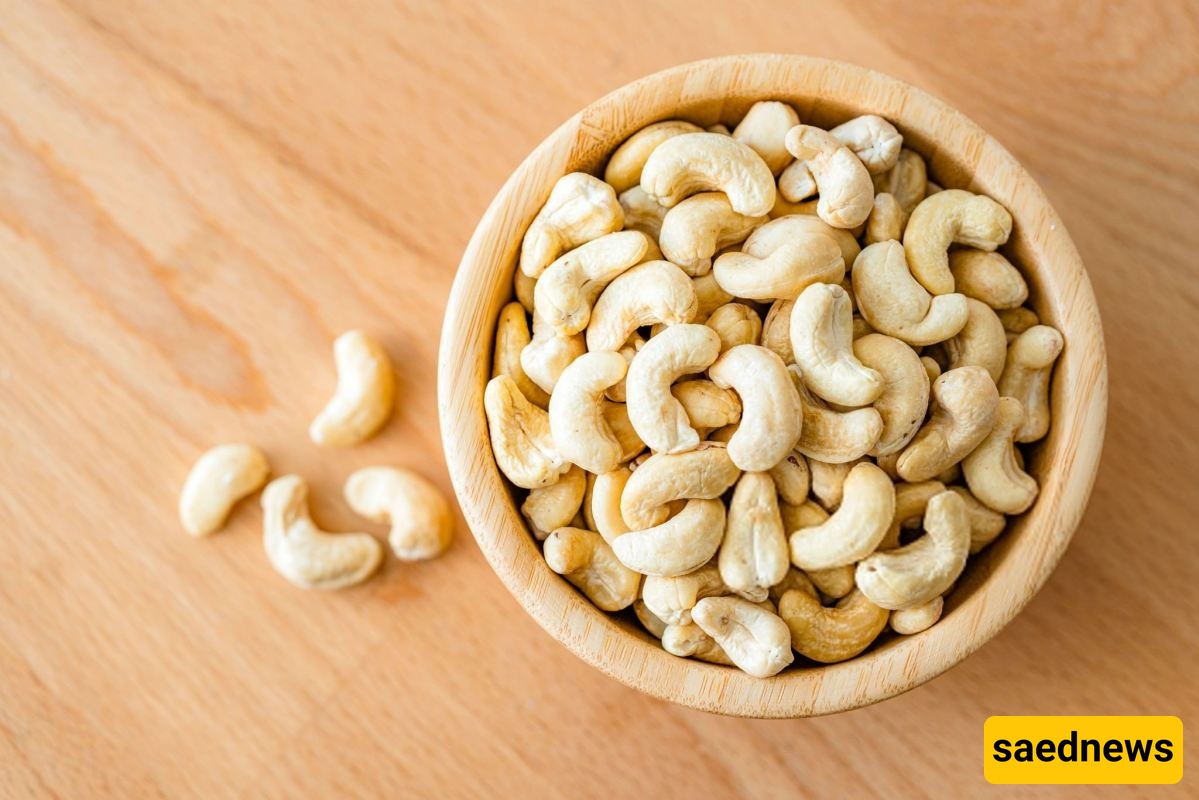
Cashews provide minerals such as magnesium and phosphorus, both of which are important for maintaining healthy bones and teeth. These nutrients also contribute to several essential functions throughout the body.
Cashews contain minerals such as copper and iron. Copper contributes to normal iron metabolism and the formation of red blood cells, while iron is essential for oxygen transport throughout the body.
Copper is involved in several biological processes, including the production of melanin, the pigment responsible for the natural color of hair and skin. Cashews can contribute copper and other nutrients to a balanced diet.
The copper and antioxidant nutrients found in cashews contribute to normal skin health and cellular protection. A nutritious, balanced diet rich in essential vitamins and minerals is important for maintaining healthy-looking skin.
Cashews are a calorie-dense but nutritious nut that provides protein, healthy fats, fiber, magnesium, copper, phosphorus, and iron. Whether eaten raw or roasted, they can be a valuable part of a balanced diet when consumed in appropriate portions.