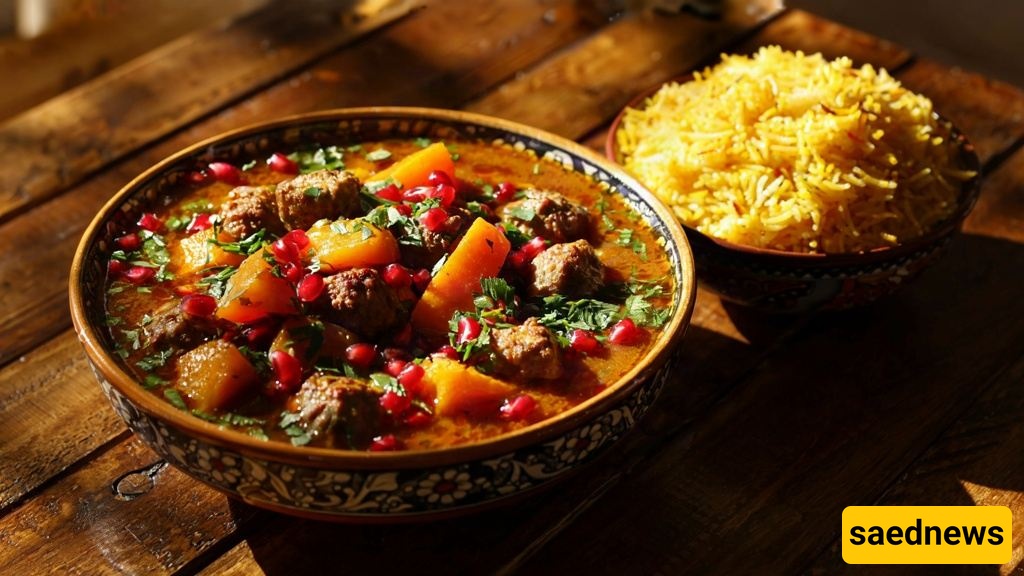
SAEDNEWS: Pumpkin stew is one of the most traditional and delightful Persian stews. The gentle sweetness of pumpkin, the warm aroma of cinnamon, and the tangy flavor of pomegranate juice come together to create a uniquely delicious and comforting dish.
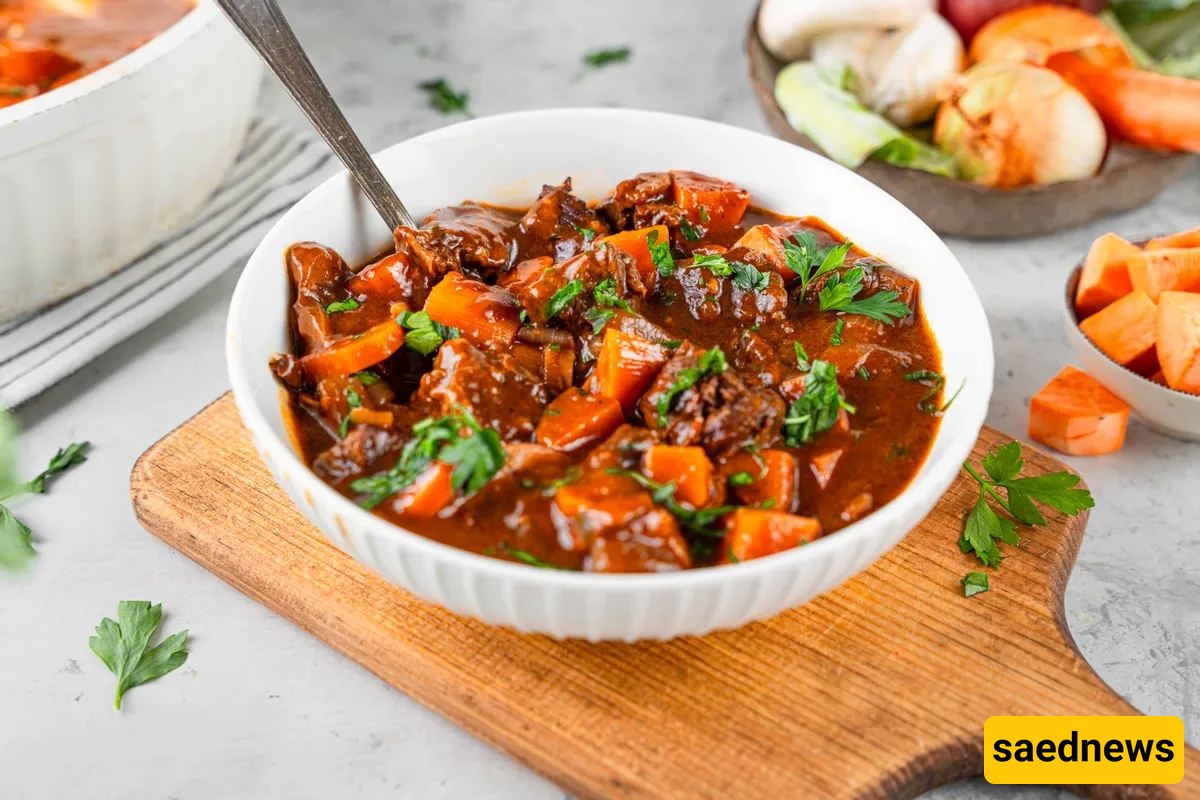
According to Saednews, Pumpkin stew is one of the most authentic and comforting dishes in Iranian cuisine. The mild flavor and tender texture of pumpkin, combined with the warm aroma of cinnamon and the gentle tartness of pomegranate juice, create a distinctive dish for anyone who enjoys traditional Persian food.
Pumpkin is naturally rich in vitamins A and C as well as powerful antioxidants. When combined with ground meat and aromatic spices, it makes a satisfying and nourishing meal. In this guide, you’ll learn how to prepare this classic Persian pumpkin stew step by step, along with essential tips for achieving the best flavor and texture.
Using fresh, high-quality ingredients is important for making a flavorful pumpkin stew. Here are the ingredients and the role each one plays in the dish.
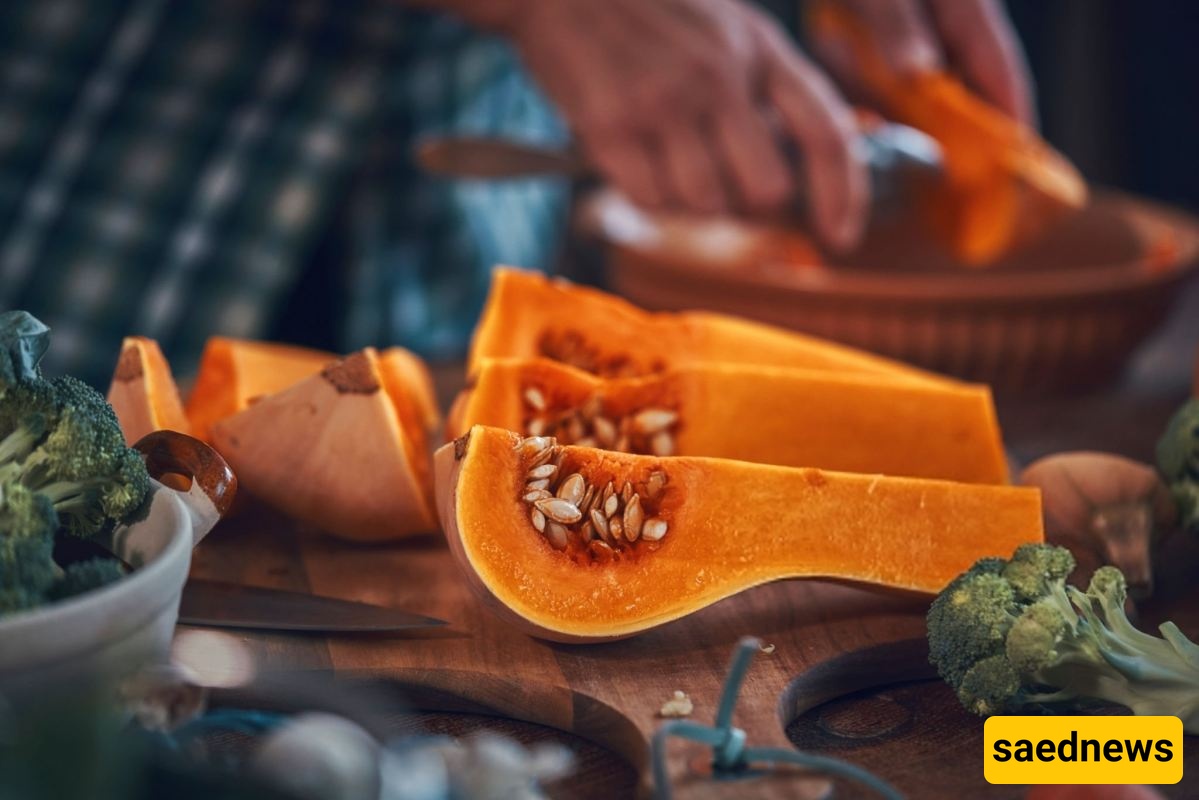
Pumpkin is the main ingredient in this stew. Choose a ripe pumpkin with deep orange skin and firm, dense flesh. Heavy, firm pumpkins generally have better flavor and are less likely to fall apart during cooking.
You can use ground beef or a combination of ground lamb and beef. Lamb gives the stew a richer flavor, while beef helps the meatballs hold their shape. A combination of both is an excellent choice.
Use one onion to prepare the meatballs. It should be grated and thoroughly squeezed to remove excess liquid. Slice the second onion for sautéing and building the base of the stew. Onion adds natural sweetness and aroma.
Cinnamon is one of the defining flavors of this pumpkin stew and can be used either as ground cinnamon or as a cinnamon stick. Turmeric adds color and aroma, while black pepper provides mild heat. Salt is added according to taste.
Beef stock or chicken stock forms the flavorful liquid base of the stew. If you do not have stock available, you can use hot water instead.
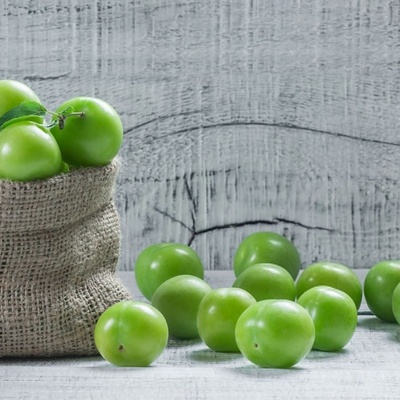
Pomegranate juice gives the stew its characteristic tart flavor and attractive color. Use natural, preferably tart, pomegranate juice. If the juice is particularly sour, you can increase the amount of sugar slightly.
Sugar helps balance the tartness of the pomegranate juice. If your juice is very sour, you can increase the amount to 2 tablespoons. If the juice is naturally sweet, you can omit the sugar. Finding the right balance between sweet and sour is one of the keys to this dish.
Use strongly brewed saffron and add it shortly before serving. Adding saffron toward the end of cooking preserves its delicate aroma and gives the stew a beautiful golden color.
Fresh pomegranate seeds add a beautiful finishing touch as well as a refreshing tartness that contrasts nicely with the warm flavors of the stew.
Once all the ingredients are prepared, you can begin cooking this traditional and elegant Persian dish. Take your time with each step, as slow and careful cooking allows the flavors to develop properly.
Start with a whole pumpkin and carefully remove the skin using a sharp knife. Remove all the seeds and inner fibers.
Cut the pumpkin into slices about ½ inch thick, then cut each slice into smaller pieces, such as quarters. Avoid cutting the pumpkin too small, as the pieces may fall apart during cooking.
Heat a little vegetable oil in a nonstick pan over medium heat. Arrange the pumpkin pieces in the hot oil and fry them on both sides until golden and lightly glossy.
Frying the pumpkin first helps it maintain its shape during the cooking process. Transfer the fried pieces to a paper towel to remove excess oil.
Place the ground meat in a large bowl and season it with a little salt. Kneading the meat with salt helps improve its texture and binding.
Add the grated onion after squeezing out as much of its liquid as possible. This is important because excess onion juice can make the meatballs too soft.
Add ground black pepper and cinnamon. Knead everything thoroughly by hand until the mixture becomes smooth and evenly combined. About 5 minutes of kneading is enough to give the meat a slightly elastic texture.
Moisten your hands and take small portions of the mixture, about the size of small walnuts. Roll each portion between your palms to form small, evenly shaped meatballs.
There is no need to fry the meatballs beforehand, as they will cook directly in the stew.
Place a suitable pot over medium-low heat and add a little oil.
Add the sliced onion and sauté until soft and golden. Take your time with this step because the sautéed onion forms an important flavor base for the stew.
Toward the end of sautéing, add the turmeric and cook for about 30 seconds, just until its aroma is released. Be careful not to burn the turmeric, as burnt turmeric can make the dish bitter.
Add the fried pumpkin pieces to the pot and gently combine them with the onions. Sauté for about 2 minutes to allow the pumpkin's aroma to develop.
Pour in the beef or chicken stock. The liquid should be sufficient to almost completely cover the ingredients.
Add the cinnamon stick, salt and black pepper. Increase the heat and bring the stew to a boil.
Once it starts boiling, reduce the heat to low and cover the pot. Allow the stew to simmer gently for about 30 minutes, until the pumpkin and meatballs are fully cooked and the liquid has reduced slightly.
After about 30 minutes, add the fresh pomegranate juice during the final 10 minutes of cooking. Add the sugar as well, if needed.
Adding the pomegranate juice near the end helps preserve its fresh tartness. Adjust the amount of sugar according to the acidity of the juice.
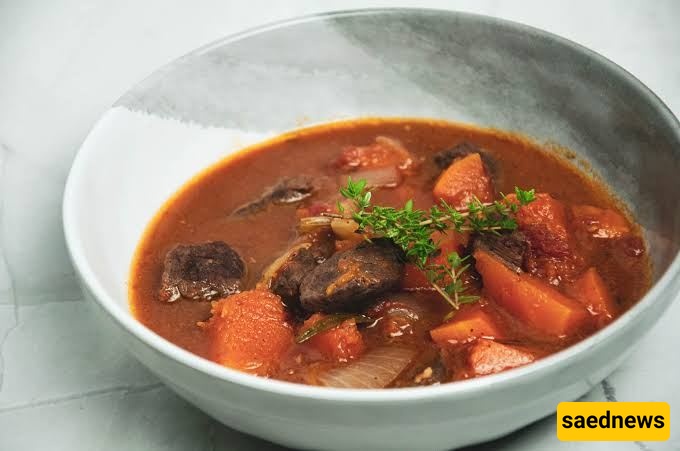
Stir gently and allow the stew to continue cooking over low heat so the sweet, sour and savory flavors can blend together.
A few minutes before turning off the heat, add the strongly brewed saffron.
Adding saffron at the end of cooking helps preserve its aroma and vibrant color. Gently stir the stew, then remove the cinnamon stick.
Your Persian pumpkin stew is now ready.
Transfer it to a serving dish and garnish with fresh pomegranate seeds. Serve it with freshly prepared plain Persian rice or fragrant saffron rice.
Choose pumpkins with firm skin and a deep orange color. Old or damaged pumpkins may have an unpleasant flavor.
To check whether a pumpkin is ripe, gently scratch its skin with your fingernail. If the skin is difficult to scratch, the pumpkin is generally firm and mature.
Fry the pumpkin only until the surface becomes lightly golden. Avoid excessive frying, as it can dry out the flesh and give it a powdery texture once cooked in the stew.
This stew combines several contrasting flavors, including sweetness, tartness and warm spices.
Taste the stew toward the end of cooking and adjust the pomegranate juice or sugar if necessary. The ideal result should be pleasantly balanced rather than excessively sour or sweet.
Make the meatballs relatively small so they complement the pumpkin pieces and fit naturally into the stew.
If ground meat is unavailable, you can substitute small pieces of lamb or chicken.
A good-quality meat or chicken stock gives the stew greater depth and helps create a richer final texture.
If your stock is already salty, reduce the amount of salt added at the beginning of cooking.
For the most traditional presentation, serve the pumpkin stew warm alongside Persian steamed rice. A generous sprinkling of fresh pomegranate seeds adds color, freshness and a pleasant tart contrast to the sweet pumpkin and aromatic spices.