SAEDNEWS: Ordinary pasta gets a dramatic makeover in this colorful recipe, using food coloring to create red, orange, yellow, green, blue and purple noodles. The dish becomes even more striking when served with homemade crispy Parmesan “clouds.”
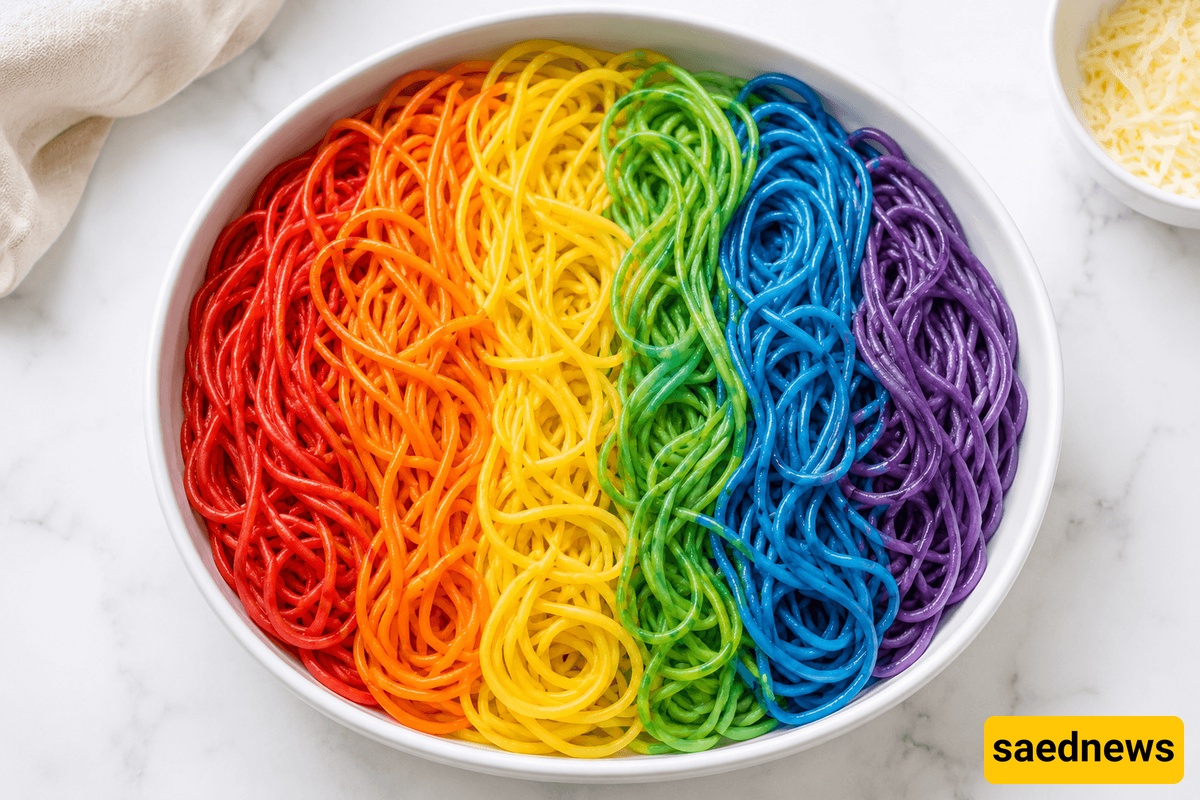
According to SaedNews: There is nothing unusual about a bowl of ordinary pasta—until it suddenly arrives at the table in six different colors. Red, orange, yellow, green, blue and purple noodles can turn a familiar meal into something that looks almost like a rainbow, and the surprising part is that you do not need to buy specially colored pasta to create it.
Pasta is one of the world's most widely enjoyed foods and comes in countless shapes and varieties. Although it is strongly associated with Italian cuisine, the meaning and appearance of pasta can differ from one country or region to another. In Japan, for example, the term may be used for pasta varieties with short tubular, shell-like or other distinctive shapes.
But this recipe takes the familiar dried pasta found in many kitchens and gives it a completely different appearance.
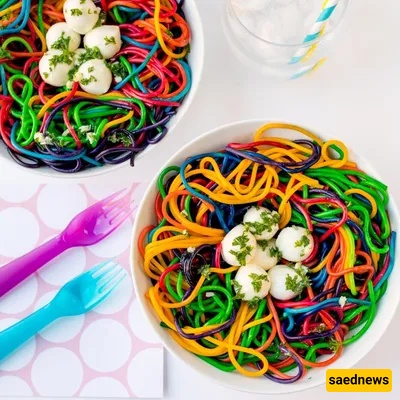
The basic idea is remarkably simple. Cook ordinary pasta according to the instructions on its package, then divide it into separate portions and color each portion individually.
For this version, six colors are used: red, orange, yellow, green, blue and purple. About 20 drops of food coloring are combined with two tablespoons of water inside each resealable zip-top bag.
The timing is important. Once the pasta has cooked and become tender, drain it and immediately rinse it with cold water. This stops the cooking process before the coloring stage begins.
The cooled pasta is then divided among the prepared bags. Each portion goes into a different color, after which the bags are sealed and shaken thoroughly. The goal is to make sure the coloring reaches as much of the pasta as possible. The recipe recommends spending at least one minute working with each bag.
Afterward, the bags are opened one at a time. The colored pasta is transferred to a colander and rinsed again under cold water to remove excess coloring. The different portions are then returned to a pot and mixed carefully.
At this stage, the transformation becomes especially noticeable. What began as ordinary pasta now appears in a collection of vivid colors.
The final step is deliberately flexible: add your preferred pasta sauce and, if desired, Parmesan cheese. The recipe does not require one particular sauce, allowing the colorful pasta itself to remain the visual centerpiece.
The colorful noodles have another eye-catching companion: crisp Parmesan chips shaped to resemble little clouds.
To prepare them, preheat the oven to 350 degrees and line a baking tray with parchment paper. For each Parmesan “cloud,” place about two tablespoons of grated Parmesan in a circular shape on the tray. A round mold can help create more even shapes.
Bake the cheese for around four to five minutes, watching for it to melt and develop golden edges. Once ready, remove the tray from the oven and leave the Parmesan pieces on the parchment paper until they cool and become firm enough to serve.
Preparing these cheese pieces before assembling the pasta is recommended, so they are ready when the colorful noodles are served.
Placed on top of the rainbow pasta, the crisp Parmesan pieces create the visual impression of small clouds floating above a colorful landscape. It is a simple presentation idea, but one that changes the character of the entire dish.
For those who would rather experiment with ingredients instead of food coloring, the recipe also offers another approach using beetroot and spinach.
The ingredients are straightforward: one package of pasta, along with beetroot and spinach as needed.
First, cook the beetroot and spinach thoroughly in water. Once they are cooked, drain them completely and place the two ingredients in separate containers.
Divide the pasta into two portions and cook each portion in a separate pot of boiling water, following the usual process for pasta that will later be drained. After about two to three minutes, add the beetroot water to one pot and the spinach water to the other.
The pasta continues cooking with the colored liquid for another 10 to 15 minutes. At the end, drain both portions and serve.
This natural-color method produces a different look from the six-color food-coloring technique, but it follows the same basic idea: taking familiar pasta and changing its appearance through color.
The appeal of rainbow pasta is not only the finished plate. The preparation itself can make an ordinary cooking routine feel more creative. Instead of simply boiling pasta and adding sauce, each portion becomes part of a colorful process.
The food-coloring method also gives you control over the palette. Six colors are suggested in the recipe, but the portions can be adapted according to the colors available or preferred.
Meanwhile, the Parmesan chips add a completely different texture. The pasta remains soft while the baked cheese becomes crisp and golden around the edges.
The contrast is particularly noticeable when the Parmesan is placed directly over the colorful noodles. It turns a simple pasta dinner into a dish designed to catch attention before the first bite.
Whether you prefer the bright food-colored version or the beetroot-and-spinach approach, the recipe offers an easy way to rethink an everyday pasta meal. And perhaps that is the most interesting part: the transformation begins with nothing more complicated than ordinary pasta.
The result is a dish that invites curiosity, encourages experimentation and gives a familiar dinner a playful new identity. Would you try the colorful version, or would you choose natural ingredients to create the colors?