SAEDNEWS: Traditional Saffron and Vanilla Ice Cream Recipe: Two Easy Methods with and Without Salep for a Smooth, Creamy Texture

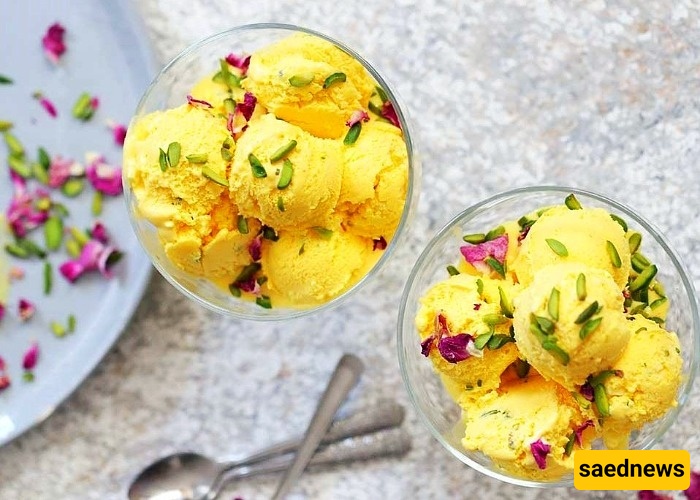
According to Saednews, The aroma of saffron and rosewater, combined with pieces of frozen cream and crushed pistachios, has made traditional Persian ice cream one of Iran’s most beloved desserts. The good news is that you do not need an ice cream maker or professional skills to enjoy this nostalgic flavor. With simple ingredients and a few easy steps, you can prepare it at home.
In this guide, you will learn how to make traditional saffron ice cream step by step, along with useful tips to achieve a smooth, creamy texture and an authentic fragrance.
To make measuring easier and ensure reliable results, this recipe uses a standard 240 ml measuring cup. The following quantities are suitable for approximately 6–8 servings.
Ingredient | Amount |
|---|---|
Full-fat milk | 4 cups (about 1 liter) |
Sugar | 1¼ cups (about 250 g) |
High-quality salep (sahlab) | 1½ level teaspoons (about 5 g) |
Full-fat breakfast cream | 100 g |
Rosewater | ¼ cup (60 ml) |
Strong brewed saffron | 3 tablespoons |
Chopped pistachios | ½ cup (about 50 g) |
Vanilla (optional) | ⅛ teaspoon |
For the best texture, use full-fat milk. Do not add more salep than recommended, as it can make the ice cream overly stretchy and sticky.
The saffron should be strongly brewed so it provides a rich color and aroma without adding too much liquid.
The cream is used to create small white pieces inside the ice cream and should not be mixed with the milk mixture.
How to Make Traditional Persian Ice Cream with Salep and Cream
Cover a small tray or flat plate with parchment paper. Spread the breakfast cream into a thin layer about 2–3 mm thick.
Place it in the freezer for 1–2 hours until completely frozen.
Once frozen, break the cream into small irregular pieces and return them to the freezer so they remain solid when added to the ice cream.
Combine sugar and salep in a dry bowl and mix well for about one minute.
This step prevents the salep from forming lumps when added to the milk and helps distribute it evenly.
Pour the full-fat milk into a suitable saucepan and heat over medium temperature.
Warm the milk until steam appears, but do not allow it to boil strongly.
Reduce the heat and gradually add the sugar and salep mixture while continuously stirring with a hand whisk until smooth.
Continue stirring the mixture over low heat for 8–10 minutes.
The base should become slightly thicker than milk and develop a smooth, glossy texture. It does not need to become as thick as pudding because it will thicken further after cooling.
Remove the saucepan from heat and add brewed saffron, rosewater, and vanilla if desired.
Mix well until the saffron color is evenly distributed.
Transfer the mixture to a container and allow it to cool at room temperature.
Stir occasionally to prevent a skin from forming on the surface.
After cooling, refrigerate it for 1–2 hours until completely cold. Cooling the mixture before freezing helps create a softer texture.
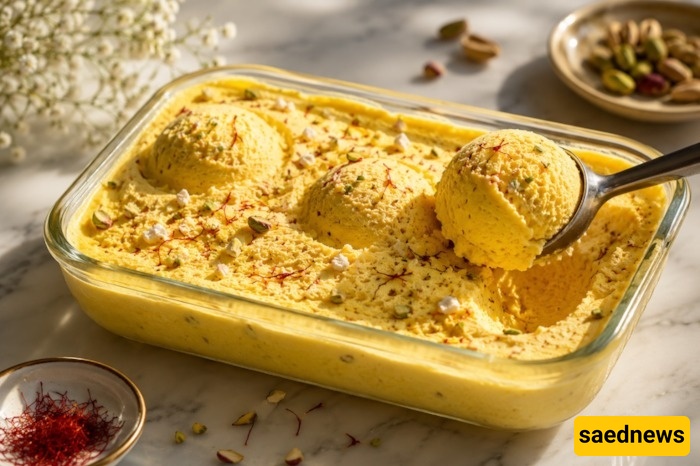
Pour the chilled mixture into a shallow metal container or a freezer-safe container with a lid.
After 40–45 minutes, remove it from the freezer and beat it with a hand mixer or electric mixer for about 2 minutes.
This breaks up ice crystals and creates a smoother texture.
Return it to the freezer and repeat this process every 40–45 minutes, for a total of 4–5 times.
During the final mixing stage, when the ice cream is partially frozen and thick, add the frozen cream pieces and chopped pistachios.
Gently fold them in using a spoon or spatula so the cream pieces remain intact.
Smooth the surface, cover the container, and freeze for at least 5–6 hours until fully set.
For the best texture, leave it in the freezer overnight.
Remove the ice cream from the freezer 5–10 minutes before serving so it softens slightly and becomes easier to scoop.
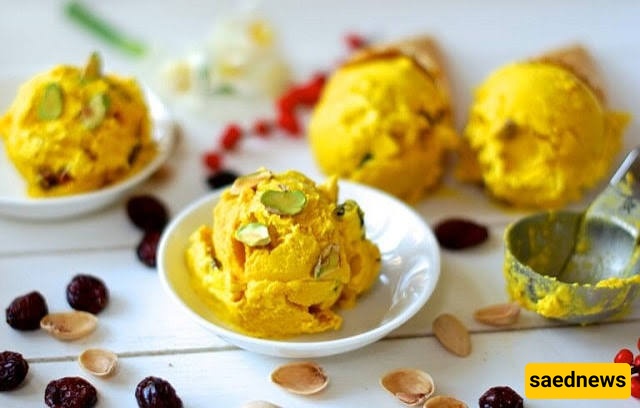
Serve with pistachios, dried rose petals, or additional cream pieces as decoration.
Traditional ice cream made without salep will not have the same stretchy texture, but cornstarch and milk powder can help create a soft, creamy dessert.
This version makes approximately 6 servings.
Ingredient | Amount |
|---|---|
Full-fat milk | 3 cups (720 ml) |
Full-fat breakfast cream | 200 g |
Sugar | ¾ cup (150 g) |
Cornstarch | 3 level tablespoons |
Powdered milk | 2 tablespoons |
Rosewater | ¼ cup (60 ml) |
Strong brewed saffron | 3 tablespoons |
Chopped pistachios | ⅓ cup |
Vanilla (optional) | A small pinch |
Cream pieces (optional) | 50–80 g |
Spread cream thinly on parchment paper and freeze for 1–2 hours.
Break it into small pieces and return it to the freezer.
Mix cornstarch and powdered milk with one cup of cold milk until completely dissolved.
Pour the remaining milk and sugar into a saucepan and heat gently until the sugar dissolves.
Gradually add the cornstarch mixture while stirring continuously.
Cook for 8–10 minutes over low heat until it reaches the consistency of thin pudding.
Remove from heat, add saffron and rosewater, and allow it to cool slightly.
Mix a few spoonfuls of the warm base with the cream first to gradually adjust the temperature.
Then add the cream to the mixture and whisk until smooth.
Refrigerate for 1–2 hours until completely cold.
Place the cold mixture in a shallow container and freeze.
After 45 minutes, beat it for 2–3 minutes to break ice crystals.
Repeat every 45 minutes for 4–5 cycles.
During the final mixing stage, add chopped pistachios and frozen cream pieces.
Gently fold everything together and freeze for another 5–6 hours.
Remove it about 10 minutes before serving.
Note: Powdered milk improves the texture but does not noticeably affect the flavor. If unavailable, it can be omitted, though the ice cream may become slightly harder and icier.
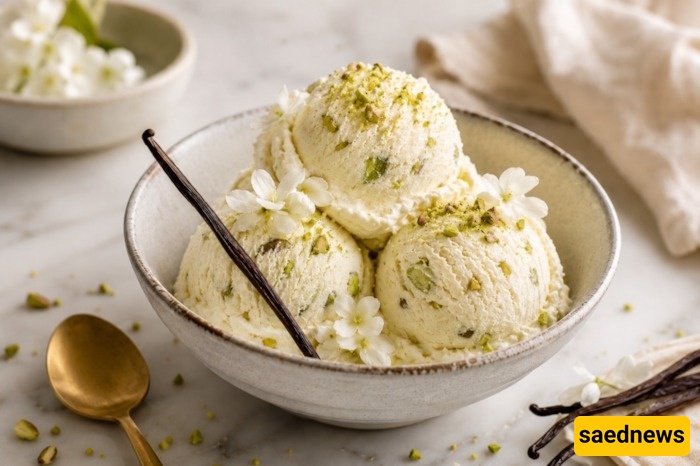
To prepare vanilla Persian ice cream, follow the same saffron ice cream recipe but remove the saffron completely.
After removing the mixture from heat, add:
1 teaspoon liquid vanilla
or
¼ teaspoon vanilla powder
Reduce rosewater to 1 tablespoon or omit it completely for a stronger vanilla flavor.
Use the same amounts of milk, sugar, and salep as in the original recipe.
Cool the mixture completely, freeze it, and continue with the same mixing process every 40–45 minutes for 4–5 cycles.
During the final mixing stage, you may add frozen cream pieces and chopped pistachios.
The vanilla version has the same creamy texture but a lighter color and a milder flavor compared with saffron ice cream.
This usually happens because the mixture was warm when frozen, low-fat milk was used, the ice cream was not mixed during freezing, or it was stored in a deep container.
Always cool the mixture completely before freezing and beat it several times during the first few hours.
The stretchy texture depends on the quality and amount of salep and how it is mixed into the milk.
Salep should always be combined with sugar first and then gradually added to warm milk.
Ice cream without salep can still be creamy but will not have the same traditional stretchy texture.
Yes, but avoid reducing it by more than 10–15%.
Too little sugar changes the flavor and makes the frozen dessert harder.
Yes, but the final texture will be lighter and may become icier.
Full-fat milk gives a softer and more traditional result.
It can be used, but many whipping creams already contain sugar, so the sugar amount should be adjusted.
For cream pieces inside the ice cream, full-fat breakfast cream usually provides a more natural flavor.
It can be stored in a tightly sealed container in the freezer for about two weeks.
However, the best flavor and texture are usually achieved within 7–10 days.
Remove it from the freezer 10–15 minutes before serving.
Avoid using a microwave, as melting and refreezing can create an icy texture.
It is better not to refreeze completely melted ice cream because the texture becomes grainy and icy.
Only remove the amount you plan to eat.
Preparation time for ingredients: approximately 30 minutes
Best served as: dessert or snack
Traditional Persian ice cream is ideal for approximately 6–8 servings depending on portion size.