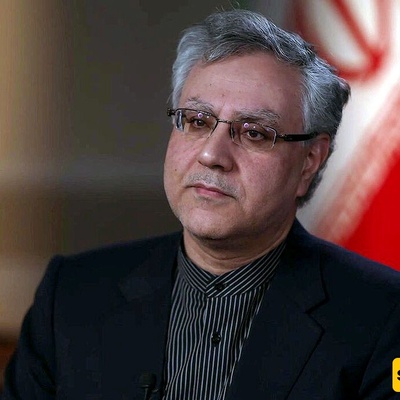
SAEDNEWS: An expert from the Water and Soil Deputy Ministry of Iran’s Ministry of Agriculture Jihad has announced the design and development of an intelligent “Qanat Scanner” system aimed at monitoring and safely renovating the country’s qanats.
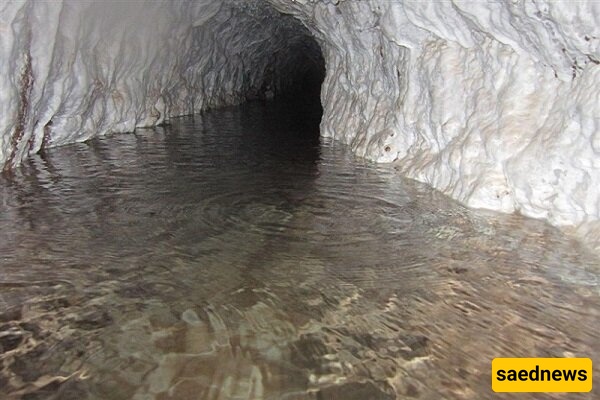
According to the Science and Technology Service of SaedNews, Hossein Rasanjad, an expert with the Water and Soil Department of Iran’s Ministry of Agriculture Jihad, said in an interview with Mehr News that the National Qanat Rehabilitation and Renovation Plan has been implemented since 1994.
He explained that the plan was introduced in the country’s annual budgets and five-year development programs with the aim of restoring damaged qanats and increasing the water flow of low-yield systems.
Rasanjad said one of the main challenges facing the project is the traditional method of monitoring qanat rehabilitation work, which requires experienced experts and qanat workers to enter underground tunnels. This work is extremely difficult and carries serious risks, including gas poisoning, tunnel collapses, and accidents caused by earthquakes. More than 45 incidents related to such activities have been recorded across the country to date.
He added that, because of these dangers, much of the current monitoring process is based on estimating the amount of construction material used and the volume of sediment removed from the qanat. However, this approach does not provide sufficient accuracy, highlighting the need for modern technologies capable of monitoring rehabilitation work more precisely.
According to the ministry expert, the idea of developing a “Qanat Scanner” emerged after he witnessed an experienced qanat worker struggling to enter an underground qanat for inspection despite the serious risks involved.
Rasanjad explained that, as a first step, imaging technologies could be used to accurately examine qanat tunnels and their routes. However, the ultimate goal goes much further: developing a robot capable of entering qanats and autonomously carrying out tasks such as sediment removal, excavation, and even the installation of tunnel lining components known as kool.
He also highlighted the economic and environmental advantages of qanats. Contrary to the view of some experts who consider qanats economically unviable, he said that amid water shortages and the high cost of pumping water, qanats remain a relatively inexpensive and sustainable method of supplying water.
He noted that new qanats are also being constructed in South American countries such as Brazil and Argentina using small drilling machines and modern technologies.
“Qanats are not only an important part of Iran’s water-management civilization,” Rasanjad said, emphasizing that combining traditional knowledge with modern technology could transform them into a global model for sustainable water-resource management.
The Ministry of Agriculture Jihad expert stressed the importance of preserving and restoring qanats as part of Iran’s hydraulic heritage. He said that approximately 100,000 qanat systems currently exist across the country, of which nearly 40,000 have been lost.
He explained that the first priority is to preserve and maintain functioning qanats. The next step is to assess whether qanats that have dried up or been damaged can be restored.
“In the current critical situation and amid water shortages, bringing qanats back into operation could be considered one of the sustainable solutions for water management in the country,” he said.
Rasanjad added that modern technologies, including excavation equipment similar to machines used in metro construction, could play an important role in restoring qanats.
He also called for greater involvement from universities and research institutions in this field. He suggested that universities and research centers, including Islamic Azad University, could conduct pilot projects to construct qanats for supplying water to their campuses’ green spaces or even for drinking-water purposes.
Such projects, he explained, could provide an alternative to the costly transportation of water from lower-lying areas. Because qanats rely on gravity to move water toward the point of use, they can operate without continuous energy consumption for pumping.
Rasanjad said that approximately 46,000 active qanats with identified geographical coordinates have currently been documented across the country, and restoration and rehabilitation work is underway on some of them.
Ownership of these qanats varies. Some are endowed properties, some belong to institutions such as Astan Quds Razavi, while others are privately owned.
Regarding private-sector participation in qanat restoration, Rasanjad said there are already examples of such investment in Iran.
For example, an agricultural complex in Damavand restored a dried-up qanat by investing more than 10 billion rials and managed to obtain a water flow of approximately 20 liters per second. In today’s water-scarce regions, he noted, such a water supply can have considerable economic value.
Rasanjad concluded that restoring qanats offers environmental and economic benefits while also preserving an important part of Iranian culture and civilization.
He said the Ministry of Agriculture Jihad has a responsibility to restore and protect qanats with registered technical and historical characteristics so that this valuable water heritage can be preserved for future generations.