SAEDNEWS: If you want to buy a new laptop in this price range, we have reviewed the latest laptop hardware and the newest features and technologies in portable computers to help you choose a modern, up-to-date device.
According to Saednews, Today’s laptops have entered a new stage of evolution. If, in previous years, improvements were mostly focused on increasing CPU and GPU performance, the industry’s attention has now shifted toward artificial intelligence, advanced displays, energy efficiency, and modular designs. If you are planning to buy a laptop, it is worth taking a closer look at these new capabilities.
Below, we take a closer look at the latest technologies you may not yet be fully familiar with—from AI-powered chips to batteries that can charge up to 80% in just 20 minutes.
One of the biggest leaps in laptop innovation is the arrival of processors designed specifically for artificial intelligence. Nearly all major manufacturers, from Intel and AMD to Apple, now include a Neural Processing Unit (NPU) in their chips to handle on-device AI tasks.
New laptop hardware plays a key role in this transformation. Intel’s Core Ultra series is part of the first generation of Copilot+ PCs. The combination of CPU, GPU, and NPU enables laptops to perform tasks such as noise cancellation, speech recognition, live translation, and content generation without relying on the cloud.
AMD has also made a significant leap with its Ryzen AI 300 series. With up to 45 TOPS of NPU performance, this processor has become a powerful option for creative and lightweight gaming laptops.
Apple’s M5 chip focuses heavily on energy efficiency and on-device AI models. New MacBooks equipped with this processor can perform tasks such as video editing and facial recognition without requiring an internet connection.
In graphics, 2025 marks a major transformation with NVIDIA’s RTX 50 series. Featuring DLSS 4 and fifth-generation ray tracing, this generation delivers significantly more realistic gaming and 3D experiences.
The RTX 5090, with 24GB of GDDR7 memory and Blackwell architecture, is designed for high-end gaming laptops. In systems such as the MSI Titan 18 HX AI, it enables 4K gaming at over 165 FPS.
AMD, on the other hand, with its RDNA 4 architecture and 3D V-Cache technology, has improved integrated graphics performance by up to 30% compared to previous generations. This makes it ideal for laptops like the Framework Laptop 16 or budget-friendly ASUS TUF A15 models.
Displays have also undergone a major transformation in 2025. Resolution and brightness are no longer the only important factors; flexibility, variable refresh rates, and automatic color calibration are now key standards.
Laptops such as the Lenovo Yoga Book 9i and ASUS Zenbook A14 feature dual-screen designs, allowing them to be used as traditional laptops, tablets, or secondary monitors.
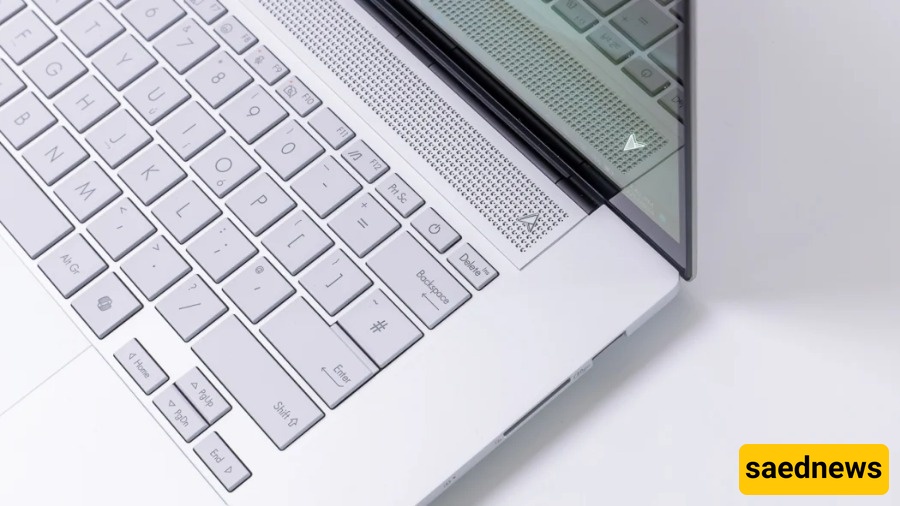
Displays with adaptive refresh rates from 1 Hz to 165 Hz provide smoother visuals in games and videos while reducing power consumption during static content like reading.
Some laptop displays even reach up to 360 Hz, although such high refresh rates are not very practical for most gaming scenarios.
Tandem OLED technology, used in premium Samsung and Apple laptops for the first time, enables brightness levels above 1000 nits without increasing heat or energy consumption.
Battery life and charging speed have always been major user concerns. Fortunately, recent advancements in battery materials and AI-based energy management systems have significantly improved both areas.
Companies such as Panasonic and BYD are developing early prototypes of solid-state batteries for laptops. These batteries offer higher energy density and greatly reduce risks of overheating or explosion.
The use of graphene has increased conductivity and charging speed up to four times. Some modern devices, such as the MacBook Air M4, can reach 80% charge in just 20 minutes.
These systems analyze user behavior, display refresh rates, and ambient temperature to optimize power consumption. The result is up to 20+ hours of continuous usage on a single charge.
Sustainability and repairability have become major priorities in laptop manufacturing. Instead of replacing entire devices, companies like Framework now offer modular designs with upgradeable components.
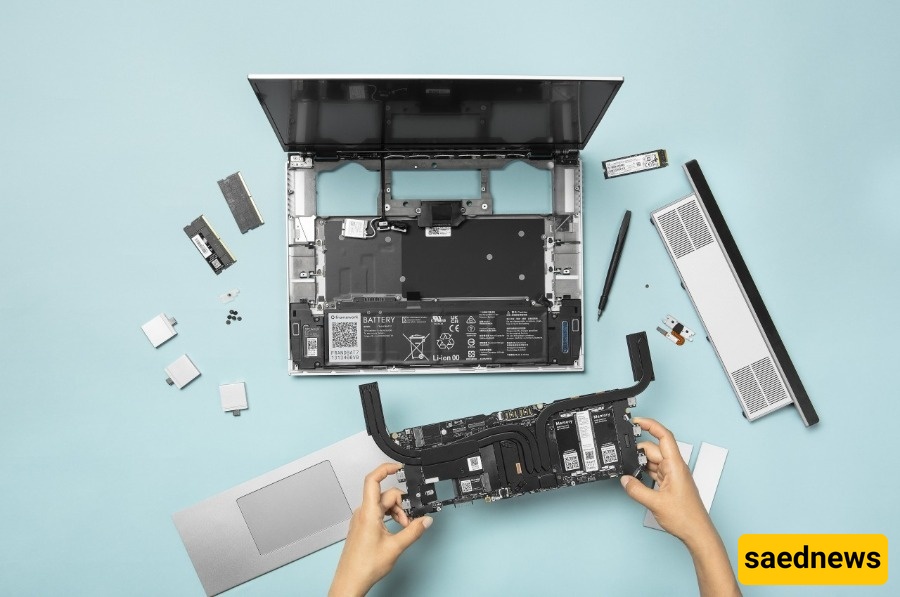
These modular laptops allow users to upgrade components such as CPU, RAM, or even GPU without replacing the entire system.
Reports show that DDR5 RAM prices have increased by about 20% compared to last year. This has affected high-end laptop pricing but also boosted demand for upgradeable memory systems.
Brands such as Razer and HP are increasingly using recycled aluminum chassis and low-carbon circuit boards in their latest models.
By combining all these technologies, the future of laptops looks dramatically different. Personal computers are becoming more truly “personal” than ever before—devices that understand the user, are lighter, more efficient, and more powerful.
Ultra-light gaming laptops are now also suitable for content creators.
Companies like Acer, MSI, and Dell are even developing AI systems that adjust screen angles, fan noise, GPU performance, and brightness automatically based on user posture, lighting conditions, and temperature.
2025 is undoubtedly one of the most exciting periods in laptop history. Technologies such as AI-powered processors with NPUs, RTX 50 graphics cards, foldable OLED displays, and smart batteries are blurring the boundaries between creativity, performance, and sustainability.