SAEDNEWS: Karanlık Church, also known as the Dark Church, is the most renowned structure within the collection of historic churches at the Göreme Open-Air Museum in Turkey.
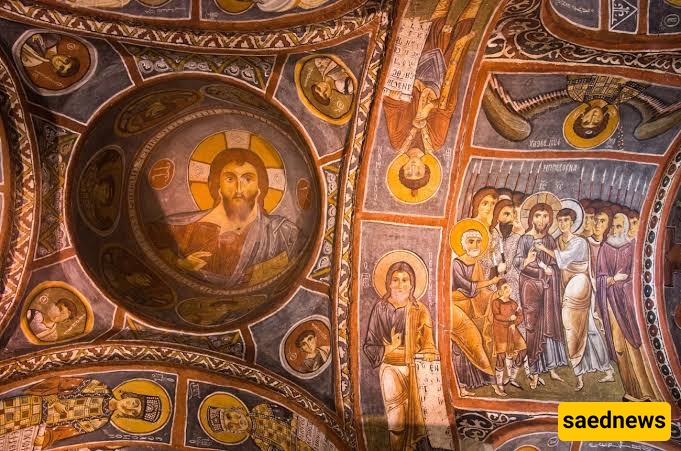
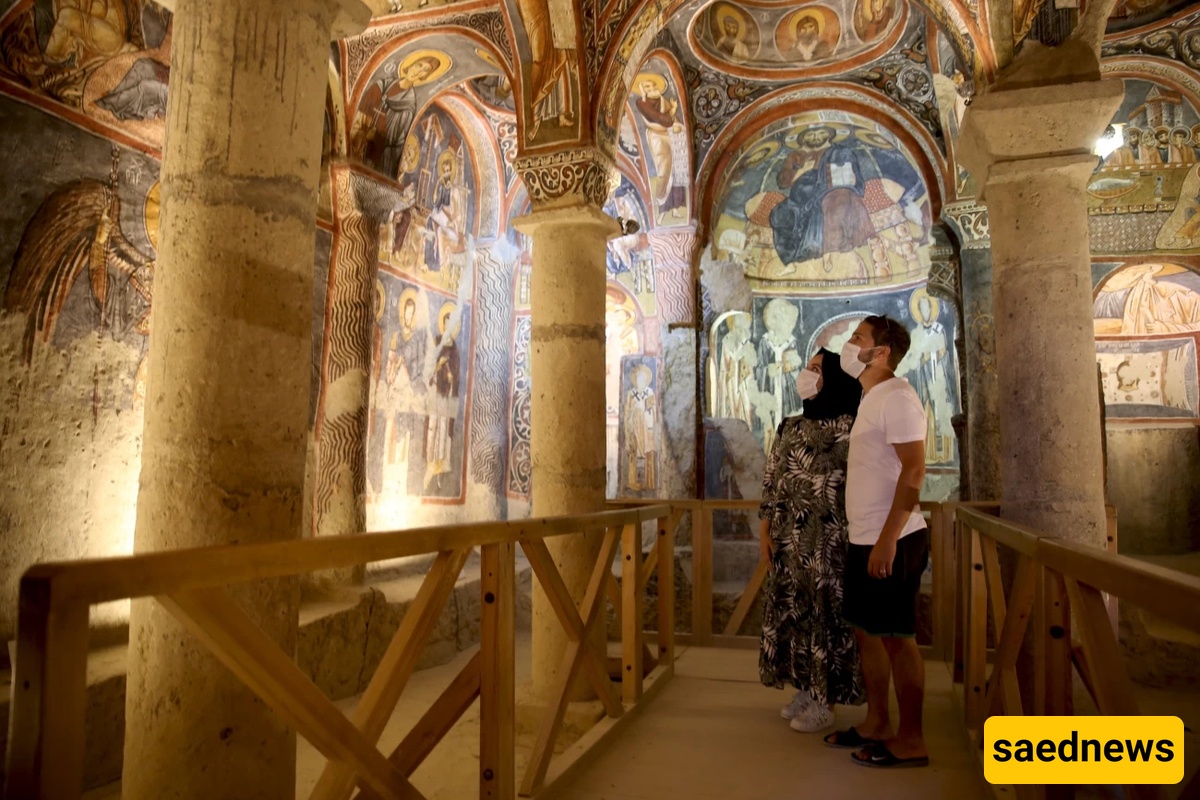
According to Saednews, The Karanlık Church is known as the Dark Church because of its small number of windows. However, the limited amount of light inside has helped protect its valuable frescoes and paintings depicting scenes from the life of Christ from deterioration.
Dating back to the middle of the 11th century, the Dark Church is a monastic church with a square plan, four columns, three apses, and five domes. Together with the Apple Church and the Sandal Church, it is considered one of the Three-Column Churches, known for their architectural and artistic similarities.
The Dark Church was initially completed by the master of the workshop. Later, apprentices constructed the Apple Church and Sandal Church in a similar, though somewhat less sophisticated, style.
The Dark Church served as the principal church of a monastic complex. It was designed to impress visitors with its monumental architecture and prominent position at the head of the Göreme Valley. Reconstructing the original layout of the monastery is difficult because of natural erosion and the modern terrace built for tourists. However, it is believed that the monastery once had a separate entrance to the courtyard and a wall along its open northern side.
The monastic complex was organized around a small triangular courtyard with a two-story portico. The upper corridor featured alternating sections of vaulted ceilings and domed niches, while the lower corridor was open and eventually collapsed over time.
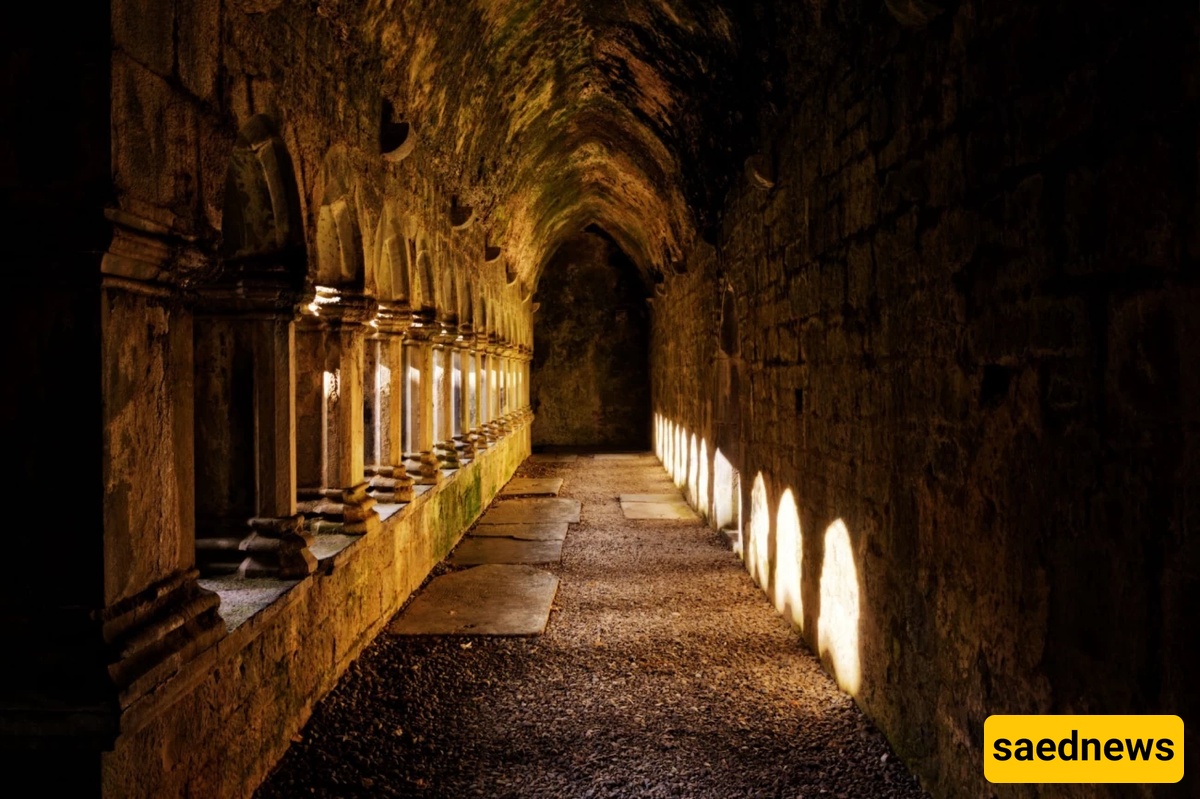
The front of the monastery featured carefully recessed doorways, columns, and a long blind arcade consisting of 19 keyhole-shaped niches decorated with Maltese crosses. The façade also contained red geometric designs, a feature found in many churches throughout Cappadocia.
The door on the left leads into the dining hall, or refectory. The 15-meter-long room contains carved stone benches and rounded sections at both ends. A staircase on the right side of the refectory leads to the upper level. This area was used as a storage space, with openings in the floor for storing ceramic jars. The central and right-hand doors of the portico lead to relatively plain rooms, possibly storage areas or even monks' cells.
The church is geographically and artistically connected to the courtyard. The eastern wall of the portico contains a painting of the Virgin Mary and the Christ Child accompanied by two angels, located about five meters from the church entrance. The artwork resembles paintings found in the Sandal Church.
The entrance to the Dark Church is relatively plain, featuring only a carved half-arch above the doorway. A shallow tunnel leading into the nave contains the grave of an infant.
The Dark Church contains remarkable artistic and architectural features that surpass those of many other churches in Cappadocia. The narthex is angled to avoid interfering with the existing refectory and intersects with the courtyard, creating the church's single window.
A prominent burial chamber contains two church graves and a child's arcosolium.
The Ascension covers the ceiling of the narthex. It depicts Christ seated within a concentric mandorla while four angels carry him toward heaven. The artistic quality and level of preservation of the nave's painted program are superior to those found in many other Cappadocian churches. The lower walls mainly depict standing saints.
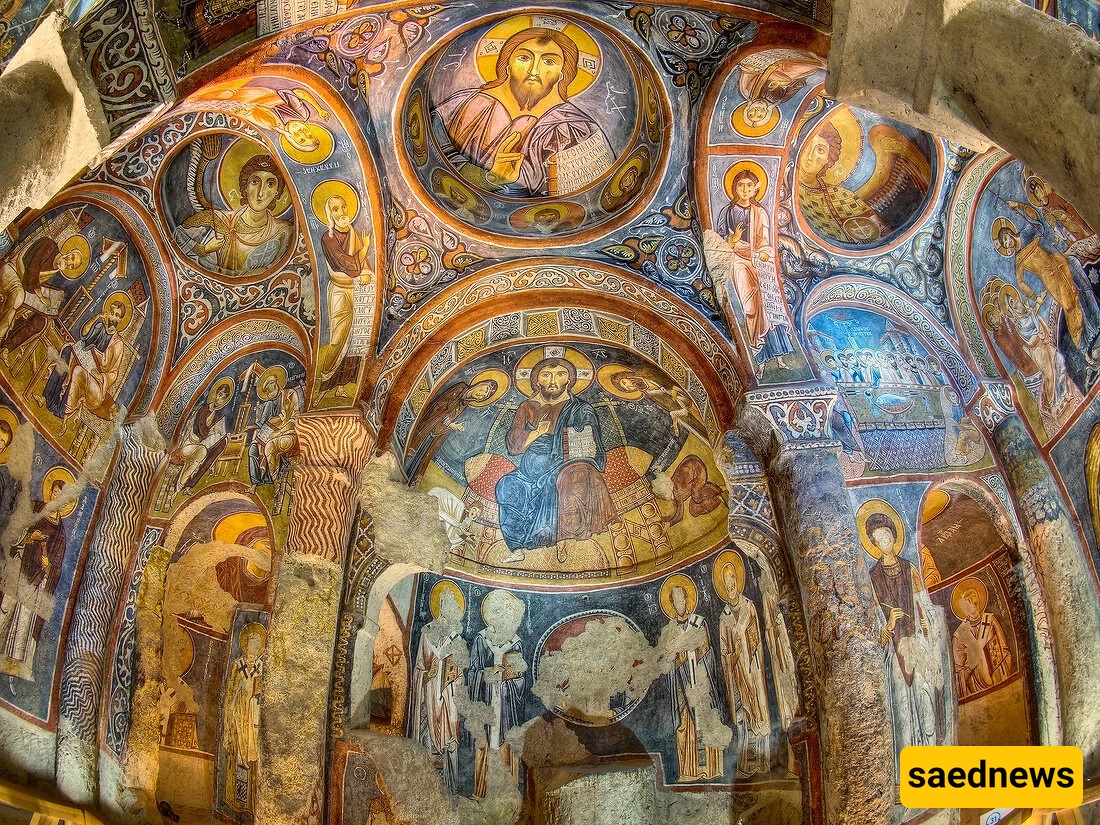
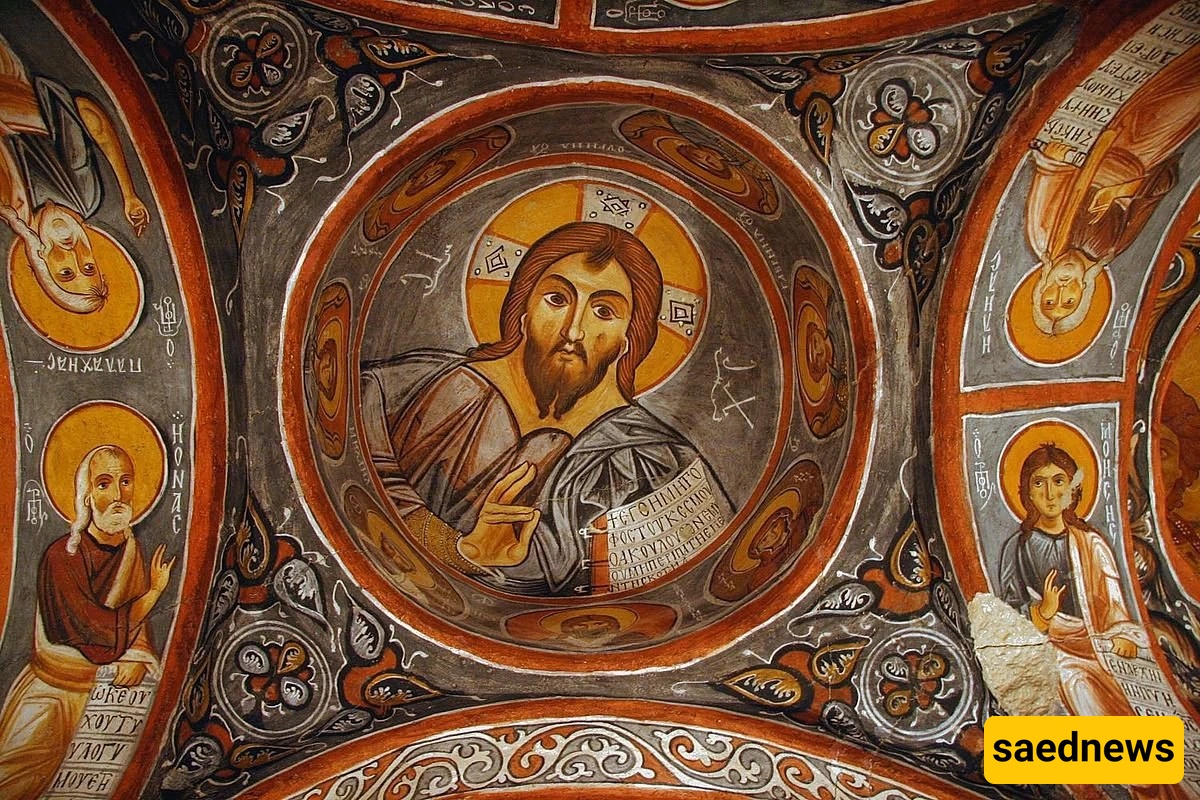
The interior layout of the Dark Church follows the traditional Byzantine three-level division of the cosmos. The upper domes represent heaven and feature Christ Pantocrator and angels. The upper walls contain scenes from the life of Christ, while the lower walls are largely decorated with standing figures of saints.
Beneath the arches are depictions of Old Testament prophets standing with open scrolls containing verses from their prophetic writings. These images help explain the scenes from Christ's life toward which the prophets gaze.
The kings Solomon and David occupy the arch between two Pantocrator domes, dressed in royal garments. Many of the paired figures consist of an older and a younger individual.
The fresco program of the Dark Church focuses primarily on the life of Christ. It includes scenes such as the Nativity, Baptism, Transfiguration, Crucifixion, and Resurrection.
The four Evangelists appear on the front left section, offering an indication of how Cappadocian communities copied and preserved biblical manuscripts.
Christ Pantocrator appears in three successive domes, each decorated with remarkable detail. The central dome depicts Jesus with reddish hair and soft facial features. The surrounding medallions feature six angels and Christ Emmanuel, a youthful representation of Christ Pantocrator.
The eastern dome contains another image of Christ Pantocrator. Around its base are four angels, John the Baptist, and the parents of the Virgin Mary, Anna and Joachim.
The central section features a Deesis, depicting Christ seated on a large throne with the Virgin Mary and John the Baptist beside him. Two donors kneel on either side, with their prayers written above their heads.
The lower half contains five Church Fathers, including Gregory the Theologian, Basil, John Chrysostom, Nicholas, and Hypatius.
The right-hand section contains several distinctive paintings, including an elderly Abraham in the apse and the Holy Mandylion above the rounded altar. According to church tradition, the Holy Mandylion was considered the "first icon of Jesus."
Saint Polycarp, the first bishop of Smyrna and a renowned martyr, is depicted standing on the left.
The Dark Church and its monastery were constructed with considerable financial resources, allowing professional artists from Constantinople to be employed.
The Deesis scene in the main apse includes two prominent patrons, known as Nikephoros and Basianos, who are shown kneeling before Christ.
Two small figures identified as John Antalmatikos and Gennentlios are shown bowing before Christ at the rear wall of the church.
Four additional donors are depicted beneath the wings of the archangels Gabriel and Michael on the side walls of the church.
Beyond these inscriptions and images, little is known about the donors. The plaster on the lower walls also contains graffiti left by Greek pilgrims, dating from the 17th and 18th centuries.
Following the population exchange of 1924, the church was abandoned and later used as a pigeon house by local Turkish farmers. It was opened to the public in the 1970s and underwent restoration during the 1980s.
The Karanlık Church is one of the notable historic monuments of Cappadocia and is particularly important for the preservation of its Byzantine frescoes. Its combination of architecture, religious art, and monastic history provides an insight into the cultural and artistic heritage of medieval Cappadocia.
The Karanlık Church is located in the Cappadocia region of central Turkey, within the historic Göreme area.
The development of the Karanlık Church took place over an extended period, with the building being continuously modified and expanded. The church dates primarily to the 11th century and was repaired and renovated several times during subsequent centuries. During the Ottoman period, the building had fallen into a ruined state.
The Karanlık Church contains religious and historical paintings, including scenes from the life of Christ, Old Testament prophets, angels, Church Fathers, and saints.
Yes. The Karanlık Church is open to visitors, allowing them to see its exceptionally well-preserved Byzantine frescoes and architectural features.