SAEDNEWS: NASA’s Curiosity rover has recently observed and recorded ripple-like rock structures, suggesting that lakes once existed in this ancient region of Mars. Previously, scientists believed this area of the planet was dry and lacked signs of standing water.
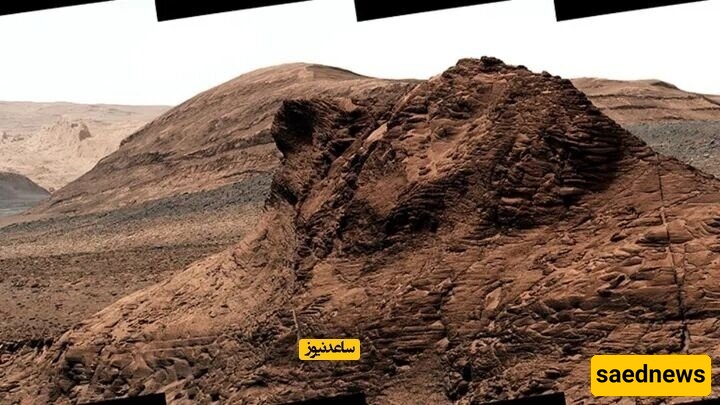
According to Saednews report Qouting IRNA, citing SciTech News, when NASA’s Curiosity rover landed in the Martian sulfate-rich region in the fall of 2022, scientists were surprised by new evidence pointing to the existence of ancient lakes. The sulfate-bearing rock layers in this area formed in conditions that were much drier compared to other regions of Mars. The prevailing hypothesis suggests that as lake water levels decreased, salt minerals were left behind as the water retreated.
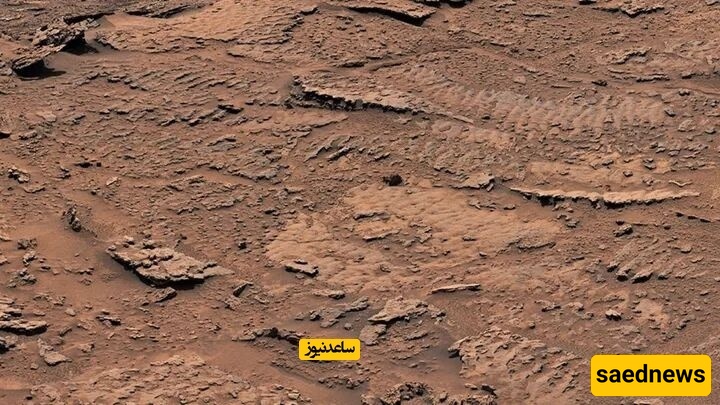
Researchers also believe that surface waves in shallow lakes billions of years ago helped shape sediments on the lakebeds, gradually forming ripple-like rock structures that are still visible today.
Ashwin Vasavada, a scientist with NASA’s Curiosity rover team at the Jet Propulsion Laboratory, stated that thousands of kilometers of lake deposits have been studied, but nothing as clear as this evidence had been found before. He noted that this may be the strongest indication yet of water activity and wave formation discovered during the mission, appearing in a location previously thought to have been completely dry.
During its exploration near Mount Sharp, Curiosity identified a preserved geological structure known as “Marker Band,” a thin layer of dark rock that appears distinctly separated from the surrounding formations. Another clue in the region is an unusual rock formation that may have resulted from repeated climatic or environmental cycles.
NASA has also reported additional evidence of past water activity in a valley known as Gediz Vallis. Scientists suspect that wet landslides may have occurred there, leaving behind preserved geological traces.
These findings together strengthen the growing evidence that Mars once had stable bodies of water capable of forming lakes, waves, and complex sedimentary structures.