SAEDNEWS: Hegmataneh is regarded as the first city in Iran, founded around 728 BC by order of the Median ruler to serve as the capital of the Median Kingdom.
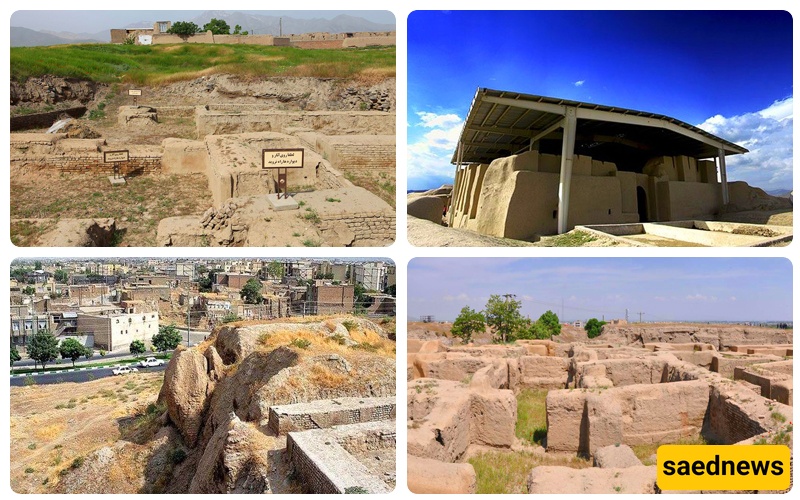
According to Saednews, Hamadan, known in ancient times as Hegmataneh, has attracted attention since the Median period, when it was selected as a capital. Today, the city is one of Iran’s well-known tourist destinations, offering a wide range of historical and natural attractions, including Hegmataneh, Ganjnameh, and Ali Sadr Cave. Hamadan has also earned a special place in the hearts of visitors through its association with such celebrated figures as Avicenna and Baba Taher.
Hegmataneh, meaning “place of gathering,” remained a summer capital during the Achaemenid period after the Median era. It continued to be an important city during the Parthian, Seleucid, Sasanian, and post-Islamic periods.
Many historians have written about Hegmataneh and provided different descriptions of the ancient city. Some accounts describe it as being surrounded by seven defensive walls, each reportedly painted a different color. These fortifications were built to protect the royal palace and treasury, while ordinary residents were expected to build their homes outside the fortified area.
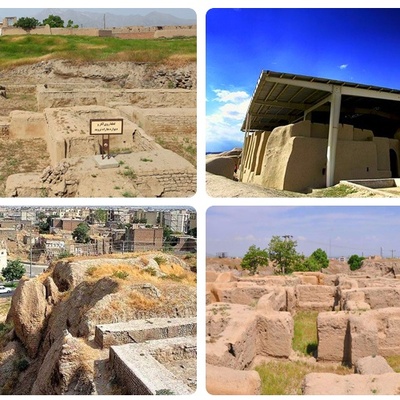
Today, the archaeological remains of Hegmataneh lie in the center of Hamadan and have been the subject of numerous excavations by both Iranian and foreign archaeologists. These investigations have uncovered various structures and artifacts, including parts of an ancient water-supply system, buildings, and sections of the surrounding fortifications.
However, excavations carried out in recent decades, particularly those associated with the late archaeologist Masoud Azarnoush, raised the possibility that the excavated site may not have belonged to the Medes. According to this interpretation, the legendary Median capital may have been located elsewhere in Hamadan.
Despite these debates, Hegmataneh remains an excellent starting point for exploring Hamadan and its historical attractions. The archaeological complex covers approximately 25 hectares on both sides of a street and includes several important sites, among them the Hegmataneh Museum, the Church of Saint Mary, and the Gregorian Church of Saint Gregory the Illuminator.
Archaeological efforts to locate the ancient Median city began many years ago. Researchers such as De Morgan and Kéter were among those who devoted considerable attention to Hegmataneh. In 1913, Charles Fossey conducted excavations in an area known as Camel Pit, or the French Pit, opposite the Hegmataneh Museum. However, no report of his findings was ever published.
After a period of interruption, Iran’s Archaeological Center began purchasing residential properties on Hegmataneh Hill in 1968 and 1969, allowing excavations to continue until 1974. Following the Islamic Revolution, archaeological excavations resumed in 1983.
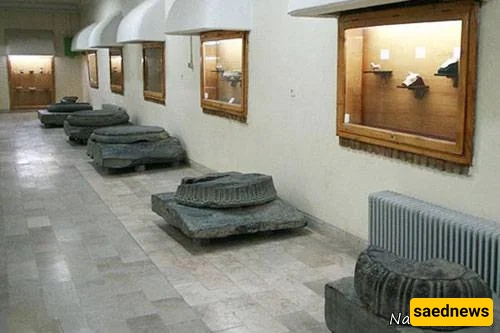
The Hegmataneh Museum stands on the eastern side of the archaeological complex, next to the French Pit. The building, originally known as Parvaresh School, was later renovated and converted into a museum. Constructed between 1941 and 1946, it served as a school before being acquired by the archaeological authorities in the 1970s. It was subsequently used as a storage facility for archaeological discoveries and eventually became the Hegmataneh Museum.
Based on the types of artifacts displayed, the Hegmataneh Museum can broadly be divided into historical and Islamic sections. The objects in both sections were obtained through archaeological excavations, purchases, donations, or confiscations. Stone and pottery artifacts make up a significant portion of the museum’s collection.
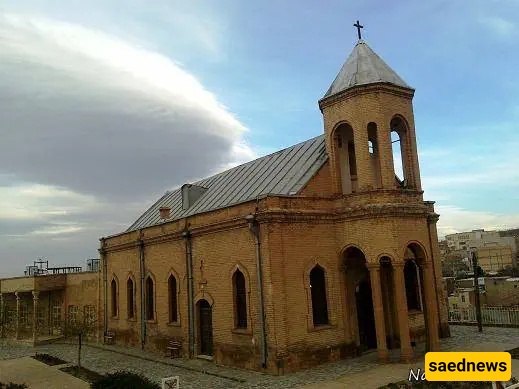
In the northwestern part of the complex, within the Armenian quarter, stands the Gregorian Church, which belongs to the Protestant tradition. In the southwestern section is the Church of Saint Mary, associated with the Orthodox Christian tradition. Both churches are notable attractions within the historic area.
After exploring the oldest parts of the city, visitors should make time to see the mausoleums of Baba Taher, the renowned poet and mystic, and Avicenna, the celebrated Persian philosopher and physician. These two monuments are among Hamadan’s most important landmarks.
Avicenna, one of the great intellectual figures of his age, made significant contributions to logic, mathematics, astronomy, chemistry, medicine, and numerous other fields. He was born around 980 CE in Khormisin, near Bukhara. During his life, he traveled to places such as Gorgan and Ray and later served as a court minister in Hamadan under the Buyid rulers. He also taught at one of the city’s major schools.
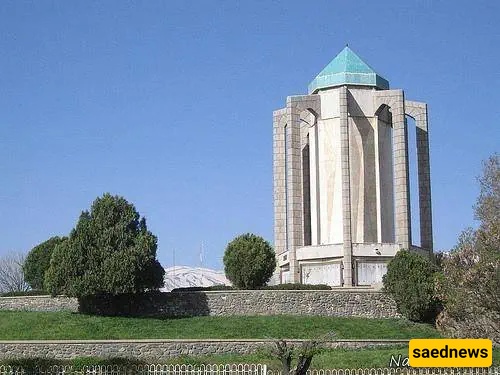
After his death, Avicenna was buried in the garden of his friend Abu Sa'id Dakhduk. A simple four-arched structure was initially built over his grave. The tomb was renovated during the Qajar period, and in 1954 the present monument was constructed by the architect Houshang Seyhoun. Its design was inspired partly by the Tower of Gonbad-e Qabus and combines elements of ancient Iranian architecture with post-Islamic Iranian traditions.
Avicenna left behind numerous influential works, many of which remain important treasures for libraries and scholars around the world. Visiting his mausoleum therefore provides travelers with an opportunity to connect with the legacy of one of Iran’s greatest scientists and thinkers.
“I passed through a cemetery one morning,
And heard cries, lamentations, and sighs.
I heard a skull speaking to the earth:
This world is not worth diminishing yourself for.”
Traveling toward Baba Taher Square brings visitors to the memory of the famous fifth-century mystic and poet. Because of his simple and ascetic way of life, he became known as Baba Taher-e Oryan, or “Baba Taher the Naked.”
Baba Taher is particularly famous for his short poems, known as dobaytis, many of which use the everyday language of his time. Following his death, several structures were built over his grave during different historical periods. The present mausoleum was constructed around the same period as Avicenna’s new tomb.
The current monument was built in 1965 with the support of the National Monuments Association and the municipality of Hamadan, under the supervision of architect Mohsen Foroughi. A large landscaped area surrounds the building, enhancing its appearance. The site also contains the graves of several notable scholars, poets, and literary figures, including Muhammad ibn Abd al-Aziz, Abu'l-Fath As'ad, Haji Mirza Ali Naghi Kowsar, and Maftun Hamadani.
Another famous monument in Hamadan is the Alavian Dome, which is particularly remarkable for its intricate stucco work and brick architecture. In some respects, it resembles the Red Dome of Maragheh and the Heydarieh Dome in Qazvin.
The Alavian Dome is located in Alavian Garden near Imamzadeh Abdollah Square. It is one of the surviving monuments from the late Seljuk period, dating to the sixth century AH. The Alavian family originally constructed it as a mosque. In later periods, a crypt was added beneath the building and it was transformed into a family mausoleum.
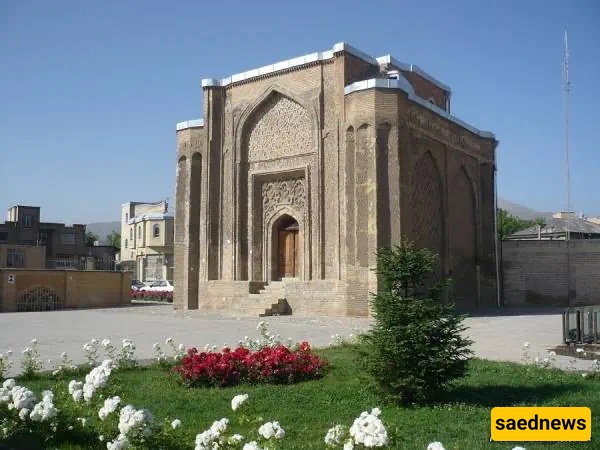
The original dome, which once covered the tombs of two members of the Alavian family, eventually collapsed due to the passage of time and no longer survives.
Because Hamadan was among the early Iranian cities to embrace Islam following the Battle of Nahavand, visitors might expect to find an early Islamic mosque in the city. Surprisingly, the present Jameh Mosque dates to 1253 AH and is believed by researchers to have replaced an earlier structure.
The mosque is located near Imam Khomeini Square at the beginning of Ekbatan Street. An inscription on the decorative band above the large entrance porch records its construction during the reign of Fath-Ali Shah Qajar.
In historic Islamic cities, mosques were often accompanied by bathhouses, bazaars, and caravanserais. Hamadan is no exception. One of the city’s notable traditional sites is Qaleh Bathhouse, located in the old Qaleh neighborhood, also known as Qashoq-Tarashan.
The bathhouse probably dates from the Qajar period. It has since been converted into an ethnographic museum and traditional restaurant, providing visitors with an opportunity to experience aspects of traditional urban life.
Hamadan’s traditional bazaar complex consists of numerous markets, covered lanes, courtyards, and caravanserais, most of which were constructed in the architectural style of the Qajar period. In the past, each market lane was associated with a particular trade or guild, although this organization has largely disappeared. Some sections of the original bazaar roof have collapsed and have been replaced with modern roofing materials.
Among the city’s historic caravanserais, Golshan Caravanserai and Haj Mirza Kazem Caravanserai stand opposite one another on Ekbatan Street. Golshan Caravanserai is now used for the sale of rugs, carpets, and textiles and also has another entrance from the traditional Calligraphers’ Bazaar.
Before leaving the city to explore the surrounding attractions, visitors can see several other historic monuments. One of these is Qorban Tower, a brick structure dating approximately to the seventh or eighth century AH.
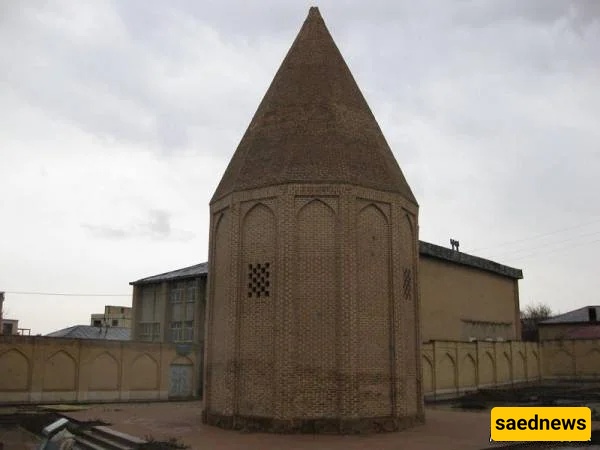
The tower stands in the Zandi district of Hamadan on Taleghani Street, next to Ibn Sina High School. Its architecture bears some resemblance to the Gonbad-e Qabus tower. It serves as the burial place of Sheikh al-Islam Hasan ibn Attar, a respected ascetic, scholar of hadith, and Quran memorizer, as well as several Seljuk-period commanders.
The Tomb of Esther and Mordechai is located in central Hamadan at the beginning of Dr. Shariati Street. Judging from its architectural style and appearance, the present building appears to have been constructed during the seventh century AH over an older structure.
The complex consists of an entrance, corridor, burial chamber, porch, and royal seating area. At the center of the square-shaped burial chamber are two beautifully carved wooden cenotaphs.
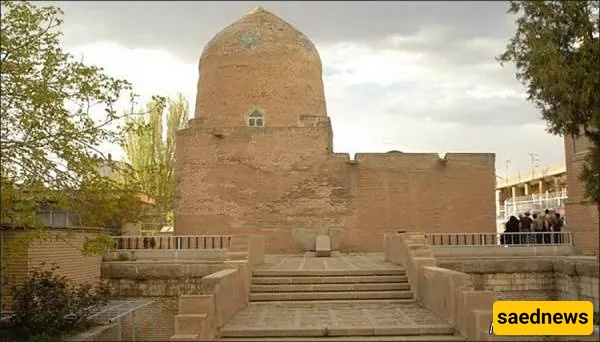
Esther was a Jewish woman who, according to tradition, became the wife of Ahasuerus, the Achaemenid king Xerxes. Together with her uncle Mordechai, she is associated with saving the Jewish community from a plot by Haman, the king’s minister. This event is commemorated by the Jewish festival of Purim.
The site has both religious and historical significance. It is a respected pilgrimage destination for many Jews and is also an important historical monument. Among its notable features are the stone entrance, finely carved wooden cenotaphs, and Hebrew inscriptions containing the Ten Commandments.
Before leaving the city, visitors can see another ancient monument known as the Stone Lion. The statue stands in a square bearing the same name, on an ancient mound where a Parthian-era coffin was discovered.
Originally, two lion statues stood on opposite sides of one of the city gates. During the conquest of Hamadan, the ruler Mardavij of the Ziyarid dynasty attempted to move both statues to Ray. He failed, damaging one lion’s paw and destroying the other statue almost completely.
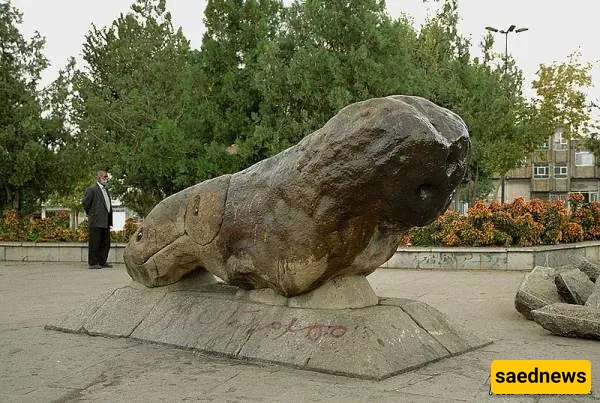
The surviving damaged lion was later placed in its current location during the restoration of several historic monuments under architect Houshang Seyhoun.
Once visitors leave Hamadan to explore the surrounding region, Abbasabad Recreation and Tourism Complex is one of the most attractive destinations to consider.
The complex is situated on Abbasabad Hill at the end of Mahdieh Street, overlooking Ghaem Square. It offers recreational facilities, temporary accommodation, dining services, sports facilities, a waterfall, and panoramic views over the lush Abbasabad Valley and the city of Hamadan.
Continuing in the same direction for approximately eight kilometers brings visitors to Ganjnameh, one of the most important historical and natural attractions around Hamadan.
Ganjnameh lies on the slopes of Mount Alvand in the Abbasabad Valley. Alongside its beautiful waterfall and impressive natural scenery, the site is famous for its ancient inscriptions.
Because Hegmataneh was located along the Royal Road and served as an Achaemenid summer capital, Darius I ordered the creation of an inscription at Ganjnameh after completing the famous Bisotun inscription. His son, Xerxes, later added another inscription slightly lower on the same mountainside.
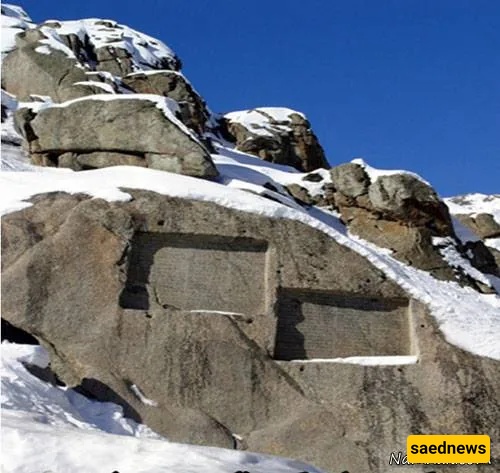
The inscriptions provide valuable evidence of the Achaemenid period and are among the most important historical attractions in the region.
Today, the Ganjnameh area is connected to Mishan Square by a cable car approximately 1.5 kilometers long, which has itself become a popular tourist attraction. The area also offers a range of recreational, sports, and dining facilities. These developments have transformed Ganjnameh into a major destination for visitors exploring the natural and historical landscapes around Hamadan.