SAEDNEWS: Cuneiform Script is a writing system used by ancient peoples of Western Asia such as the Sumerians, Assyrians, Babylonians, Elamites, and Iranians from the 3rd millennium BCE for writing.
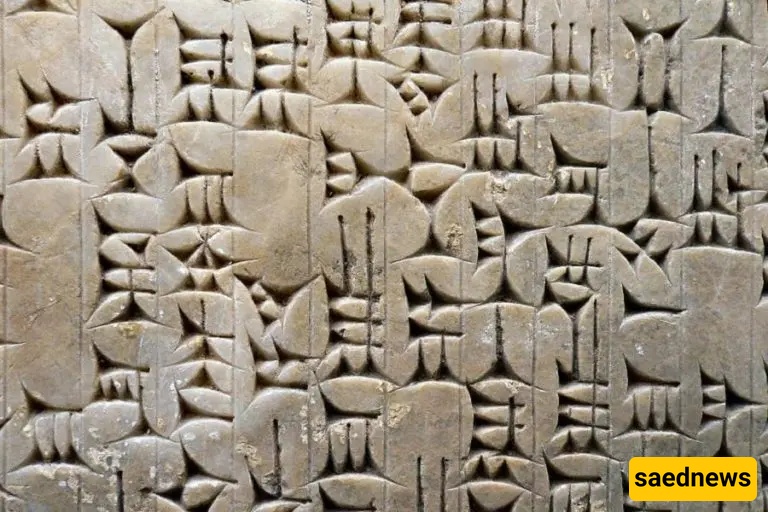
According to Saednews, The wedges, depending on their orientation, form four basic elements. There is also a fifth element created by combining two wedges in an angular form with an open end facing to the right. It is likely that the Sumerians created cuneiform signs around 2900 BCE in the lower plains of the Tigris and Euphrates by simplifying earlier pictographic writing.
The Akkadians, after migrating to Babylon around 2400 BCE, adopted the cuneiform script derived from Sumerian pictographs and learned it from the Sumerians. However, the Akkadian-Sumerian cuneiform script was extremely complex. It contained more than 2,000 signs and 20,000 logograms.
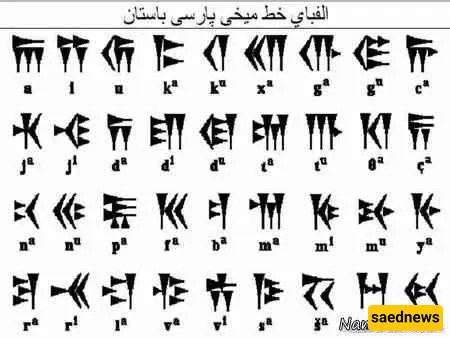
Old Persian Cuneiform / Cuneiform Script
Later, the Babylonians reduced the number of cuneiform signs to between 400 and 350. The Akkadians, by abandoning the semantic (meaning-based) aspect of words, opened a new chapter in the history of writing by shifting from logographic writing to syllabic writing.
During the rule of the Akkadians in Babylon, cuneiform spread to Assyria and Elam, and shortly afterward, the Hittites in Asia Minor also adopted it. Around 2000 BCE, the script reached Syria, through which the Hittites also became familiar with cuneiform. By around 1400 BCE, it had become an international writing system across much of West Asia.
In the first millennium BCE, the Urartians also adopted the Assyrian cuneiform script. In the 5th century BCE, the ancient Persians, under Darius the Great, for the first time developed Old Persian cuneiform from Elamite writing. Although it is believed to have been derived from Elamite, Old Persian cuneiform is an independent script and can be considered the only alphabetic form of cuneiform writing.