SAEDNEWS: Among the objects left from the Golestan Palace is a finely decorated wooden chair that seems more than a simple court artifact. It reflects the hidden influence of Mahd-e Olya, the queen mother of the Qajar era, whose power quietly shaped the monarchy in favor of her son and remains a historical mystery.
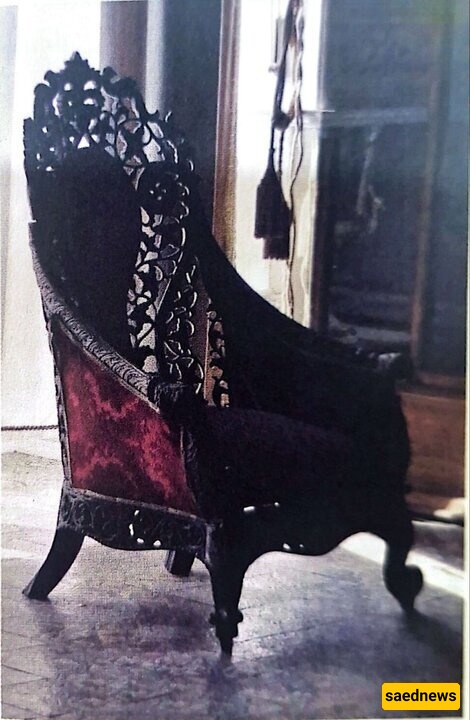
Among the surviving objects from the Golestan Palace, a wooden chair with delicate decorations stands out more than others.
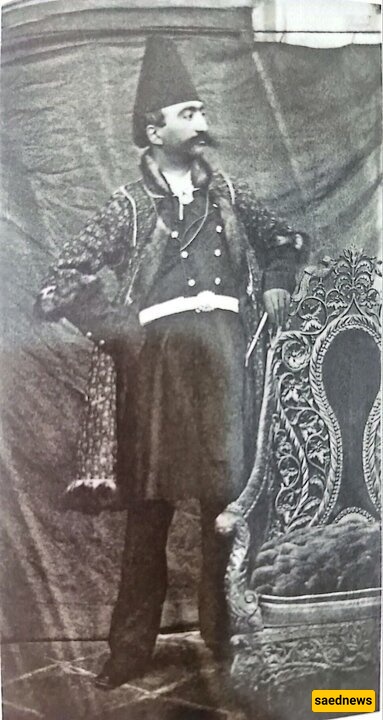
According to Saed News’ Society Service, this chair is made of walnut wood and features intricate carvings and embossed floral motifs. Two symmetrical designs appear on the upper part of its backrest, giving it a highly ceremonial appearance. The seat and part of the backrest are also covered in purple velvet—details that together place it among the distinguished objects of the Qajar court. The museum description at the Golestan Palace states: “This chair belonged to Mahd-e Olya.”
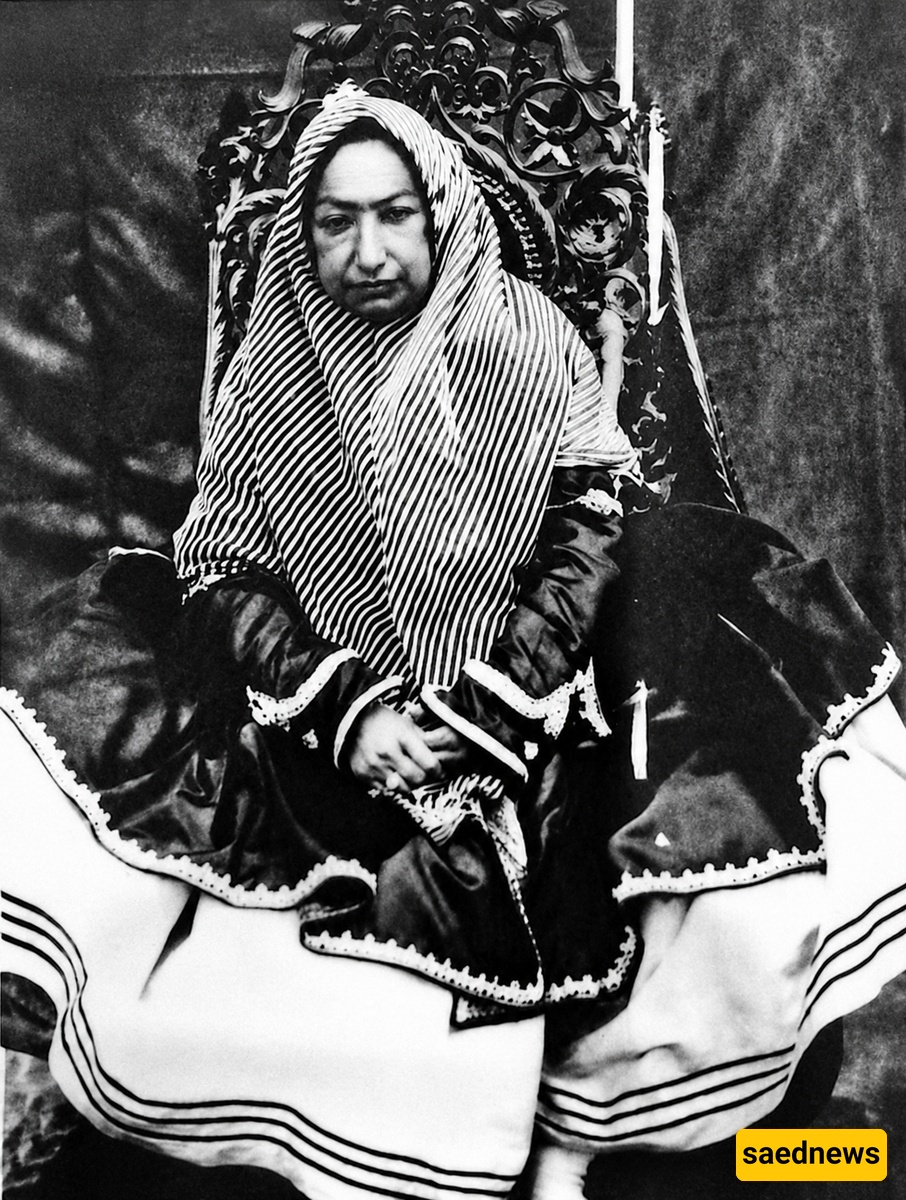
However, the importance of this chair is not limited to its form and decoration; it is also surrounded by a layer of historical and political attribution. Linking the chair to the mother of Naser al-Din Shah, Mahd-e Olya, elevates it from a decorative object to a symbol of power. As depicted in some historical TV series, Mahd-e Olya is often shown seated on a specific chair.
Mahd-e Olya, the mother of Naser al-Din Shah, served as regent during the period between the death of Mohammad Shah and the ascension of Naser al-Din Mirza. She was one of the most influential women of the Qajar court. Her influence overshadowed the court throughout the reign of Naser al-Din Shah, and in the end, the weight of her authority was even associated with the execution of Amir Kabir in the Fin Bathhouse of Kashan. This political authority seems to have become symbolically tied to the identity of this chair.
However, this attribution is not definitive. There is no solid and independent evidence confirming that the chair truly belonged to Mahd-e Olya. On the other hand, surviving photographs from the era of Naser al-Din Shah—mostly taken by the Shah himself from around 1281 AH onward—present a more complex picture.
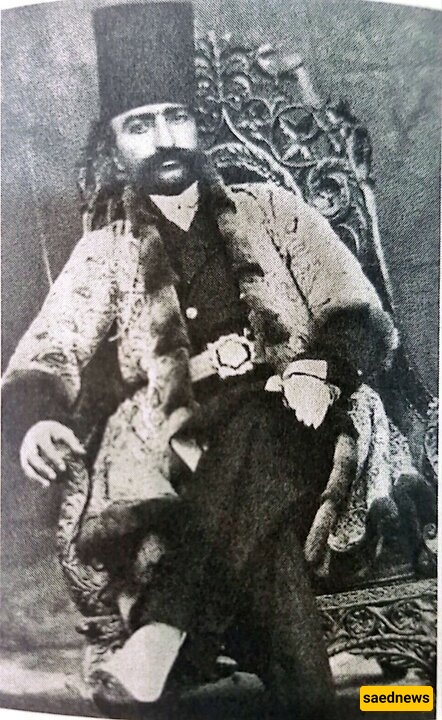
In many of these images, various court figures are seen sitting on this same chair. In some cases, it is Mahd-e Olya alone; in others, Naser al-Din Shah himself, his sister Ezzat-od-Doleh, Madame Abbas (Mahd-e Olya’s attendant), Anis-od-Doleh (the Shah’s favorite wife), and several other courtiers. This repetition suggests that the chair may not have been a personal possession but rather a theatrical and movable object used within the inner court and royal setting.
Interestingly, these photographs also implicitly show that the chair played an important role in the visual staging of the court. Its repeated presence in official and unofficial images made it a recurring prop in the visual culture of the Naserian era.
Another important point is that the introduction of chairs into Iranian visual composition is associated with the reign of Naser al-Din Shah. In his surviving works, both in photography and painting, the chair appears as a key element. A large number of his portraits depict him seated on a chair. At the same time, only in rare cases is he shown in older compositions such as sitting on a throne or in more traditional settings.
This transformation was not entirely unprecedented. Even in the late Safavid period, there are examples of kings being depicted seated on a “throne-chair.” During the reign of Fath-Ali Shah Qajar as well, he was occasionally portrayed on golden, jewel-studded chairs. However, the key difference is that during Naser al-Din Shah’s era, the chair is no longer an exceptional element but becomes a dominant visual norm, whereas in earlier periods its use was limited and sporadic.
Before this period, royal imagery mostly depicted kings either seated on the ground or leaning on thrones and cushions. In early Qajar paintings, the focus was not on realistic portraiture but on material symbols of power—such as the Kiani crown, royal necklaces, jeweled armbands, precious stones, and the throne itself. In this sense, the image of the king was less a representation of the individual and more a display of symbols of authority.
Some art historians argue that this royal iconography in the Qajar period also carried political messages. In this regard, Leila Diba notes in her article “The Image of Power and the Power of Image” that in the first two decades of Fath-Ali Shah’s reign, more than fifteen seated portraits of him were sent as diplomatic gifts to Britain, India, Russia, and France—images that emphasized jewels and symbols of wealth and authority. In this sense, the royal portrait functioned not merely as representation but as a tool of visual diplomacy and political power.
Despite this trend, the use of chairs in royal portraits was not entirely new. In the late Safavid period, there are examples of kings seated on chairs, and even during Fath-Ali Shah’s time, he was sometimes depicted on jewel-encrusted golden chairs. However, under Naser al-Din Shah, this visual form became dominant and essentially turned into the standard representation of the king.
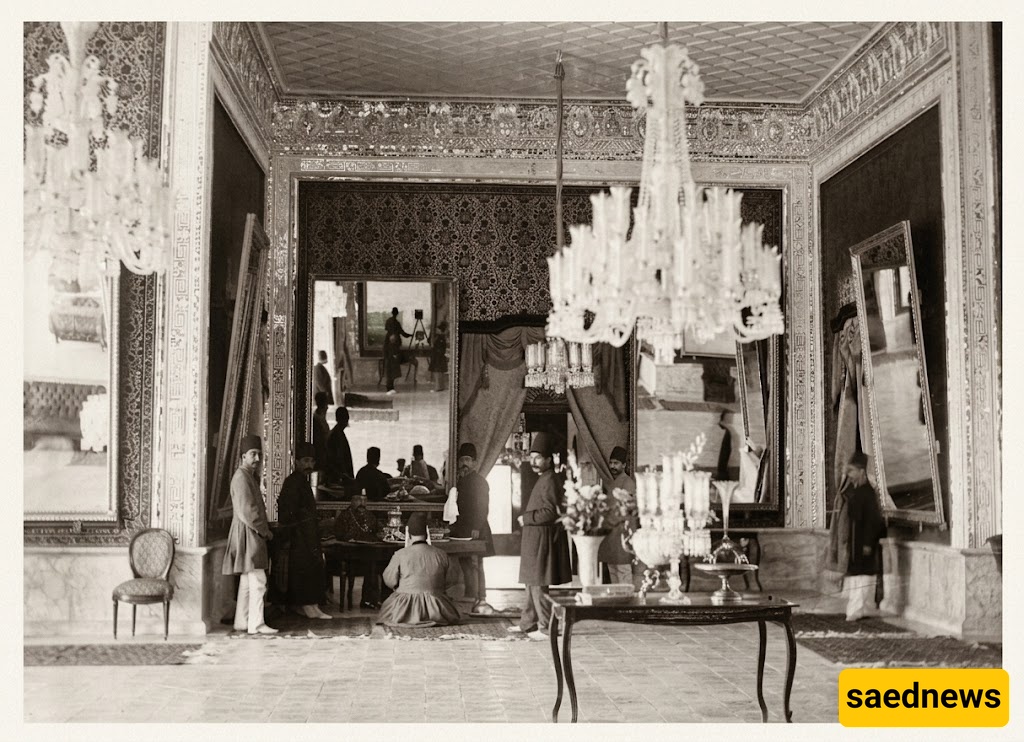
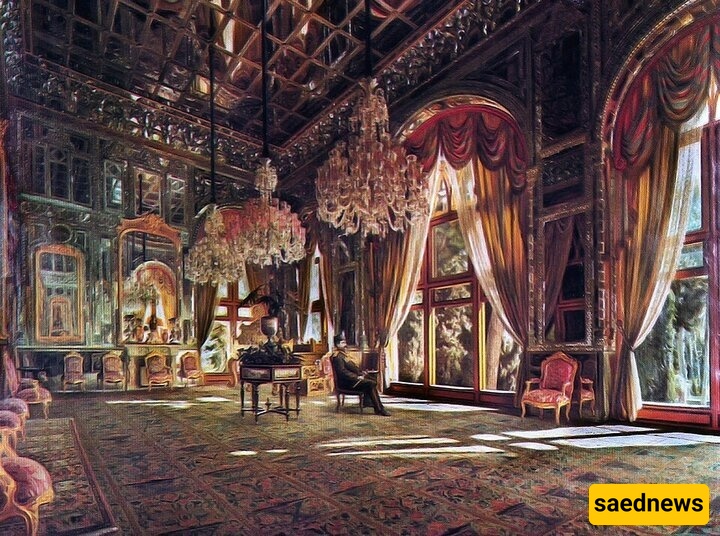
One of the most important works of this period is the famous painting “Mirror Hall” by Kamal-ol-Molk. In this painting, Naser al-Din Shah is depicted alone in the Mirror Hall, seated on a chair. Historical records suggest that the creation of this work took nearly five years, reflecting the importance and meticulous attention given to representing this royal space.
So, do you think this chair truly belonged to Mahd-e Olya, or was it simply a studio prop used in the Naserian court? If you have visited the Golestan Palace, feel free to share your impressions of this piece of history in the comments.