SAEDNEWS: Between 1918 and 1920, the Spanish flu pandemic killed more people worldwide than World War I. In Iran, it is estimated that 10–25% of rural populations and 1–10% of urban populations died due to the flu and related harsh conditions.
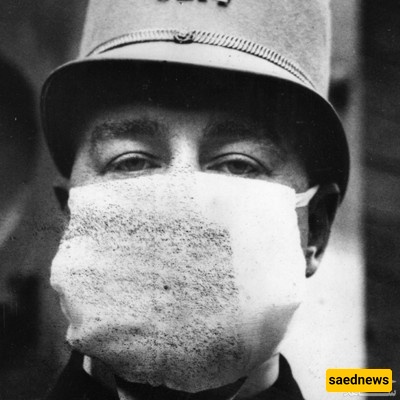
According to Saed News, as reported by Bartarinha, About a hundred years ago, between 1918 and 1920, a global influenza pandemic—later known as the “Spanish Flu”—caused more deaths worldwide than the First World War itself. In Iran alone, estimates suggest that between 10% and 25% of the rural population and between 1% and 10% of urban residents died due to a combination of harsh conditions, among which influenza was a major factor. Because the outbreak in Tehran coincided with sudden strong winds, it was locally referred to as the “illness of the wind.”
British journalist Aster Cooke, later known for his American radio letters on BBC programs, was ten years old during the autumn of 1918 when he contracted influenza. In a 2004 BBC interview, he recalled:
“What I clearly remember is how my mother—an Irish-descended woman from the north—treated me with unusual tenderness during those days. People from the north are not typically very expressive; they are not inclined to show emotion, to hug or kiss. But during those four or five days of my fever, she was deeply worried and became very affectionate because I had contracted the pandemic flu.”
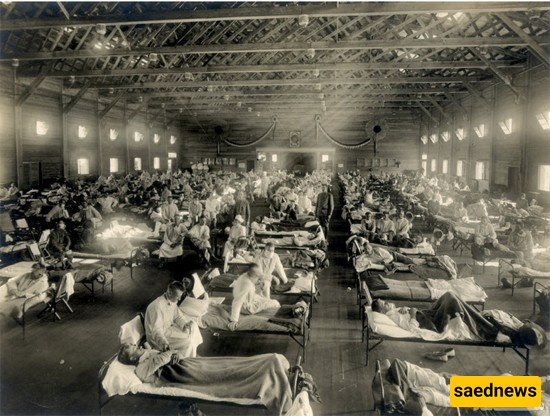
Ida Darwin was seven when her father, after caring for soldiers in a military hospital, became infected with influenza, which then spread throughout the family. She later recalled:
“I remember my aunt standing by my bedside, watching me with concern because my father had died from the disease. He had survived all the dangers of war, like many others, only to return home and die from influenza, which proved even more deadly than the war itself.”
The Spanish Flu was one of the deadliest pandemics in human history, yet its name is misleading. It became associated with Spain because Spanish media widely reported outbreaks, including infections among the royal family and prominent figures. Meanwhile, countries such as Britain—engaged in World War I and under strict wartime censorship—reported very little about the disease.
Governments in the United States, Germany, Britain, and France censored information about the outbreak to maintain morale at the end of the war. Authorities feared that revealing the full scale of the disaster would weaken public spirit, suggest vulnerability to enemies, and create panic.
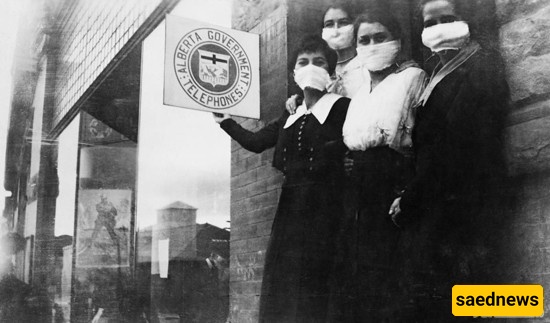
The first wave of influenza in spring 1918 most likely did not originate in Spain. Evidence suggests it began in the United States, with early cases reported from a military camp in Kentucky. These soldiers, mostly young recruits training for war, were later transported to the French port of Bordeaux, where the virus spread among American troops in northern France.
A U.S. army physician described the situation in a letter:
“The epidemic began about four weeks ago and progressed rapidly, severely weakening morale in the camp. First, soldiers develop what appears to be influenza, but upon entering the hospital, many develop severe pneumonia unlike anything seen before. Within hours, red patches appear on their cheeks, followed by cyanosis spreading across the face. Death often follows within hours, preceded by suffocation. Watching this endless stream of deaths is unbearable.”
As American troops carried the virus into Europe, it spread rapidly across battlefields. The Western Front’s trenches provided ideal conditions for infection, and the movement of troops and workers from across the British Empire and beyond—including India and China—accelerated its global spread.
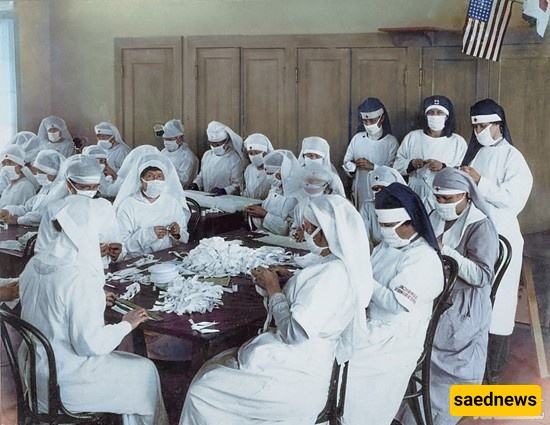
Unlike typical seasonal influenza, which mainly affects children and the elderly, the Spanish Flu disproportionately killed young adults. Actor Arnold Ridley, who later worked in Birmingham theater, recalled his experience:
“I was one of the first to fall ill. I collapsed outside the railway station and was taken home by taxi. My landlord left milk outside my door rather than enter. My doctor advised me to return to my family in Bath. I recovered slightly but returned to Birmingham despite my mother’s objections. The theater was desperate for actors. Two staff members had already died, many were sick, and yet the show had to continue. One actor even played multiple roles in the same performance.”
A second, far more lethal wave emerged in late 1918 and spread globally. A hospital superintendent in Cape Town described the devastation:
“Six thousand people died within two weeks. Cape Town became a city of the dead. Bodies were collected in carts, shops closed, transportation stopped, and even clergy were unavailable for burials. In cemeteries, grieving families dug graves themselves, often too weak to dig deep enough. Chaos and suffering were everywhere.”
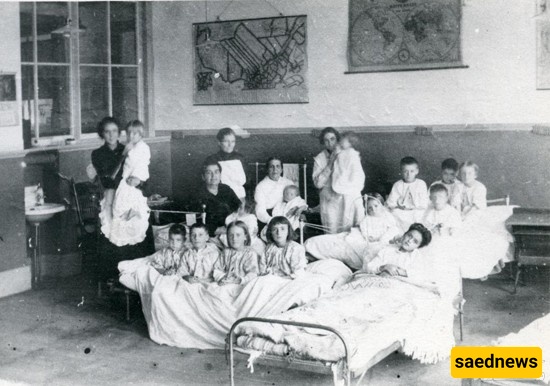
By the end of the pandemic in 1919, more than 15 million people had died worldwide—more than the total deaths of World War I.
According to historian Abbas Milani, Iran at the time was suffering from multiple crises including famine, addiction, and disease. Public health infrastructure was extremely weak, and estimates suggest that up to 10%–40% of the population may have died in the early 20th century due to combined effects of epidemics, famine, and war.
Research by Dr. Amir Aslan Afkhami shows that the Spanish Flu entered Iran through multiple routes:
From Ashgabat to Mashhad
From Baku to Anzali
From southern ports such as Bandar Abbas and Bushehr
From the west through Mesopotamia
In all cases, Russian, British, and Ottoman forces contributed to the spread. Estimated mortality in Iran ranged from 10% to 25% in rural areas and 1% to 10% in cities—equivalent to between 900,000 and 2.5 million deaths.
The Spanish Flu had lasting effects on public health systems. In Iran, awareness of the catastrophe contributed to the establishment of the Pasteur Institute in Tehran in 1921, initiated through efforts by Prince Nosrat al-Dowleh Firouz following the Paris Peace Conference.
In 2005, scientists successfully reconstructed the full genetic sequence of the 1918 influenza virus from preserved samples, including one recovered from a frozen victim in Alaska. Experiments later showed that infected animals developed symptoms similar to those documented in 1918, including a severe immune reaction known as a “cytokine storm,” which is now believed to have played a major role in the high mortality among young adults during the pandemic.