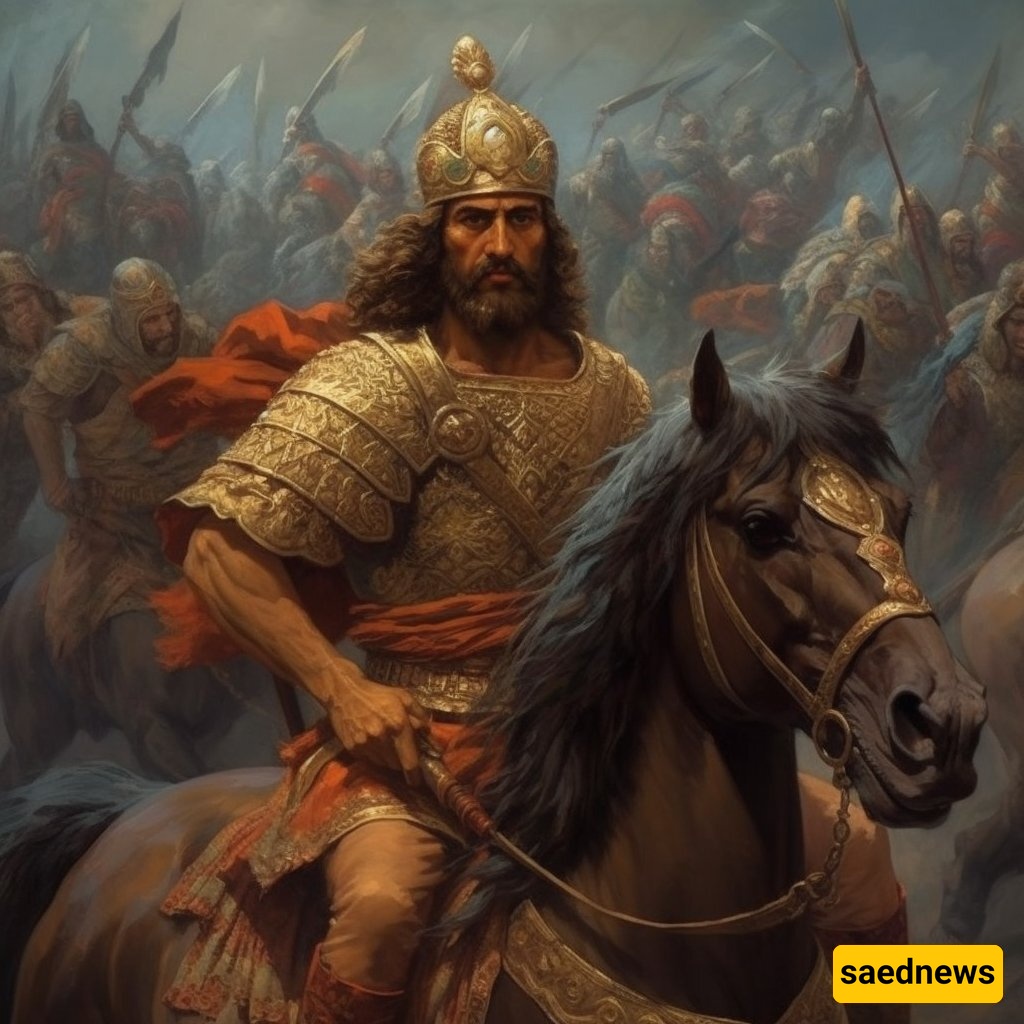
SAEDNEWS: An artificial intelligence–generated reconstruction of the face of Ariobarzanes, the Persian commander, has been created and widely circulated on social media. Based on descriptions from Wikipedia, the AI has visualized and illustrated his appearance.
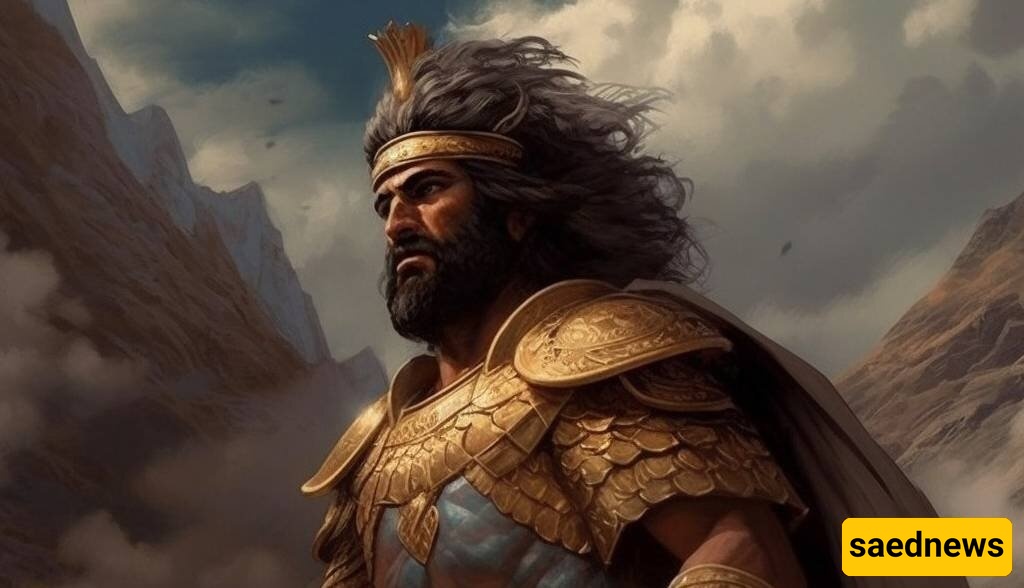
According to reports from Saed News’ social affairs section, Ariobarzanes was a nobleman and one of the great military commanders of ancient Iran during the reign of Darius III, the last king of the Achaemenid Empire. In 331 BCE, he famously resisted the forces of Alexander the Great at the Battle of the Persian Gates, fighting with remarkable bravery to defend his homeland and ultimately sacrificing his life in what became a legendary last stand.
His courage in battle led Greek historians to compare him with Leonidas, the Spartan king known for his role at Thermopylae during the reign of Xerxes I. The Battle of the Persian Gates is often described as closely resembling Thermopylae, including similarities in the commanders’ final moments. The key difference noted in these accounts is that Leonidas was honored in Greece with inscriptions celebrating his heroism, while Ariobarzanes did not receive comparable recognition in Iran.
The historian Abdolrafi’ Hekmat wrote of him:
Ariobarzanes, the brave defender of the Persian Gates, fully fulfilled his duty to his homeland and sacrificed his life. He should be regarded among the martyrs of the nation, and his memory honored and preserved forever.
No direct records of Ariobarzanes remain from Achaemenid-era Persian sources. However, Greek works such as Anabasis of Alexander by Arrian (a 2nd-century CE Greek historian and philosopher), Library of History by Diodorus Siculus, and History of Alexander by Quintus Curtius provide brief accounts of the Battle of the Persian Gates and his resistance against Alexander’s army.
Ariobarzanes (also rendered Ariobarzan in Persian, meaning “glorious Iran”) is described in historical traditions as having been born around 368 BCE and killed in 331 BCE during the battle against the Macedonian forces.
His lineage is debated among historians. Some sources identify his father as Pharnabazus II and his mother as Apama, daughter of Artaxerxes II. Others suggest he was the son of Artabazus and the grandson of Pharnabazus. In contrast, many accounts describe Artabazus as his brother. Pharnabazus himself was a prominent Achaemenid noble who governed the satrapy of Phrygia in northwestern Anatolia and claimed descent from Arsames, the grandfather of Darius I.
Some historical traditions describe Ariobarzanes as having grown up in a large family, while others say he had only two siblings. As a member of a royal-related household, he would have received elite training intended for Persian nobility, including military education. He is also said to have spent part of his youth in Macedonia, where he was exposed to Greek learning. After returning to Persia, he rose through military ranks and eventually became satrap of Persis.
According to historians, in August 330 BCE, Alexander advanced toward Persepolis with his army. A segment of his forces was halted in the narrow and mountainous region of the Persian Gates, a strategically difficult pass. The Macedonian troops reportedly struggled with harsh terrain, heavy rainfall, and dense forests, reportedly going three days without seeing sunlight.
Ariobarzanes led the Persian defense with determination, holding the pass against Alexander’s advancing army. Despite his resistance, he was ultimately killed in battle while defending his homeland.