SAEDNEWS: A military advisor to the Leader of the Islamic Revolution Mohsen Rezaei has warned the US against attack on the Hormuz Strait, saying that the US army has faced deadend in face of Iran.
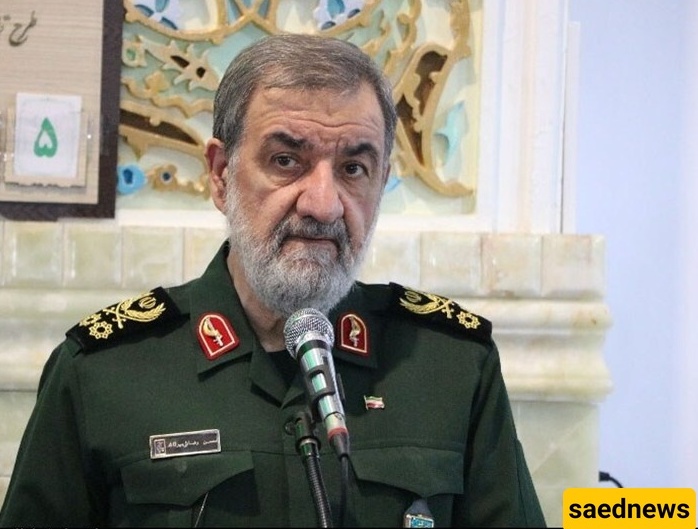
According to Saednews, In remarks published on Sunday, Rezaei warned that any military action against Iran in the Strait of Hormuz could trigger a broader regional conflict. He said Tehran could respond by breaking what he described as a “naval blockade” and even reconsider its membership in the Treaty on the Non-Proliferation of Nuclear Weapons (NPT).
Addressing tensions with the United States, he claimed Washington and the administration of Donald Trump are at a “complete deadlock,” and cautioned that a decision to go to war with Iran would place the United States in a “dark and endless corridor” extending across the Strait of Hormuz, the Persian Gulf, the Gulf of Oman, Bab al-Mandab, and the Indian Ocean.
He alleged that the United States is simultaneously threatening military action while demanding in negotiations that Iran give up control of the Strait of Hormuz and surrender its enriched uranium stockpile.
Rezaei argued that Iran has strong strategic reasons for maintaining influence over the waterway, saying the goal is to prevent the Persian Gulf from becoming a zone of military buildup and instability. He added that the strait remains open to commercial shipping, while restrictions are aimed at military activity that could escalate tensions.
He further claimed that during the Iran-Iraq war—and what he called a “12-day war”—large quantities of weapons and military equipment passed through the strait and were later used against Iran.
On Iran’s nuclear program, he said the country remains committed to the International Atomic Energy Agency (IAEA) and the NPT, and that its nuclear activities continue under international monitoring. He also stated that IAEA inspectors have repeatedly visited Iranian facilities, and argued that even U.S. intelligence assessments have found no diversion in Iran’s nuclear program.
He added that what he described as U.S. “excessive demands” have failed and will continue to fail, saying Washington is left with two options: military confrontation or negotiation for leverage.
Regarding military dynamics in the Persian Gulf, he argued that even if U.S. naval forces pass through the Strait of Hormuz, they would remain within range of Iranian capabilities, calling the region a “dangerous corridor” for American forces.
He warned that any conflict could expand beyond the Persian Gulf into the Red Sea, Bab al-Mandab, and the Indian Ocean, adding that “the first to leave the scene would be the Americans.”
He concluded that while Iran continues negotiations to defend the rights of its people, crossing its “red lines” would prompt what he described as a “decisive response,” and said the option of withdrawing from the NPT remains on the table if tensions escalate.