SAEDNEWS: The Holy Shrine of Imam Reza (AS) in Mashhad is a remarkable treasure of Iranian-Islamic art and architecture. Over more than twelve centuries, it has evolved from a simple tomb in Sanabad into a magnificent shrine and one of the most significant religious centers in the Islamic world.
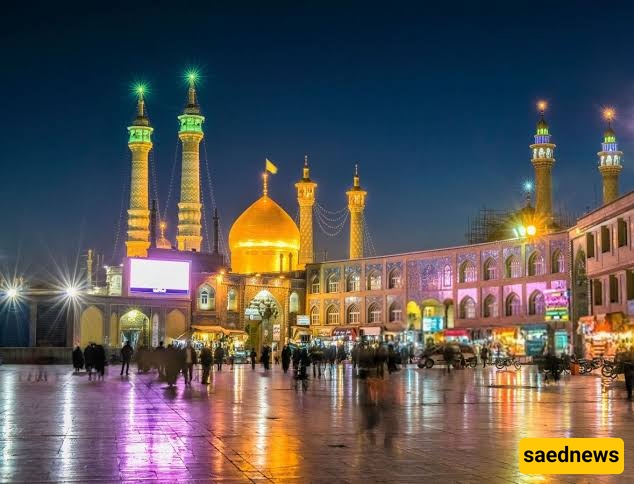
According to Saednews, The Holy Shrine of Imam Ali ibn Musa al-Rida (peace be upon him) in Mashhad is one of the most important religious centers in the Islamic world and a remarkable treasury of Persian-Islamic art and architecture. Every year, millions of pilgrims from across Iran and around the world visit this sacred site out of their devotion to the Ahl al-Bayt. But how did this magnificent shrine take shape over more than twelve centuries, and what historical developments and transformations did it experience along the way? This article takes a journey through history to explore the construction, expansion, restoration, and architectural evolution of the Imam Reza Shrine from the earliest days following the Imam’s burial to the present day.
Before the martyrdom of Imam Reza, the site of today’s shrine was a small village called Sanabad, located on the outskirts of Tus. The area was known for the tomb of Harun al-Rashid, the Abbasid caliph, and was associated with the structure known as Haruniyya.
After Harun’s burial, al-Ma'mun ordered a simple tomb structure to be built over the site in the architectural style of Khorasan. When Imam Reza died in 203 AH and was buried at the same location, the area gradually became known as Mashhad al-Rida, meaning the place associated with his martyrdom and visitation.
Interestingly, for centuries, the tomb of Harun al-Rashid remained near the feet of Imam Reza’s grave. During the eighth century AH, however, the Sarbadars removed many visible traces associated with the Abbasid caliphs, including the visible form of Harun’s grave. This period marked an important stage in the transformation of Mashhad into a major religious city.
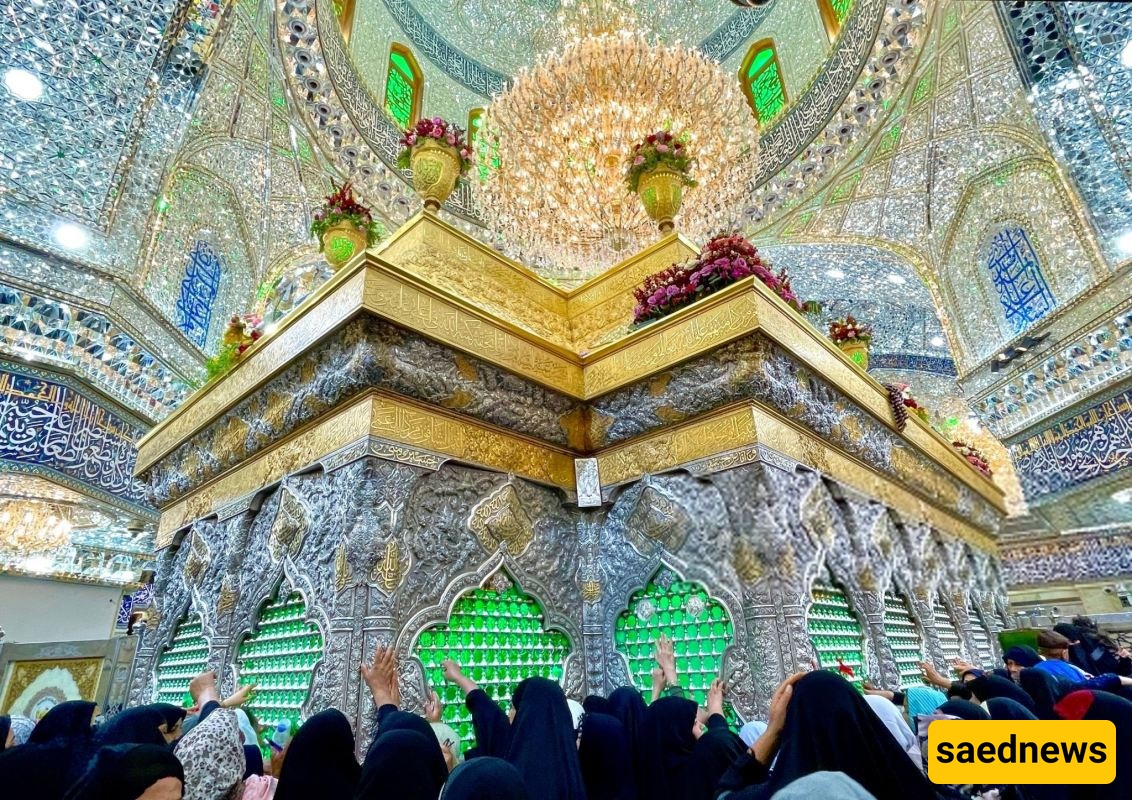
During the early centuries of Islamic history, the shrine of Imam Reza gradually gained greater importance. Under the Samanids, Buyids, and Ghaznavids, various repairs and decorative projects were carried out at the shrine.
The first major dome over the sacred tomb is traditionally associated with the reign of Sultan Sanjar of the Seljuks. The dome was decorated with tiles and muqarnas, and elements of its original structure remained influential in the shrine’s later architectural development.
During the reign of Sultan Muhammad II of Khwarazm, the shrine was further embellished with some of the finest tiles available at the time, and two prayer niches were added. These developments indicate that, even before the Mongol invasions, the Imam Reza Shrine had already become an important example of Islamic architecture.
One of the notable questions in the history of the shrine is how it survived the devastating Mongol invasions. During their campaigns in Khorasan, the Mongols destroyed Tus and surrounding areas and carried out widespread massacres.
Historical accounts indicate that the shrine of Imam Reza suffered relatively limited physical damage, while its principal structure survived. Although its possessions and offerings were looted, the main building was not completely destroyed. This survival holds considerable historical and religious significance, and some devotees have interpreted it as a sign of divine protection and the spiritual grace associated with Imam Reza.
The damage that did occur was repaired during subsequent periods.
The Timurid period can be regarded as one of the most important eras in the architectural development of the shrine.
During this period, Goharshad Begum, the wife of Timurid ruler Shah Rukh, commissioned the construction of the magnificent Goharshad Mosque on the southern side of the shrine complex, toward the qibla. The architect of this celebrated monument was Qavam al-Din Shirazi.
The mosque’s inscriptions, executed in elegant Thuluth script, together with its intricate mosaic tilework, are among its most remarkable features. Its soaring iwans, elaborately decorated vaults, and exquisite tilework have continued to attract the admiration of artists and architects for centuries.
Other buildings, including the Parizad School and Doodar School, were also added to the shrine complex during this period.
With the establishment of Twelver Shiism as the official religion of Iran, attention to the shrine of Imam Reza increased significantly. The Safavid rulers undertook extensive projects to restore, expand, and beautify the complex.
Shah Tahmasp I presented the shrine with an early zarih and ordered the restoration and gilding of the dome, as well as the gold-plating of the nearby minaret.
The most significant developments, however, took place during the reign of Shah Abbas I. He expanded the historic courtyard, now known as Enqelab Courtyard, and commissioned several new porticos and spaces, including Tohidkhaneh, Dar al-Siyadah, and Dar al-Fayz.
Following damage caused during Uzbek attacks, Shah Abbas also ordered the dome to be restored with copper sheets covered in gold. This major project began in 1010 AH and was completed in 1116 AH.
The celebrated inscription around the dome, written in Thuluth script by the renowned calligrapher Ali Reza Abbasi against a turquoise background, is one of the most distinctive artistic legacies of this period.
A famous popular story connects Sheikh Baha'i with the construction of the shrine during the reign of Shah Abbas.
According to the story, Sheikh Baha'i, who served as an architect and adviser on several of Shah Abbas’s projects, requested that construction of the shrine be completed while leaving its main entrance unfinished because he intended to install an inscription containing his own poetry.
According to the tradition, the inscription was intended to serve almost as a symbolic “talisman,” suggesting that only spiritually prepared visitors should enter the shrine.
However, after returning from a long journey, Sheikh Baha'i discovered that the shrine had been completed and that the entrance had also been finished at the insistence of the shrine’s administrator.
When Sheikh Baha'i questioned the decision, the administrator reportedly told him that he had repeatedly dreamed of Imam Reza, who had said:
“Let Sheikh Baha'i’s inscription not be placed at the door of our house; the door of our house is never closed to anyone.”
According to the story, Sheikh Baha'i wept upon hearing this and abandoned his original plan, recognizing the spiritual greatness and generosity associated with Imam Reza.
Although the story has legendary elements and should be understood as part of the shrine’s popular traditions rather than established historical fact, it reflects the deep devotion of generations of pilgrims to Imam Reza and their belief in his spiritual blessings.
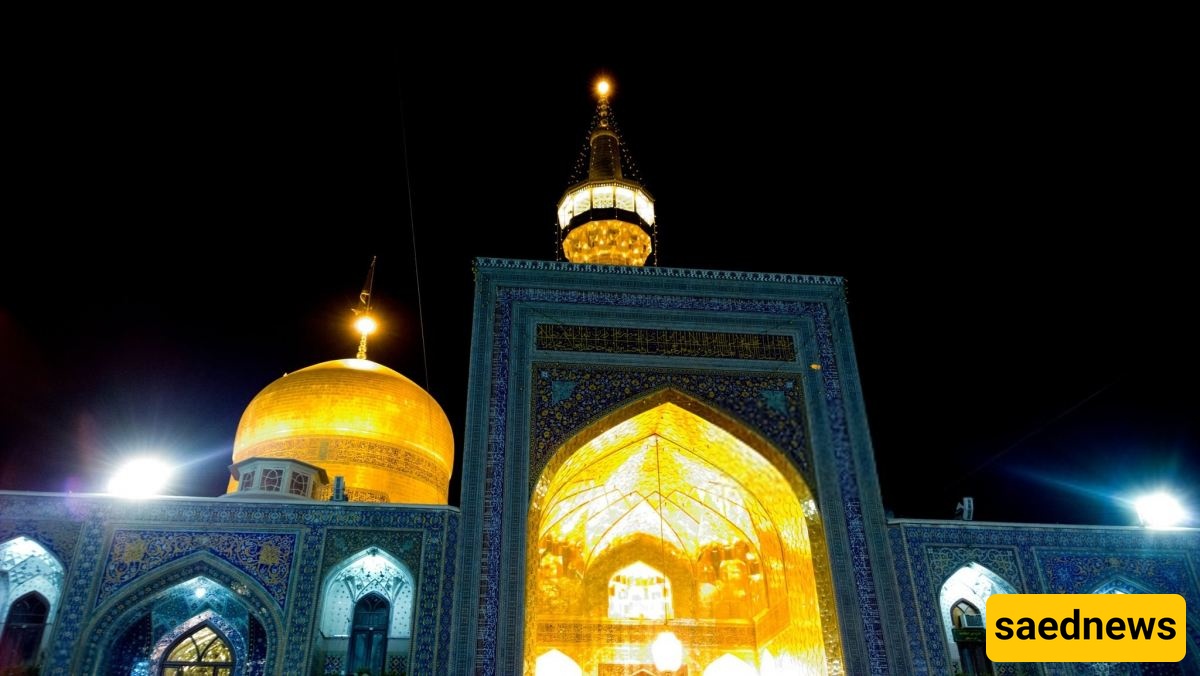
During the Afsharid era, Nader Shah Afshar, who had a particular interest in Mashhad, ordered the gilding of the Timurid courtyard iwan and the construction of the shrine’s second minaret.
In 1144 AH, a famous single-piece marble basin, reportedly brought from Herat to Mashhad, was installed at the shrine. It was later covered with an octagonal structure and dome.
The development of the shrine continued under the Qajars. Fath-Ali Shah Qajar presented the shrine with another zarih. The Azadi Courtyard, historically known as the New Courtyard, was also constructed during this period and became one of the principal courtyards of the complex.
The western iwan of the courtyard was gilded during the reign of Naser al-Din Shah Qajar and subsequently became known as the Naseri Iwan.
In 1275 AH, mirrorwork was added to the Rawza-ye Munawwara and several of the shrine’s porticos, including Tohidkhaneh and Dar al-Hefaz. Further repairs were carried out during the Pahlavi period, while the shrine’s largest modern expansions took place after the Iranian Revolution.
The history of the Imam Reza Shrine tells the story of a gradual transformation from a modest tomb into an immense religious and architectural complex.
Across more than twelve centuries, the shrine has experienced wars, invasions, political changes, royal patronage, restoration projects, and successive waves of architectural development. From the Mongol invasions to the building programs of the Safavid, Afsharid, and Qajar rulers, the complex has remained an enduring symbol of Persian-Islamic religious culture and artistic heritage.
Today, the Imam Reza Shrine is a major destination for pilgrims devoted to the Ahl al-Bayt and also serves as a living showcase of Islamic and Persian art. Its extraordinary architecture, intricate tilework, dazzling mirrorwork, and ornate golden zarih preserve artistic traditions from different periods of Iranian history.
The story of the shrine is therefore not simply the history of a single building. It is the history of a sacred complex that has continually evolved across centuries while retaining its central religious identity. As Mashhad continues to develop, the Imam Reza Shrine remains one of the city's defining landmarks and a lasting symbol of Khorasan’s religious and cultural heritage.