SAEDNEWS: “Human” and “person” are two words that have different meanings in different languages and in different contexts.

According to Saednews, In our diverse and complex world, one question has long inspired philosophical, religious, and scientific reflection: What is the difference between “human” and “Adam”? While the term “human” generally refers to a living being with specific biological characteristics, “Adam” is often associated with the spiritual, moral, and cultural dimensions of humanity. This article explores these two concepts and examines the fundamental differences between them.
The words human and Adam can have different meanings depending on the language, context, and tradition in which they are used. Although they are sometimes used interchangeably, they can represent significantly different concepts.
To begin, a human is a living being characterized by distinctive abilities and traits, including reasoning, emotions, language, culture, and social relationships. Humans are social beings who depend on one another and live within organized communities.
From a scientific perspective, modern humans belong to the family Hominidae and the species Homo sapiens.
Abstract thinking: Humans can understand, develop, and apply abstract concepts.
Language: Humans use complex languages to communicate information, express ideas, and share experiences.
Emotions and feelings: Humans experience emotions such as love, hatred, happiness, sadness, fear, and compassion. These emotions influence relationships, behavior, and decision-making.
Social interaction: Humans form families, communities, institutions, and cultures through cooperation and communication.
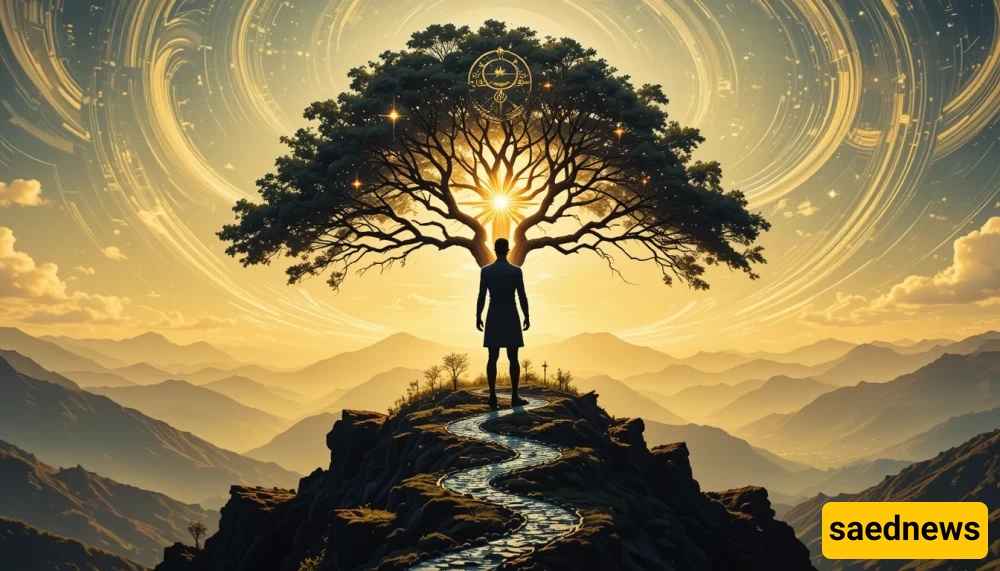
The term Adam, on the other hand, has a particularly important meaning in religious and philosophical traditions. In Judaism, Christianity, and Islam, Adam is presented as the first human being created by God, although the details and interpretations of his story differ among these traditions.
Adam is not viewed merely as a biological organism. He is also understood as a symbol of humanity, moral responsibility, free choice, and the relationship between human beings and God.
The first human: In major Abrahamic religious traditions, Adam is regarded as the first human created by God.
Relationship with God: Adam represents a human being who has a direct spiritual relationship with the Creator.
Moral responsibility: The story of Adam and Eve is commonly associated with human choice, obedience, temptation, and responsibility.
Human identity: Adam can also be understood symbolically as representing humanity and its search for meaning, purpose, and moral direction.
From a philosophical perspective, the human can be understood as a being who exists in the natural world and searches for meaning, purpose, and identity.
Adam, by contrast, can be interpreted as a symbolic representation of humanity in relation to God, morality, responsibility, and the deeper meaning of existence.
Scientifically, the human is studied as a biological species. Human anatomy, genetics, evolution, psychology, and social behavior can all be examined through scientific methods.
Adam, however, is primarily a religious and philosophical figure. His significance belongs largely to theological, historical, cultural, and interpretive discussions rather than to empirical biological science.
Human societies are built around communication, cooperation, culture, family structures, and shared institutions. The concept of Adam focuses more strongly on the individual and questions of spiritual identity, moral responsibility, and the relationship between humanity and God.

Not necessarily. Human generally describes a member of the human species, whereas Adam traditionally refers to the first human in Abrahamic religious traditions and can also carry broader symbolic and spiritual meanings.
No. Judaism, Christianity, and Islam each have their own theological interpretations of Adam and the story associated with him.
A human can refer to an individual member of the human species, while humanity generally refers to human beings collectively.
Some abilities, such as communication, emotional responses, problem-solving, and social behavior, can also be observed in other animals. However, the complexity and combination of these characteristics in humans are distinctive.
Yes. A person can live without adopting or exploring the religious concept of Adam. However, studying the concept can provide a deeper perspective on questions of morality, human nature, responsibility, and the meaning of existence.
Humans are extensively studied by biological and social sciences. Adam, as a religious figure, is primarily discussed within theology, philosophy, religious studies, and cultural history rather than empirical science.
Ultimately, human and Adam represent two different ways of understanding human existence. The term human emphasizes biological, psychological, social, and cultural characteristics, while Adam represents the religious and philosophical dimensions of humanity, particularly ideas concerning creation, morality, responsibility, and the relationship with God.
Understanding the distinction between these concepts can encourage a broader reflection on who we are—not only as biological beings, but also as individuals searching for meaning, identity, moral responsibility, and purpose in life.