SAEDNEWS: The remembrance of Muharram begins with the same central memory of Imam Husayn at Karbala, but its public expression changes dramatically from Iran and Iraq to South Asia and the Caribbean. Those differences reveal how religious memory adapts to language, history, art and local culture.
According to SaedNews, Muharram is remembered across Shia communities through a remarkable mixture of shared religious memory and local tradition. The central event is the martyrdom of Imam Husayn ibn Ali, the grandson of Prophet Muhammad, at Karbala in 680 CE, commemorated particularly on Ashura, the 10th day of Muharram. Yet there is no single worldwide script for remembering it.
That diversity is part of the story.
In one place, the defining image may be a solemn majlis in a neighborhood hall. Somewhere else, it may be a vast procession, a dramatic performance, an elaborate replica of a shrine or a pilgrimage to Karbala. In South Asia, poetry and public storytelling have developed distinctive forms, while in Trinidad the commemoration became intertwined with Indo-Caribbean history and even attracted participation from people outside the Muslim community.
The result is a fascinating example of how one historical memory can travel across continents without remaining culturally identical.
For Shia Muslims, Muharram is inseparable from the memory of Karbala and Imam Husayn's stand against what is understood as injustice. Ashura therefore functions not simply as a historical anniversary but as a recurring act of remembrance, mourning and moral reflection. Oxford's Ashura reference describes the commemoration as a central element of Shi'i ritual life and notes the diversity of practices that developed around it.
Mourning assemblies, known as majalis, are among the most widespread forms. Participants listen to sermons and accounts of Karbala, hear elegies and lamentations, and often take part in rhythmic expressions of mourning. These gatherings can be intimate, held in homes or community spaces, or become large public events.
The differences begin with what communities choose to emphasize.
Iran developed one of the world's most recognizable forms of Muharram performance: ta'ziyeh, a ritual dramatic tradition depicting religious and historical events, especially the tragedy of Karbala.
Rather than merely hearing the story, audiences can encounter it through poetry, music, song and movement. UNESCO describes ta'ziyeh as a ritual dramatic art whose performances can involve large casts portraying historical, religious and other characters. It was inscribed on UNESCO's Representative List of the Intangible Cultural Heritage of Humanity in 2010.
The form developed particularly strongly under the Safavids, after Twelver Shi'ism became Iran's state religion in the 16th century. Encyclopaedia Iranica notes that the Safavid period gave major impetus to the development of Muharram as a popular religious and artistic phenomenon.
This means that in Iran, remembering Karbala can involve not only mourning but also a sophisticated performance tradition in which the boundary between religious ritual and theater becomes deliberately blurred.
In Iraq, the geography itself gives Muharram a special dimension.
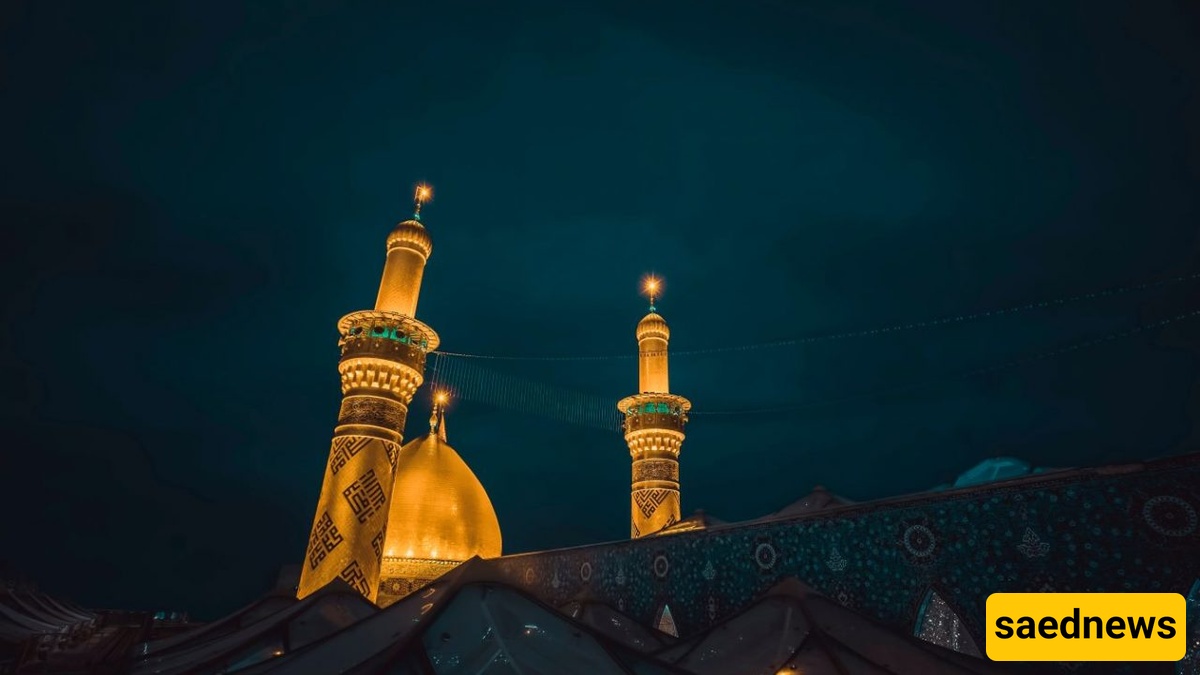
Karbala is not simply the setting of the historical event; it is a major pilgrimage destination associated with Imam Husayn's shrine. The city therefore becomes a physical focus for remembrance, with pilgrims and mourners gathering around the sacred sites connected to the Karbala narrative.
The scale can be enormous. During the 2026 Ashura commemorations, the Imam Husayn Holy Shrine reported preparations for the Tuwairij Run mourning procession and described millions of participants arriving for the observances. The shrine said thousands of staff and volunteers were deployed to manage the crowds.
Here, Muharram is experienced not only through a neighborhood gathering but through movement toward a place that carries the memory being commemorated.
Lebanese Shia communities have developed their own distinctive public expressions of Ashura. Religious gatherings, sermons, lamentation and processions remain important, but contemporary institutions and community organizations have also reshaped some practices.
One striking example is blood donation.
The World Health Organization's Eastern Mediterranean office documented efforts within Lebanon's Shia community to encourage blood donation as an alternative to forms of self-flagellation involving blood. A Lebanese hospital reported that Ashura became an occasion for spontaneous blood donation after an earlier initiative encouraged worshippers to donate.
The example illustrates an important point: religious traditions are not frozen in time. Communities can reinterpret how mourning should be expressed while retaining the underlying memory of Husayn.
Academic research has also examined how Ashura ceremonies in Lebanon can carry social and political meanings in addition to their religious significance.
South Asia added another layer to the global history of Muharram.
Shi'a communities in India developed elaborate forms of public mourning, poetry, processions and storytelling. Oxford scholarship notes that Muharram rituals spread from the Middle East into the Indian subcontinent and later traveled farther through South Asian migration networks.
In places such as Lucknow and Hyderabad, the majlis became an important cultural institution as well as a religious gathering. Urdu poetry and elegy became powerful ways of transmitting the Karbala narrative from one generation to another.
Women have also played an important role in this history. Research on South Asian Shi'ism documents female majalis and distinctive forms of women's participation, including gatherings centered on figures such as Zaynab and other members of Husayn's family.
Recent ethnographic research from Pakistan likewise describes women's majalis in Lahore, where women and children gather to hear female and male religious speakers recount the events of Karbala.
This is one reason photographs showing only male processions can give an incomplete picture of Muharram. The remembrance also takes place inside homes, women's assemblies and family networks.
Perhaps the most unexpected transformation can be found in the Caribbean.
In Trinidad, Muharram is widely known as Hosay. The tradition arrived through South Asian indentured laborers during the colonial period, carrying practices with roots in Iraq and Iran into a very different cultural environment.
The result was not simply an imported ceremony preserved unchanged.
Encyclopaedia Iranica describes Trinidad's Hosay as a tradition shaped by Hindu, Muslim and African influences. The ritual structures known as tadjahs, derived from representations associated with the Karbala tradition, became symbols of identity for Indo-Trinidadians, while participation could extend beyond Muslims.
Recent scholarship similarly documents Hindu and Christian participation in building tadjahs and in tassa drumming, showing how the commemoration developed within Trinidad's multicultural environment.
This is a particularly powerful illustration of cultural adaptation: a mourning tradition originating around Karbala became part of a Caribbean society with its own ethnic, musical and religious history.
It is tempting to look for a single "authentic" way of observing Muharram. History suggests something more complicated.
The shared foundation is the remembrance of Husayn and Karbala. Around that foundation, communities have built different languages of mourning: Iranian ritual theater, Iraqi pilgrimage and processions, South Asian poetry and majalis, Lebanese charitable initiatives and Caribbean performance traditions.
Even within the same country, practices can vary by city, family, religious authority and generation.
Some rituals have also been debated within Shia religious scholarship. Practices involving bloodletting, for example, have been contested by clerics, demonstrating that disagreement over ritual form exists within Shia communities themselves.
The bigger lesson is that Muharram is both deeply rooted and remarkably adaptable. The story remains recognizable across continents, but communities tell and embody that story through the cultural vocabulary they have inherited.
From a theater stage in Iran to the streets of Karbala, from women's majalis in South Asia to the tassa drums of Trinidad, the geography changes the sound, appearance and social meaning of remembrance.
What remains constant is the memory of Karbala. What changes is the way each community gives that memory a home.