SAEDNEWS: This article examines the Islamic ruling on the use of perfume by young girls and women. It analyzes the various opinions of Islamic scholars regarding wearing fragrance in the presence of non-mahram individuals and discusses the conditions and circumstances related to its permissibility.

According to Saednews, The use of perfumes and fragrances has always been a part of human social life. In Islamic culture, cleanliness and pleasant fragrance are given special importance, and Prophet Muhammad (peace be upon him) considered perfume among his beloved things. However, a question that often concerns many women, especially young girls, is whether wearing perfume is considered haram (forbidden) for women in Islam.
Some people believe that any form of fragrance used by women in public is prohibited, while others argue that the ruling depends on the situation, intention, and circumstances. This article explores the topic from the perspective of Islamic teachings, narrations, and the opinions of Islamic scholars, while examining the religious and ethical aspects of wearing perfume.
Before discussing the religious ruling, it is important to understand the status of perfume in Islamic teachings. Numerous narrations mention the value of fragrance. Prophet Muhammad (peace be upon him) is reported to have said:
“From your world, three things have been made beloved to me: women, perfume, and prayer.”
This narration indicates that perfume itself is not considered something negative. On the contrary, it was regarded as one of the things loved by the Prophet.
Imam Ja’far al-Sadiq is also reported to have said:
“Perfume is among the traditions of the prophets.”
Therefore, the main question is not whether perfume itself is forbidden, but rather under what circumstances the use of perfume by women may become religiously problematic.
The answer depends on several factors, including interaction with non-mahram men, intention, type of fragrance, and whether the perfume attracts unnecessary attention.
Ruling on Women Wearing Perfume Outside the Home
Many Islamic scholars from both Shia and Sunni traditions believe that if a woman applies perfume and goes outside in a way that allows unrelated men (non-mahrams) to notice the fragrance, it is not permissible.
This view is based on several narrations, including one attributed to Prophet Muhammad (peace be upon him):
“Any woman who applies perfume and passes by people so that they can smell her fragrance is like one who commits adultery.”
Scholars who support this view explain that strong fragrances in public may become a means of attracting attention and may contribute to inappropriate interactions.
They connect this issue with the Quranic guidance against displaying beauty in a way intended for attraction:
“And do not display yourselves like the display of the former times of ignorance.”
(Quran 33:33)
According to this interpretation, using perfume outside the home for the purpose of attracting attention is considered a form of tabarruj (displaying beauty publicly), which Islam discourages.

Some scholars argue that the prohibition is not absolute and depends on the circumstances.
They refer to the Quranic verse:
“And tell the believing women to lower their gaze, guard their modesty, and not display their adornment except what normally appears.”
(Quran 24:31)
According to this perspective, perfume may be considered a form of adornment, but the issue is not fragrance itself. The concern is whether it is used for showing off, attracting attention, or creating temptation.
Therefore, if a woman uses a mild fragrance simply for cleanliness, personal comfort, or avoiding unpleasant odors, and it does not attract attention, some scholars consider it permissible.
Some Islamic thinkers, including scholars who have discussed modesty and social ethics, explain that Islam does not oppose a woman’s beauty or personal care but restricts practices that intentionally turn beauty into a means of public attraction.
Conditions Under Which Perfume May Be Permissible for Women
Based on various scholarly opinions, perfume use is generally considered acceptable in situations such as:
No major Islamic scholar considers it forbidden for a woman to wear perfume for her husband. In fact, maintaining cleanliness, beauty, and pleasant fragrance within marriage is encouraged.
A woman may beautify herself for her spouse and enjoy the use of perfume in a private family environment.
If a woman is attending a gathering where only women are present and non-mahram men will not smell her fragrance, many scholars consider it permissible.
Women’s gatherings, private celebrations, and female-only environments are generally not included in the prohibition.
Some contemporary scholars, including religious authorities such as Ayatollah Ali al-Sistani and Ayatollah Naser Makarem Shirazi, have stated that mild perfume that does not attract the attention of non-mahram men is not considered problematic.
However, if the fragrance is strong, noticeable, or intentionally used to gain attention, it may become impermissible according to these views.
In workplaces such as offices, hospitals, or professional environments where cleanliness and personal hygiene are important, using a light fragrance without the intention of attracting attention is generally viewed differently by many scholars.
The key factors remain modesty, intention, and avoiding unnecessary attraction.
Opinions of Contemporary Islamic Scholars
According to his view, wearing perfume outside the home becomes forbidden if it is intended to attract non-mahram attention or leads to moral problems. However, mild fragrance without such intention may not be considered problematic.
He states that a woman should not leave home wearing perfume that is likely to attract attention. A light fragrance that does not draw attention is considered acceptable.
He emphasizes that perfume use becomes forbidden when it creates attraction or social corruption in the presence of non-mahram individuals.
In Tahrir al-Wasilah, he mentions that wearing perfume when going to a mosque is discouraged, but if it causes attraction or social harm, it becomes forbidden.
Among Sunni scholars, similar views exist. Many Sunni jurists consider noticeable perfume worn by women in front of non-mahram men impermissible, although some scholars make exceptions for elderly women when there is no intention of attracting attention.
The Quran provides certain allowances for elderly women who no longer expect marriage:
“And elderly women who have no desire for marriage—there is no blame upon them if they remove some of their outer garments without displaying adornment.”
(Quran 24:60)
This indicates that some restrictions may be lighter for elderly women. However, even in this case, behavior intended to attract attention remains discouraged.
During the state of Ihram for Hajj or Umrah, using perfume is prohibited for both men and women due to specific pilgrimage rules.
During Ramadan, wearing perfume while fasting is generally allowed, although care should be taken not to intentionally inhale substances that reach the throat.
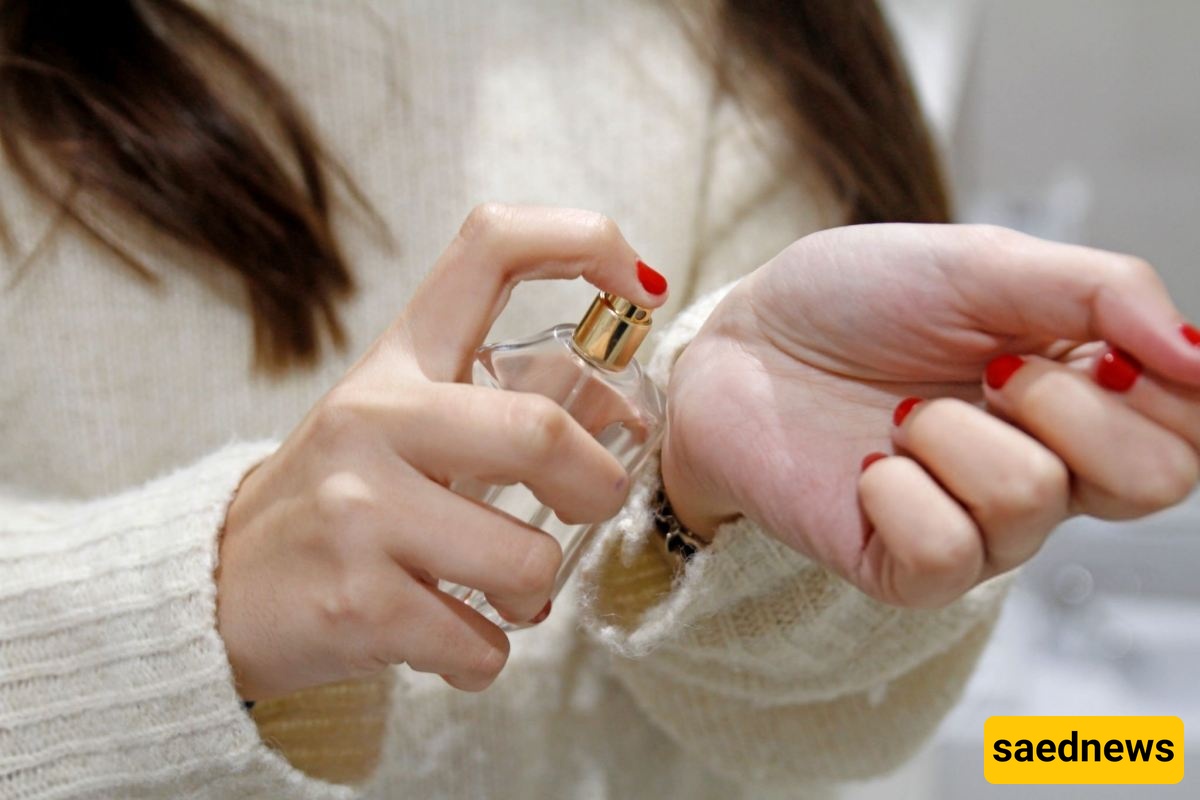
Beyond legal rulings, Islamic teachings also emphasize social responsibility and modesty.
The purpose behind these guidelines is understood by many scholars as protecting dignity, preventing inappropriate attention, and maintaining respectful social interactions.
A woman in Islam has the right to participate in society, work, study, and engage in social activities. However, Islamic teachings encourage that public presence should be accompanied by dignity and modesty.
From this perspective, scholars who restrict strong perfume in public argue that a woman’s beauty and fragrance should primarily be reserved for her husband and private family life rather than used as a means of attracting strangers.
A common misunderstanding is that Islam completely forbids women from wearing perfume. This is incorrect.
Perfume is not forbidden for women in all situations. Wearing fragrance at home, for one’s husband, or in women-only gatherings is generally considered permissible and sometimes encouraged.
Another misunderstanding is that the ruling only applies to young women. Many scholars explain that the main issue is not age but whether the fragrance attracts attention or is used for display.
It is also important to understand that the term “perfume” in Islamic discussions includes all noticeable fragrances, such as perfumes, sprays, scented oils, and strongly scented personal-care products. The main consideration is whether the scent is noticeable and capable of attracting attention.
According to many Islamic scholars, wearing perfume is not automatically forbidden for women. The ruling depends mainly on the situation, intention, and effect.
Wearing perfume for a husband, at home, or among women is generally considered permissible.
Wearing a strong fragrance in public with the intention of attracting attention is considered forbidden by many scholars.
Using a mild fragrance for cleanliness and personal comfort, without attracting attention, is considered permissible by some scholars.
Therefore, the Islamic perspective does not prohibit women from enjoying fragrance itself; rather, it focuses on modesty, intention, and maintaining respectful social behavior.