SAEDNEWS: According to the opinions of most Shia religious authorities and Sunni Islamic jurists, the game of backgammon is considered forbidden (haram) and is regarded as a form of gambling.
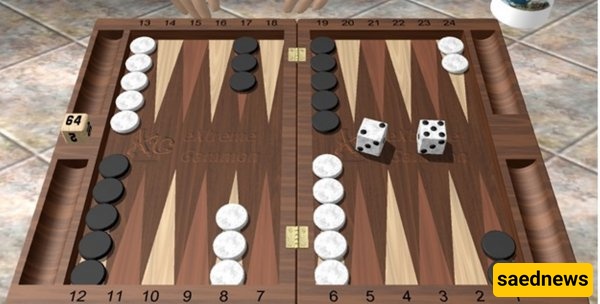
According to Saednews, The Religious Ruling on Playing Backgammon According to Shia and Sunni Islamic Scholars
Grand Ayatollahs Imam Khomeini, Tabrizi, Khamenei, Fazel, and Makarem: If backgammon is considered an instrument of gambling, playing it is forbidden, even without winning or losing money.
Grand Ayatollahs Bahjat and Vahid: Playing backgammon with betting is forbidden, and without betting it is, based on obligatory precaution, not permissible.
Grand Ayatollahs Sistani, Safi, and Nouri: Playing backgammon is forbidden.
The most important evidence used by many Islamic jurists regarding the prohibition of backgammon comes from various narrations attributed to the Prophet Muhammad (peace be upon him) and the Ahl al-Bayt (the Household of the Prophet).
One of the most well-known narrations attributed to the Prophet states:
“Whoever plays backgammon has disobeyed Allah and His Messenger.”
Another narration attributed to Imam Ja‘far al-Sadiq states that backgammon, chess, and games associated with gambling are prohibited.
Scholars who consider backgammon forbidden rely on these narrations as evidence that the game has a religiously unacceptable nature.
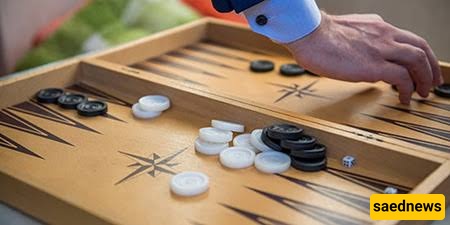
Many Islamic jurists classify backgammon as a form of maisir (gambling), which is explicitly prohibited in the Qur’an.
The Qur’an states in Surah Al-Ma’idah (5:90):
“O you who believe, indeed intoxicants, gambling, idols, and divining arrows are filth from the work of Satan, so avoid them that you may be successful.”
Scholars who prohibit backgammon argue that because the game involves elements of chance, probability, and traditionally has been associated with winning and losing money, it resembles gambling.
Another reason given for the prohibition is that backgammon may lead to neglect of religious duties and remembrance of God.
Some scholars argue that because of its entertaining and competitive nature, the game can occupy a person for long periods and distract them from:
Prayer and worship
Religious responsibilities
Social and personal duties
The majority of Shia religious authorities consider playing backgammon generally prohibited.
Examples include:
Ayatollah Ali Khamenei: Playing backgammon is forbidden even without betting if it is considered a gambling instrument.
Ayatollah Ali al-Sistani: Playing backgammon, chess, and similar games using gambling instruments is forbidden.
Ayatollah Makarem Shirazi: Playing backgammon in any form and with any intention is forbidden and is considered among major sins.
Ayatollah Vahid Khorasani: Playing backgammon, chess, or any game involving gambling instruments is forbidden.
Among Sunni scholars, there is also significant agreement regarding the prohibition of backgammon.
The four major Sunni schools:
Hanafi
Maliki
Shafi‘i
Hanbali
have traditionally considered backgammon impermissible.
Some Hanafi scholars have even regarded playing backgammon as a major sin and considered its ruling stricter than that of chess.
Some scholars argue that if backgammon is played only for entertainment and without gambling or financial stakes, the prohibition may not apply in the same way.
However, many scholars still consider it forbidden because they believe the backgammon board and pieces themselves are traditionally associated with gambling.
With modern technology, digital versions of backgammon have become common.
Many scholars maintain that the ruling of digital backgammon is the same as the physical version because the nature of the game remains unchanged.
However, some scholars distinguish between different situations:
If the game involves real money or betting, it is considered clearly forbidden.
If it is only for entertainment without gambling, some scholars allow it, while many still prohibit it.
If it is used for educational purposes or non-gambling competitions, some scholars may permit it under specific conditions.
Some argue that if backgammon is used for:
Improving memory
Developing analytical skills
Rehabilitation and therapy
the ruling may differ.
However, most scholars who consider the game inherently connected with gambling do not accept these exceptions.
Some contemporary thinkers have questioned the absolute prohibition of backgammon.
Some researchers argue that certain narrations regarding the prohibition of backgammon may have weaknesses in their chains of transmission and therefore should not alone establish a definitive ruling.
Those who oppose a complete prohibition argue that backgammon itself is not necessarily gambling. They claim that without betting, it is simply a strategy-based recreational activity, similar to other intellectual games.
Some scholars argue that cultural understanding has changed. In modern societies, backgammon is often viewed as a mental and recreational game rather than merely a gambling tool.
Scholars who support the complete prohibition respond with several arguments:
They argue that any object commonly recognized as a tool of gambling remains prohibited, even if it is used without financial betting.
They maintain that the narrations regarding backgammon are numerous and collectively provide strong evidence for its prohibition.
They argue that games based partly on chance may encourage dependence on luck rather than effort, which conflicts with Islamic values of responsibility, reliance on God, and personal effort.
The expansion of online gaming has raised new questions about digital backgammon.
According to many Islamic scholars:
Online backgammon involving money or betting is unquestionably forbidden.
Online backgammon without betting remains disputed, though many scholars still prohibit it.
Educational or official competitions without gambling elements may be treated differently by some scholars.
Based on traditional Islamic jurisprudence and the opinions of many contemporary religious authorities, playing backgammon is generally considered forbidden, especially when it involves gambling or is played using instruments traditionally associated with gambling.
This ruling is based on:
Religious narrations attributed to the Prophet and the Imams
Comparison with gambling (maisir)
Concerns about moral and social consequences
However, some modern scholars and researchers question whether the prohibition applies to all forms of backgammon, particularly when there is no betting involved and the game is used only for entertainment, education, or mental exercise.
Those who wish to strictly follow religious precaution are advised to avoid playing backgammon, whether physically or digitally, and to choose other forms of entertainment considered permissible within Islamic teachings.
Ultimately, Islamic rulings aim to protect individual and social well-being, encourage awareness of God, and prevent activities that may lead to neglect of spiritual and moral responsibilities.