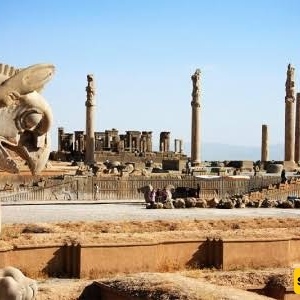
SAEDNEWS: The Achaemenid Museum is a museum located in Persepolis, Fars Province. The building itself is approximately 2,500 years old, dating back to the Achaemenid period.
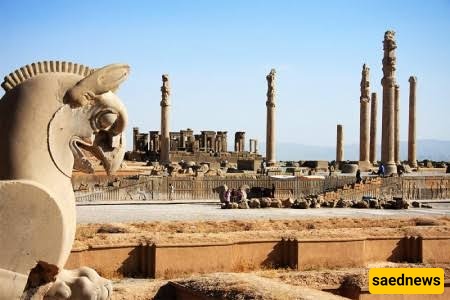
According to Saednew, Museums are among the places humanity has created to preserve its cultural achievements and heritage. In this sense, museums help safeguard the story of human civilization and strengthen collective memory.
The Persepolis Museum is notable for its distinctive red interior, created with red sarooj, a traditional lime-based mortar used in its flooring. Visitors can see the foot of a marble statue as well as a section of a burned curtain discovered at Persepolis.
The museum building is considered the oldest surviving structure in Iran to have been restored and converted into a museum. It forms part of the Persepolis palace complex, which was constructed by the Achaemenid dynasty approximately 2,500 years ago.
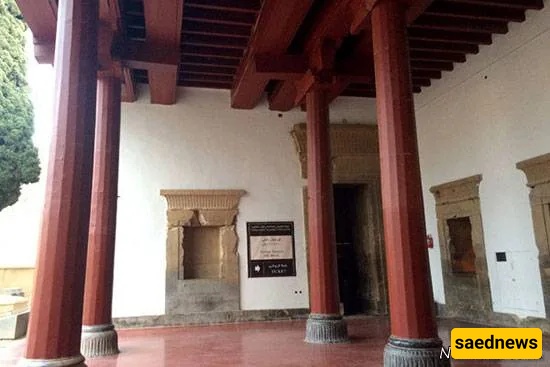
The Harem, also known as the Queen's Palace, was reconstructed by Professor Ernst Herzfeld based on its original design. The building was originally commissioned by Xerxes and consisted of a main hall surrounded by numerous rooms and corridors.
The main section of the Harem, whose gateways are decorated with reliefs depicting Xerxes, his attendants, the king battling a lion, and mythical creatures, now forms the museum's principal exhibition hall. Its roof is supported by 12 wooden columns.
The foundations of the building were constructed directly on the mountain's stone surface, while the hall floor was covered with red sarooj. This is why the museum's interior was also designed in red.
Masoud Rezaei, director of the Persepolis complex, explained that the red color was chosen because red sarooj had been used for the museum floor during Herzfeld's period of restoration. He added that this was also a color used during the Achaemenid period.
Most of the objects exhibited in the museum were discovered at Persepolis. Among them are examples of iron clamps used to join stone blocks, dating from the Achaemenid period.
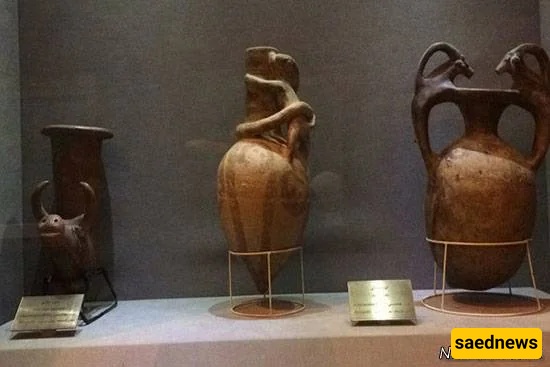
The collection also includes two female statues. Although they are associated with ancient Egypt, they were discovered at Persepolis. Other objects on display include a chariot wheel hub, a bronze horse bit, and several ceramic rhytons.
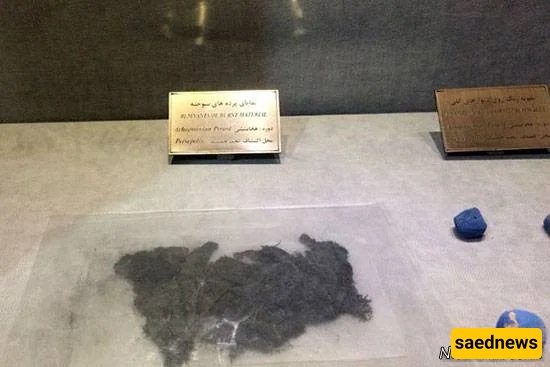
One of the museum's most remarkable exhibits is a surviving fragment of the burned curtain from Persepolis. Despite having been exposed to the passage of roughly 2,500 years, part of the fabric has survived and is considered one of the important discoveries made at the site.
An inscription belonging to Xerxes, written in cuneiform and discovered around Persepolis in 1966, is also displayed in the museum. The inscription has been translated into Persian to make its content accessible to visitors.
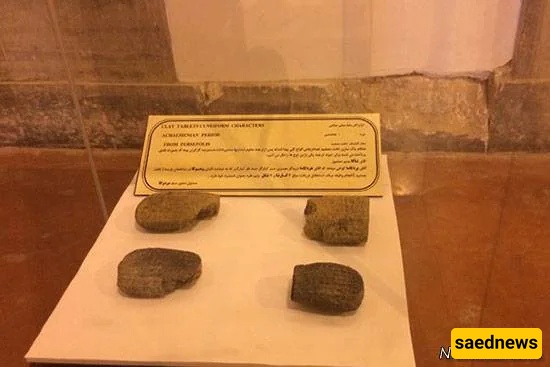
The museum also contains examples of clay tablets written in Elamite cuneiform and dating to the Achaemenid period. Some related tablets are still being studied at the Oriental Institute in Chicago.
The tablets displayed in the Persepolis Museum were discovered during cleaning and excavation work at the site. After translation, researchers determined that they were records documenting payments made to workers, with wages apparently being paid in cash.
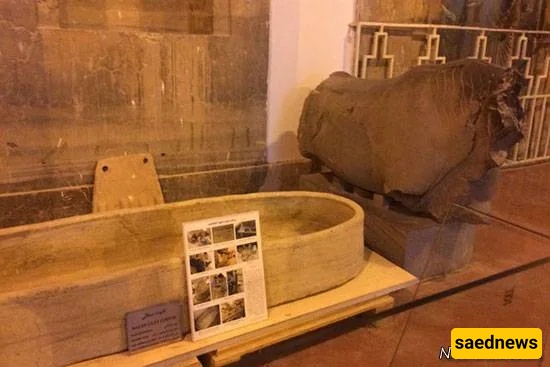
A clay coffin is displayed in the museum together with photographs documenting the various stages of its restoration.
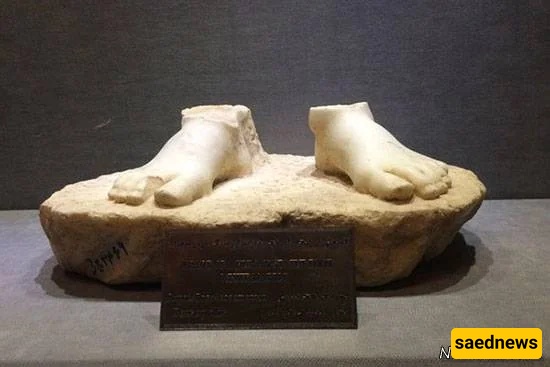
Another exhibit is a marble human foot carved from white stone. It dates to the post-Achaemenid period and was discovered northwest of the Persepolis terrace, in an area known as Fratadara.
Objects from Persepolis are periodically rotated and replaced. In the spring of one recent year, the head of a statue believed to represent Xerxes was displayed for the first time in a decade.
The head is carved from black marble. Its identification as Xerxes is based partly on distinctive features such as the headwear and earrings depicted on the sculpture.
Speaking about the museum, Masoud Rezaei-Monfared, director of the Persepolis complex, emphasized the importance of the building itself. According to him, the museum provides visitors with an opportunity to understand the architectural structure and design principles of Persepolis. Consequently, the building has considerable historical and architectural value independent of the objects housed inside it.
The museum's storage facilities contain more than 5,000 research objects, while approximately 4,000 museum-quality and significant artifacts are held in the collection. Around 170 objects are normally selected for public display. Some artifacts are periodically brought out of storage and exhibited for visitors.
Although all of the museum's objects are considered important, the inscriptions of Xerxes and other cuneiform texts attract particular attention.
Despite the remarkable collection, some of the museum's dark-colored reliefs have been affected by repeated contact with visitors. Some are not currently protected by adequate barriers.
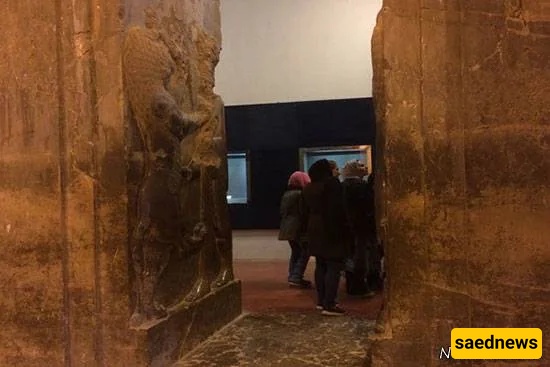
Rezaei stated that funding was being sought to address the problem. Protective glass would need to be installed around the gateways and other carved sections of the museum. Some of the carved areas are not easily accessible to visitors, but they also require appropriate protection.
As with many museums in Iran, admission prices differ for domestic and international visitors. Entrance to the Persepolis Museum is also charged separately from admission to the main Persepolis archaeological site.
Rezaei explained that this arrangement follows a government regulation requiring museum admission fees to be collected separately from entrance fees for historical sites.