SAEDNEWS: The birthday cake may look like a timeless tradition, but its story is a surprisingly complicated journey involving ancient celebrations, German children’s festivals, candles, wishes, and the rise of modern baking.
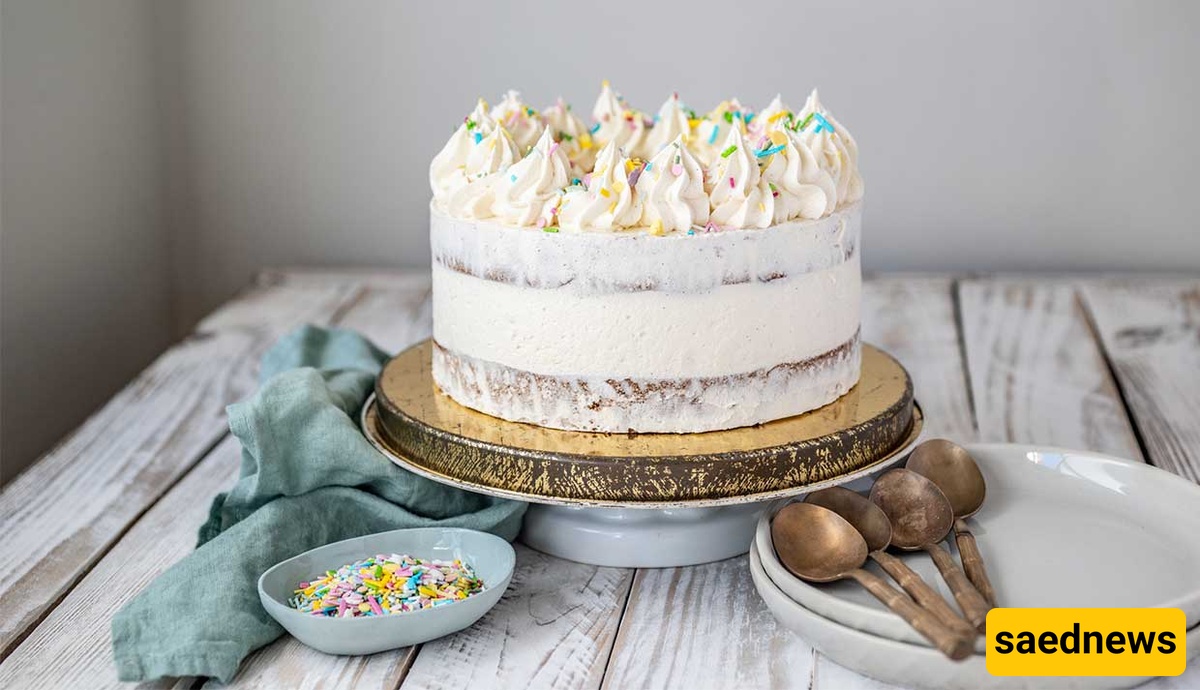
According to SaedNews, the birthday cake seems so familiar that it is easy to imagine people have always celebrated birthdays exactly the way we do today: a decorated cake arrives, candles are lit, everyone sings, the birthday person makes a secret wish, and one dramatic breath sends the flames out.
The reality is much stranger.
The modern birthday cake is not the product of one ancient custom passed unchanged through the centuries. Instead, several traditions gradually came together. Ancient Romans were already serving cakes at some birthdays, while the familiar combination of a sweet cake, candles and a child's birthday became particularly associated with German celebrations centuries later.
Ancient Rome provides some of the earliest evidence linking cakes with birthdays. Roman celebratory cakes were considerably different from today's layered sponge cakes. Historical accounts describe cakes made from ingredients such as flour, nuts, yeast and honey, and birthdays—particularly those of socially prominent people—could involve special cakes.
That does not mean an ancient Roman would have recognized a modern birthday cake. Frosted layers, elaborate decorations and rows of tiny candles belong to a much later culinary world.
For centuries, cake itself was also not sharply separated from bread in parts of Europe. The modern idea of a soft, sweet, highly decorated cake developed gradually as ingredients, ovens, baking techniques and confectionery skills improved.
The crucial chapter came in German-speaking Europe, particularly with Kinderfest, a children's birthday celebration.
By the 18th century, German birthday cakes could be decorated with candles corresponding to the child's age. The custom is documented in accounts from the period, including a famous description of a huge cake served at the 1746 birthday celebration of Count Ludwig von Zinzendorf. The cake reportedly contained candles corresponding to the celebrant's age.
Johann Wolfgang von Goethe also described a birthday celebration in 1801 involving a large torte covered with dozens of burning candles. His account makes clear that candles representing a person's years were already an established feature of children's birthday festivities.
There was an important difference from today's ritual, however: the candles were not necessarily blown out immediately after the song. Sources describing the German custom indicate that candles could remain burning during the day, with the cake served later.
This is where the history becomes less certain—and more interesting.
One popular explanation connects birthday candles with ancient Greek offerings to Artemis. Round cakes associated with the moon goddess were sometimes described as being decorated with lights to evoke the moon's glow. The idea is frequently presented as the ancestor of birthday candles, but historians caution that a direct line from the Greek ritual to today's birthday cake has not been firmly established.
The German evidence for candles on children's birthday cakes is considerably stronger.
In the worldview surrounding Kinderfest, birthdays could be regarded as vulnerable moments for children. Candles were associated with protection, light and hopes for the coming year. Some accounts also describe a candle beyond the number representing the child's age, symbolizing another year of life.
So the familiar cake-and-candle ritual may contain layers of symbolism from different periods rather than one single invention.
Today, the most anticipated moment is often not eating the cake but making a wish before blowing out the candles.
The exact origin of this custom is uncertain. Historical accounts of German birthday celebrations connect the extinguishing of candles with wishes, while later European traditions helped turn the gesture into the ritual familiar today. A record from Switzerland in 1881 describes birthday candles being blown out individually by the person celebrating.
The symbolism is easy to understand: the birthday person is given a moment of private hope, surrounded by family and friends, before the candles disappear in a single breath.
What feels like a simple children's game therefore carries traces of much older ideas about fire, time, protection and wishes.
For a long time, elaborate cakes were expensive. Refined sugar, high-quality flour, decorative ingredients and skilled baking made impressive cakes something of a luxury.
That changed dramatically with industrialization and improvements in food production and kitchen technology. Cheaper ingredients, improved ovens, chemical leavening, standardized baking equipment and mass-produced decorating supplies helped turn elaborate cakes from special-occasion luxuries into increasingly accessible household foods.
By the late 19th and early 20th centuries, birthday cakes were appearing more frequently in American cookbooks and children's celebrations. A 1912 cookbook by Fannie Farmer, for example, included a detailed birthday cake specifically for a three-year-old, illustrating how elaborate children's birthday cakes had become by that period.
The cake-and-candle ritual eventually acquired another ingredient: the birthday song.
The melody now associated with “Happy Birthday to You” began life as “Good Morning to All,” a song associated with sisters Mildred and Patty Hill and published in 1893. The familiar birthday words appeared in print in the early 20th century, but their precise authorship remains uncertain.
The song later became so deeply connected with birthday cakes that the two traditions now seem inseparable.
Its legal history was almost as surprising as the history of the cake. For decades, a copyright claim surrounding the song generated licensing disputes and payments. In 2016, a U.S. court approved a settlement that placed the song in the public domain.
Today, a birthday cake can be almost anything: a simple homemade sponge, a supermarket cake, an elaborate pastry sculpture or a personalized creation covered with photographs and decorations.
What has remained remarkably stable is its role.
The cake marks the individual rather than the calendar alone. The candles turn age into something visible. The wish creates a private moment inside a public celebration. Then the cake is cut and shared.
That combination may explain why the birthday cake survived so many changes in food, religion, technology and social life. Its history is not really the story of one recipe. It is the story of how several old human ideas—celebrating another year of life, gathering around food, lighting fire and expressing hope—eventually became one familiar ritual.
So the next time a birthday cake appears with candles flickering on top, the scene may look simple. Its history is anything but.