SAEDNEWS: In this article, we will explore the history and all the information related to rosewater distillation and become more familiar with this traditional Iranian ceremony.
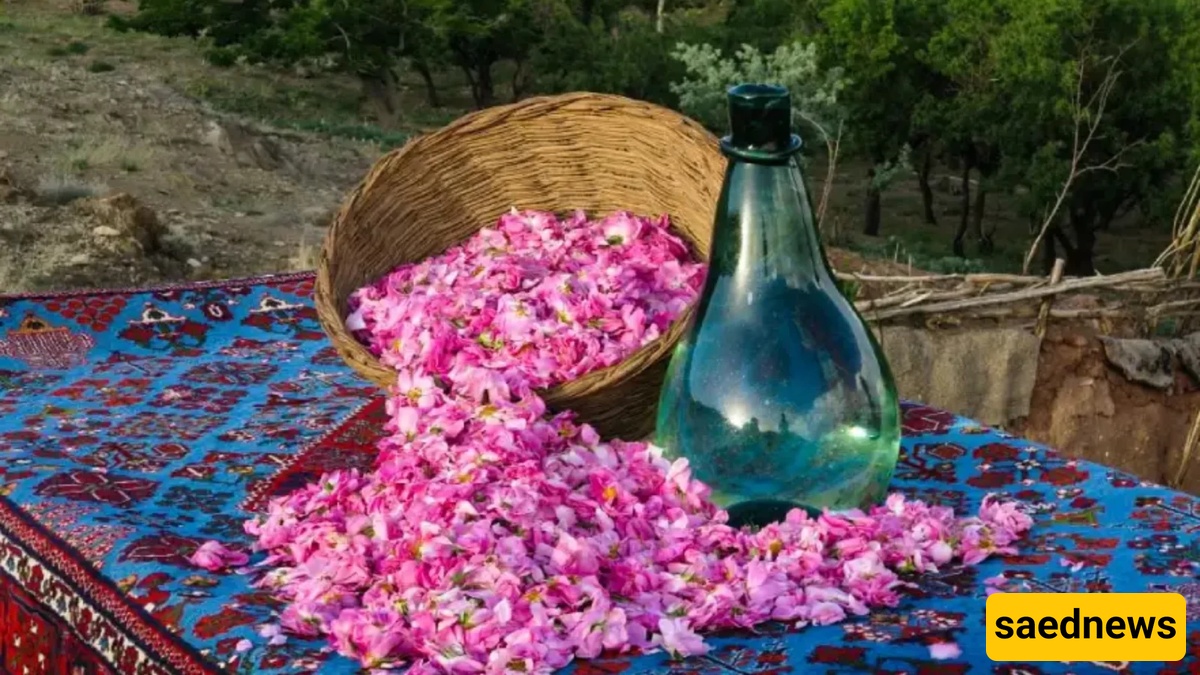
According to Saednews, One of the ceremonies held in ancient times in Kashan and still preserved today is the Kashan rosewater distillation (Golab-Giri). This ritual is considered one of the most famous traditional ceremonies in Iran and has become so popular that many tourists travel to Kashan in spring—by bus or private car—to visit it.
About 7,000 years ago, the cultivation of the Damask rose (Mohammadi rose) became widespread in Iran, turning it into one of the country’s native plants. During the Safavid era, its seeds were sent to other countries such as Turkey, Syria, and Bulgaria.
Historical records indicate that rosewater production dates back about 1,000 years—around 6,000 years after the first cultivation of the Damask rose in Iran. At that time, rosewater production, known as “Letan,” was carried out using traditional methods and followed the same distillation technique used by Avicenna (Ibn Sina) for preparing herbal medicines. Soon after, Iranian rosewater became famous worldwide and turned into an important export product, shipped along the Silk Road.
Despite the passage of centuries, traditional rosewater production is still practiced today, and Iranian rosewater continues to be exported worldwide. Because Kashan has a dry and desert climate, it hosts the largest Damask rose farms. In spring, the flowers reach full bloom, filling the alleys with their fragrance, and the rosewater season gradually begins.
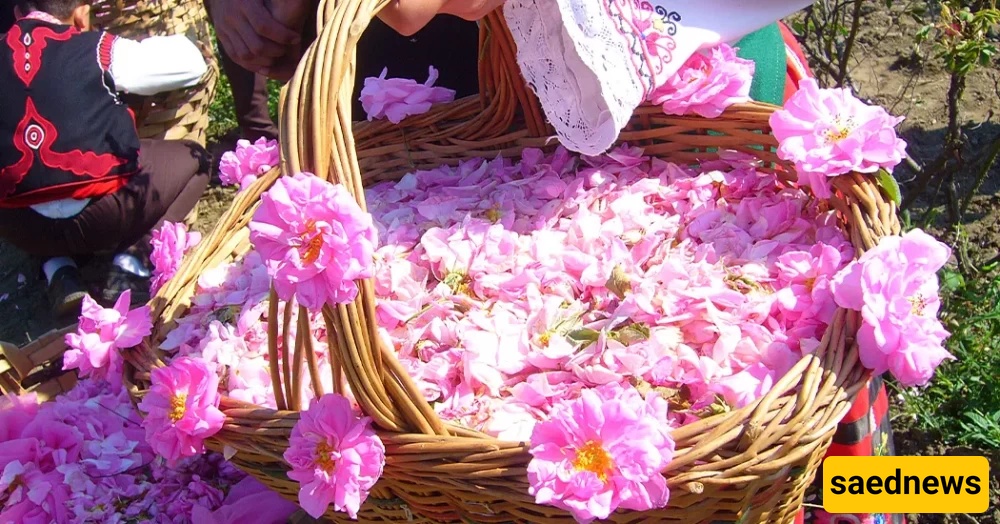
In mid-spring, rosewater production begins and usually continues until the end of the season. During this time, people work in fields and production workshops, considering it a seasonal source of income. Many also produce rosewater in their home courtyards and sell it in local markets.
If you plan to visit the rosewater-making ceremony, it is best to choose May. From around May 5th (15 Ordibehesht), the highest-quality Damask roses can be seen in Kashan and surrounding areas, and the rose fields are at their most beautiful. This allows visitors not only to witness the production process but also to take photographs in a stunning natural setting.
The best time to harvest Damask roses for rosewater production is before direct sunlight hits the flowers, when they have not yet wilted. This ensures higher-quality rosewater. Picking flowers in the early morning is especially enjoyable, as the cool air intensifies the fragrance throughout the surroundings.
In the distillation process, one liter of water is used for every kilogram of Damask rose petals. This mixture is placed in a copper pot and heated. A lid is tightly sealed using a special gasket to prevent steam from escaping.
Each pot has an opening through which a metal (steel or aluminum) pipe is connected, leading to a copper container. Once boiling begins, steam travels through the pipe into a large copper vessel placed in cold water. When the hot vapor hits the cold surface, it condenses and turns into liquid rosewater. This process takes about 5 to 7 hours, producing 30 to 40 liters of rosewater per container.
Sometimes, instead of water, rosewater itself is used in the first stage. This rosewater must be odorless and free of impurities. This method produces a higher-quality product known as “double-distilled rosewater” (Do Atisheh).
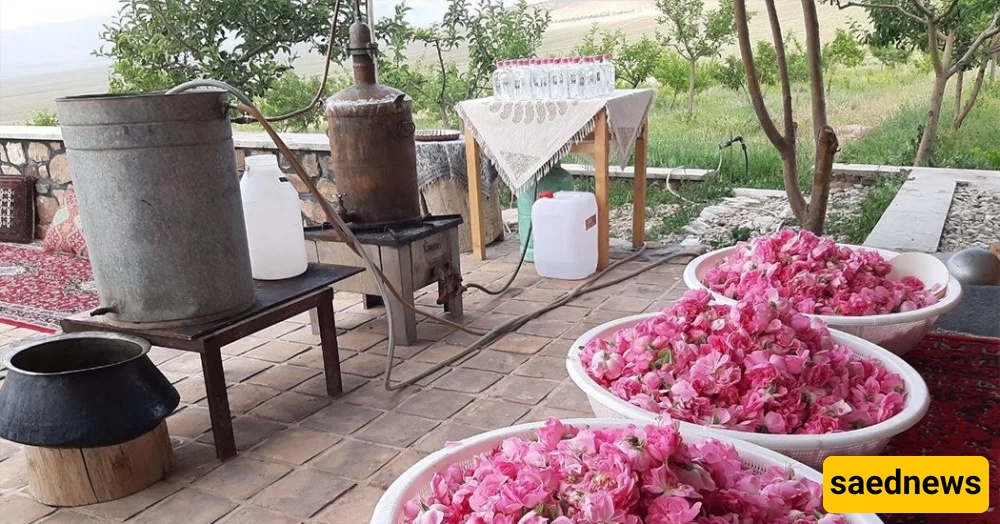
While Kashan is known for traditional methods, industrial production is also carried out in some regions. The main difference is the use of mechanized equipment in industrial production. Tools such as copper pots, bronze containers, copper-handled vessels, curved hollow copper pipes, heating systems, and water basins used in traditional methods are replaced by advanced machinery that requires less human labor.
Hygiene is also crucial in rosewater production. Any contamination can lead to fungal growth, cloudiness, and decomposition of the product, reducing its medicinal value and potentially causing side effects. Traditional methods are more vulnerable to contamination due to limited sterilization, while industrial methods are generally more controlled.
Rosewater production is also carried out in villages around Kashan, including Van, Sar, Vadghan, Khaveh, Qalhar, Marq, Viduj, Kamo, Joshaghan Qali, and Azaran. These areas are filled with Damask rose fields. Due to their higher altitude and cooler climate, rosewater production there usually takes place in June. Among these villages, Vadghan and Van are known for producing the most concentrated and high-quality rosewater.
Although the production method is generally the same (distillation), different types of rosewater are available:
Heavy, premium, or first-grade rosewater: Used for household purposes, with high quality and strong concentration.
Light rosewater: Used domestically, with a milder aroma.
Double-distilled rosewater: Used for medicinal purposes, highly concentrated with a slightly bitter and sharp taste.
Triple-distilled rosewater: Specialized use, produced in smaller quantities through repeated distillation.
“Pasab” rosewater: A diluted, low-quality, economical type made from leftover rose petals after previous distillation.
Everyone seeks the best quality rosewater, but how can it be identified? The key characteristic of pure rosewater is a slightly sharp and bitter taste. Therefore, tasting is one method of identification. Additionally, clarity and color should also be considered.
Rosewater production in Kashan is a deeply rooted cultural tradition that reaches its peak in spring, especially in May. It combines agricultural heritage, traditional knowledge, and seasonal tourism, making it one of Iran’s most distinctive cultural experiences.