SAEDNEWS: Hormozgan Province is one of the southern provinces of Iran. The people of this province are highly artistic and produce very unique and beautiful handicrafts and handmade products.
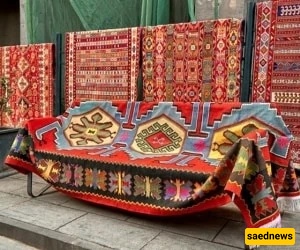
According to Saednews, Hormozgan is one of the southern provinces of Iran. Due to its distinctive customs and long-standing culture, it has attracted the attention of many historians. The province also holds a special place in traditional handicrafts, most of which are produced by local women artisans.
The handicrafts of this region, with their unique designs and beauty, reflect the province’s ancient heritage. Many of these products are primarily made for local use and are often seasonal in nature.
Among the Afshar and Rayeini nomads of Hormozgan, carpet weaving is highly developed. The wool is often sourced from the Sirjan region and then skillfully dyed and spun by local artisans.
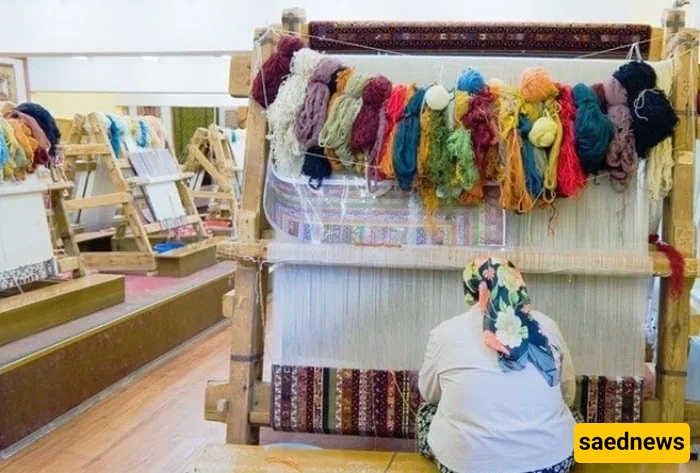
These carpets typically feature Afshar tribal motifs and Persian knots. Common designs include “Boteh Shah,” “Hunting Scene,” “Samavari,” “Three-Headed,” “Domed,” and “Moon and Star” patterns.
One of the oldest handicrafts of Hormozgan, dating back to the Achaemenid era, is reed weaving. Both men and women in this palm-rich region practice it.
Palm leaves, locally called “pish,” are used to make baskets, fans, hats, mats, brooms, trays, and more. This craft is especially common in villages such as Bashagard, Minab, and Bandar Lengeh.
Khersak is a type of rug with thick, long pile made from natural wool and dyes. It does not use a weft thread in the traditional sense, and its structure is mostly geometric.
In the past, it was used as a blanket, but today it is commonly used as a floor mat.
Savas is a traditional type of footwear with a sole and straps that pass between the toes and around the foot. It is made from palm fibers and is traditionally produced in Bashagard and Fin regions. Both men’s and women’s versions exist.
Suzan dozi is one of the famous decorative embroidery arts of Bashagard in Hormozgan. It is traditionally practiced by Baluchi women.
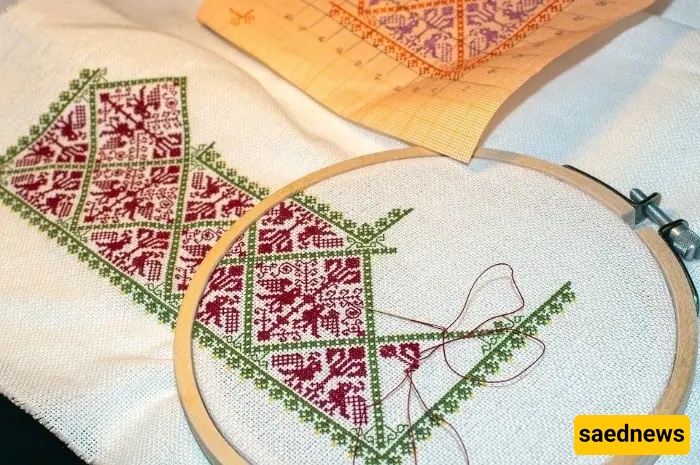
It is used to decorate clothing by creating colorful stitched patterns on fabric, forming intricate and beautiful designs.
This craft is a textile technique that lies between carpet and kilim weaving. It uses wool as the main material, sometimes combined with silk threads.
Its designs are highly diverse, reflecting the emotions and creativity of the weaver, often inspired by nature. It is commonly used as a floor covering.
Khous embroidery is done on velvet or net fabrics using metallic or plastic threads. It is used in decorating scarves, curtains, traditional clothing, bedcovers, and tablecloths.
Common motifs include six-pointed, eight-pointed, and twelve-pointed stars.
Chadorshab is a traditional textile used as a covering or blanket. It was originally made from wool, cotton, or camel hair, but today synthetic fibers are often used.
It is called “chadorshab” because it was traditionally used as a night covering.
The burqa is a traditional decorative and protective face covering used by women in Hormozgan, the coastal regions of the Sea of Oman, and the Persian Gulf islands.
It is known by different names in various areas. Its widespread use dates back to the Portuguese presence in the region.
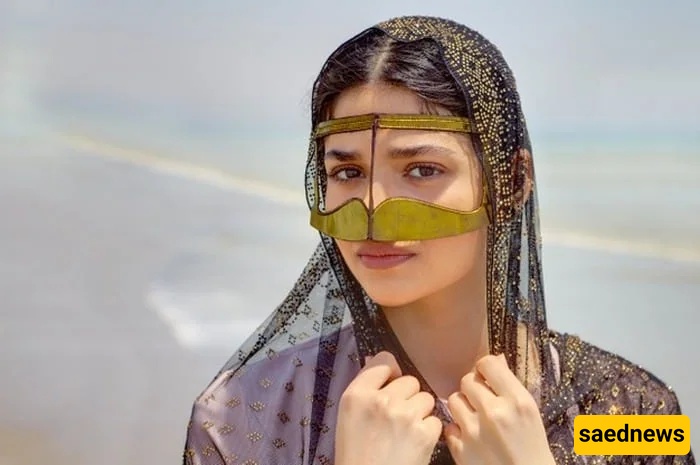
Golabetoon dozi is an ancient art dating back to the Achaemenid era. It is one of the most important handicrafts of Hormozgan and is traditionally used in women’s clothing.
It involves decorative embroidery using gold or silver-coated threads on fabrics such as velvet and cotton. Today, it is used on sleeves, collars, and traditional garments.
Chante refers to small bags or pouches used for storing personal items such as spoons, the Quran, needles, mirrors, and sewing tools. The designs are usually geometric and created using traditional ground looms by women artisans.
At low tide, large amounts of shells and marine remains are collected along the shores of the Persian Gulf islands. Local artisans use these materials to create decorative objects, sculptures, and artworks.

Badleh dozi is a traditional embroidery technique involving decorative trim applied to clothing. It typically uses woven ornamental bands about 15 cm wide, often used to decorate women’s clothing edges.
Gergor is a handmade wire fishing net used in coastal areas such as Qeshm and Bandar Lengeh. It is still used by fishermen, although its production has decreased in recent years.
Pottery is one of the oldest human crafts, dating back over 5,000 years. Hormozgan is known for producing clay items such as jars, water vessels, hookah bases, and figurines. Traditional pottery is locally known as “jehleh.”
Among Arabic-speaking communities in Hormozgan, traditional cap making is practiced. Fabric is treated with starch, then embroidered with silk thread using fine decorative techniques.
The best type of cap is known as “Margh-e Shah” (Royal Bird), and various designs are named according to their patterns.