SAEDNEWS: The war against Iran has pushed UK inflation higher again, with surging energy prices interrupting the country’s recent decline in inflation. The pressure is also complicating efforts by the government and Bank of England to ease the cost of living.
According to SaedNews: The war against Iran has renewed pressure on household budgets in Britain, with a sharp rise in energy prices halting the recent decline in inflation, according to a report by The Guardian.
UK inflation rose from 2.6% to 2.9% in July, marking its first annual increase since March.
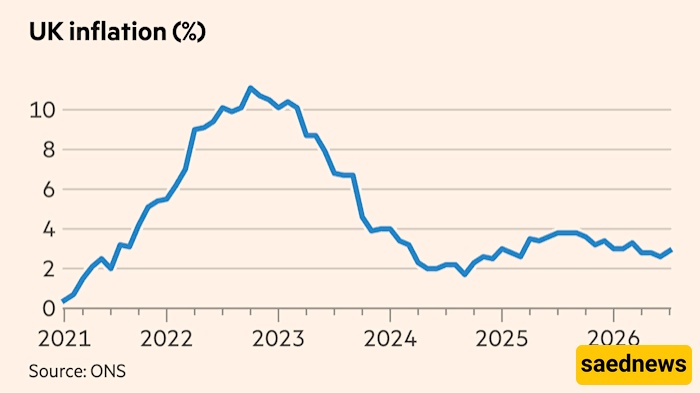
Higher gas and electricity prices, driven by the Iran war and its shock to global energy markets, were the main factor behind the rise. British households experienced their sharpest summer increase in energy bills in four years.
Before the war began in late February, inflation had been moving toward the 2% level. The shock to energy markets reversed that trend.
The Bank of England is now concerned that higher energy costs could develop into persistent inflation. If the pressure continues, an interest-rate increase from next month is possible.
The central bank had previously warned that if the war escalated, UK inflation could reach 4.5% in the first half of 2027.
The combination of rising inflation and borrowing costs has also made it harder for the British government to reduce pressure on households. The government had previously announced that, from October, a cut in electricity taxes would reduce consumers’ electricity costs by an average of £45 a year.
The war against Iran is therefore now being felt directly in Britain’s economy: the energy shock has interrupted the downward path of inflation while leaving the government and central bank facing more difficult choices over the cost of living.