Saed News: Chinese researchers have developed a portable device that can detect early signs of lung cancer using just a single drop of blood, making early diagnosis easier.
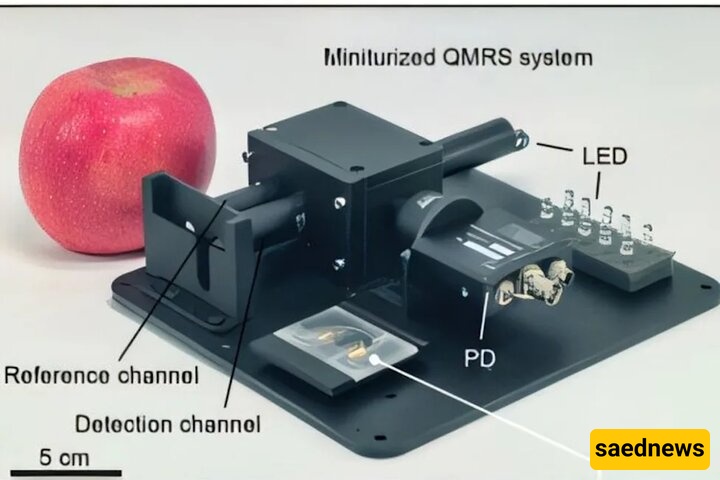
According to SAEDNEWS, citing Independent, cancer detection often requires heavy laboratory equipment, limiting testing to research labs or hospitals. These tools work by tracking small changes in light properties, such as wavelength shifts caused by specific molecules. These changes carry information about biological functions or diseases, but detecting them requires highly sensitive components that are often difficult to transport.
The new device includes a sensor that, instead of measuring how molecular properties change, shows how molecules bend light. It uses a special three-dimensional chip made from engineered materials that manipulate light in ways not possible with natural substances.
The device consists of a light emitter, a light detector, and a specially engineered material on an eight-inch semiconductor wafer, which can later be mass-produced.
Researchers say this approach shifts cancer-sensing technology from laboratory devices to low-cost, portable home diagnostic systems. They wrote in ScienceX Dialog that this method significantly simplifies device design and makes sensing systems more compatible with portable diagnostic tools.
To test the device, researchers used it to detect levels of extracellular vesicles—tiny bubble-like cell components found in very low concentrations in blood and other bodily fluids. Analyzing their concentration can help in early disease detection. The new sensor can detect these vesicles at extremely low levels within 15 minutes.
They further tested the device on 170 human serum samples and found it could distinguish between samples with early lung cancer markers and healthy tissue. The device achieved about 95% accuracy, compared to around 75% with traditional methods. However, researchers caution that further work is needed before it can become widely used in clinical practice.