SAEDNEWS: During the Renaissance and even in the early modern period, many people in Europe were executed on charges of “witchcraft.” The last victim of the “witch hunt” in Switzerland was a poor woman named Anna Göldi.

According to Saad News Agency, citing Eqtesad Online, Anna Göldi was a housewife who lived in Switzerland between 1734 and 1782. She was born into a poor family and was at the very bottom of the social hierarchy. However, her fate was even more tragic than that. At the age of 48, she was sentenced to death and beheaded. But what was her crime? Anna was the last woman in Europe to be executed for “witchcraft.”
Göldi had worked as a domestic servant in various households since her teenage years. At the age of 31, she entered into a relationship with a merchant and gave birth to a child. However, the merchant abandoned her before the child was born, and the baby died one day after birth.
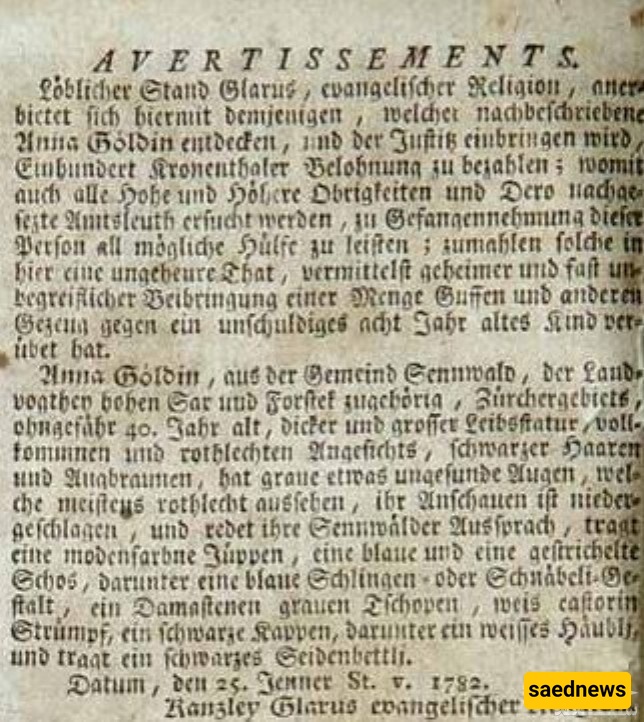
(Image of Anna’s arrest warrant)
Although infant mortality was very common at the time, Anna was accused of murdering her own child. She was tried for this charge and sentenced to six years of house arrest at her sister’s home. However, she later escaped and moved to another city, where she worked as a servant for a wealthy family.
After several relocations, Göldi eventually worked at the home of a man named Jakob Schudi at the age of 46, where tragedy struck. Schudi later claimed that Anna had placed needles in his children’s food, allegedly using supernatural powers with evil intent.
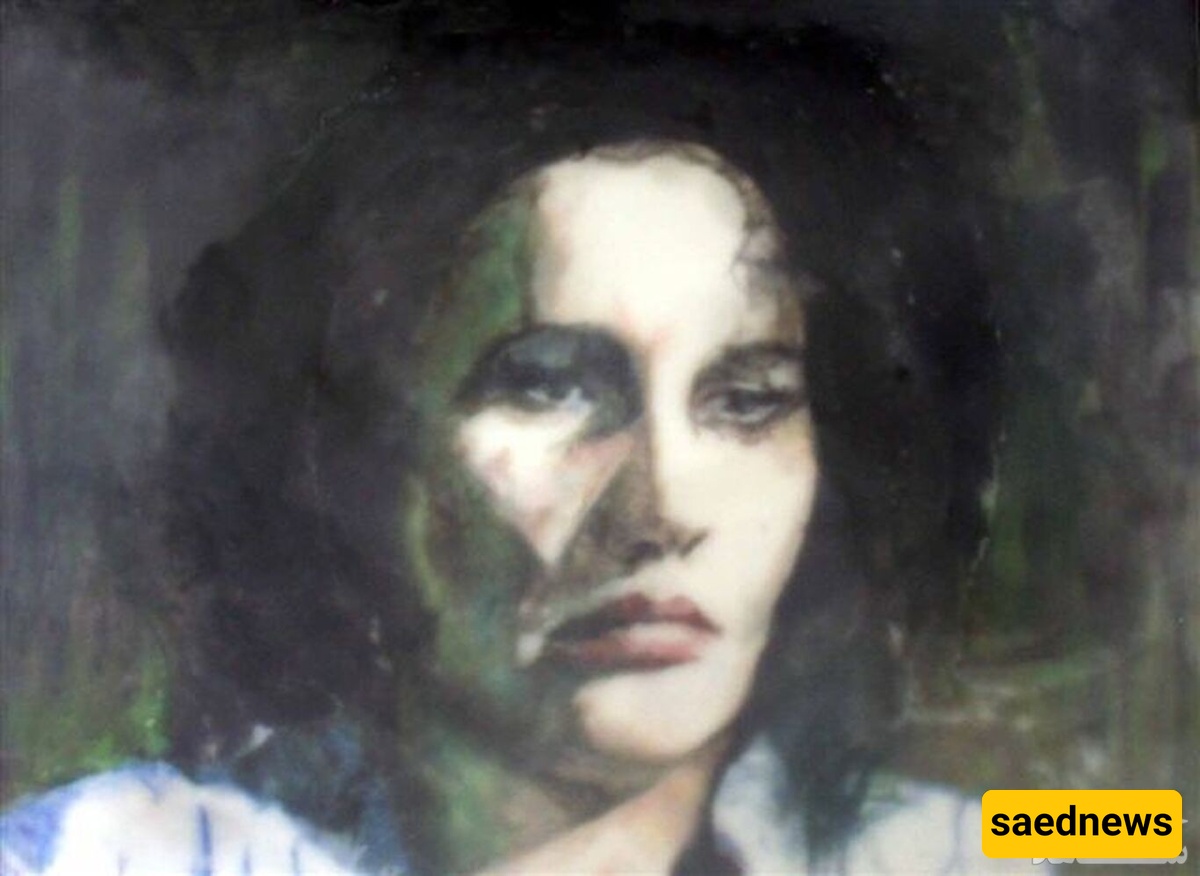
Anna initially fled and was pursued for some time. During this period, notices were issued for her arrest and widely distributed. Eventually, Anna Göldi was captured and, under torture, confessed to having made a “pact with the devil.” She claimed that the devil had appeared to her in the form of a black dog and had enslaved her. After the torture ended, she retracted her confession, but it was too late, and she was sentenced to death. The verdict sparked protests at the time, and some described it as a judicial miscarriage of justice.
Historians believe that Anna had a relationship with her employer and had threatened to expose it. For this reason, Jakob Schudi allegedly used his influence and power to accuse her of witchcraft.
In 2007, 226 years after her death, the Swiss Parliament formally exonerated her. In 2014, to commemorate her, a permanent light was installed on the façade of the court building in the city of Glarus.

(A yellow light in the upper-left corner of the building serves as a memorial to Anna Göldi.)