SAEDNEWS: Different melting behavior, interaction with other materials, and reactions during cooling lead to different outcomes in the final product.
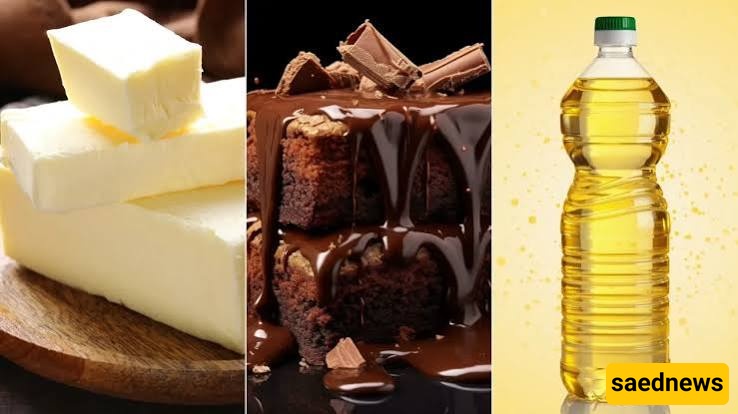
According to Saednews, This question is frequently asked because changing the type of fat in brownies can significantly affect texture, flavor, moisture, and even shelf life. Both butter and oil provide the fat needed for a soft texture and rich taste, but they behave differently in batter and after baking. Differences in how they melt, interact with other ingredients, and respond during cooling lead to different final results.
Understanding how butter and oil behave in batter is just as important as how they perform after brownies come out of the oven. Both contribute richness and tenderness, but they behave differently once baked and cooled.
Butter is about 80% fat and roughly 16% water. It is a saturated fat and solid at room temperature. In brownies, melted butter re-solidifies as the brownies cool, helping create structure, density, and flavor.
Butter’s milk solids also add flavor—especially when browned—producing nutty, caramel-like notes that intensify chocolate flavor.
In contrast, vegetable oil is 100% fat and mostly unsaturated. It remains liquid even after baking, which helps brownies stay soft, moist, and chewy for days. However, since oil does not solidify, it does not provide the same structural firmness as butter.
Unlike cakes or cookies, brownies rarely rely on creaming butter for aeration. Instead, butter is usually melted and mixed in, making it seem interchangeable with oil at first glance. However, once brownies cool, the difference between a fat that solidifies and one that does not becomes very noticeable.
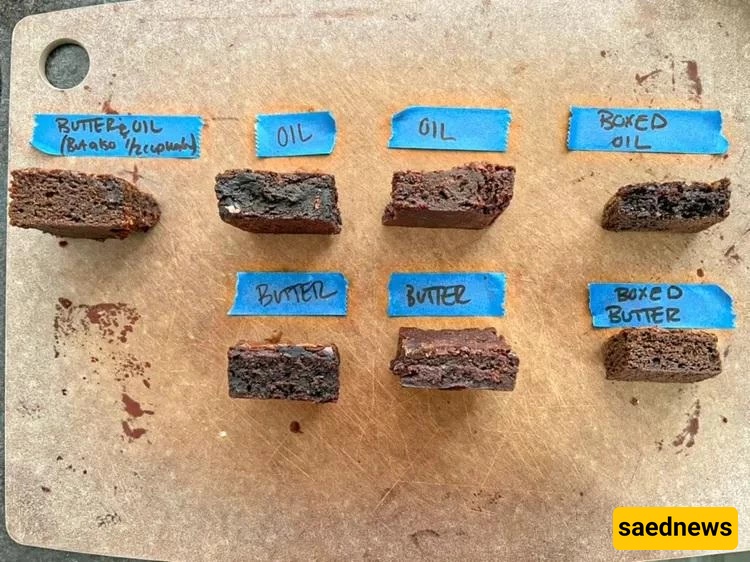
To compare butter and oil in brownies, four common baking scenarios were tested:
A butter-based brownie recipe made twice: once with butter (as intended) and once with oil replacing it
An oil-based brownie recipe made twice: once with oil and once with butter
A boxed brownie mix requiring oil, made once with oil and once with butter
A hybrid recipe intentionally using both butter and oil as written
These tests show how saturated and unsaturated fats behave in recipes designed for them—and what happens when substitutions are made.
Using a butter-focused brownie recipe, brownies made with butter were dense, soft, and rich. Browned butter added deep nutty flavors that enhanced the chocolate.
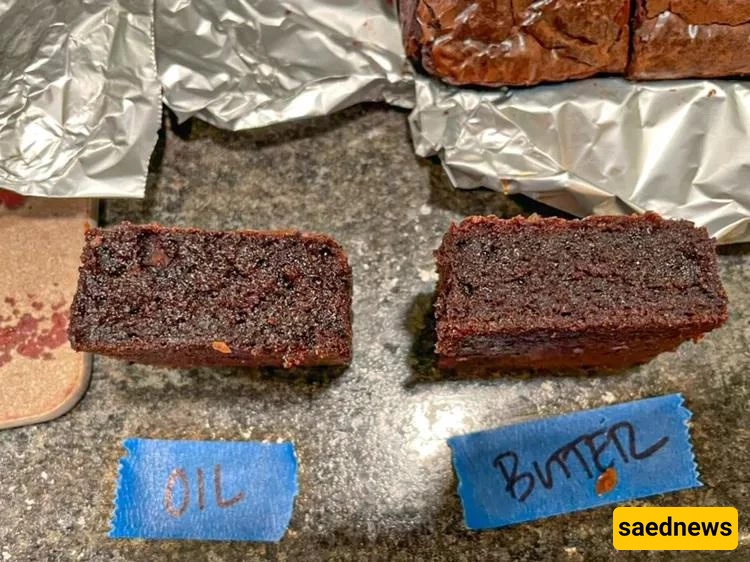
When butter was replaced with oil, the brownies became excessively soft and slightly greasy. The structure weakened because oil could not re-solidify during cooling. The result lacked the complexity and structure provided by browned butter.
Conclusion: In rich butter-based brownies, replacing butter with oil is risky because it can make the texture overly soft and greasy while reducing flavor complexity.
Oil-based brownies were moist, chewy, and intensely chocolatey. They had a darker, more direct chocolate flavor.
When oil was replaced with butter, the brownies became drier and lost their signature chewiness. While flavor improved slightly in balance, the texture suffered over time.
Conclusion: Oil is essential in these recipes for maintaining moisture and chewiness. Butter may improve flavor but reduces texture quality and shelf life.
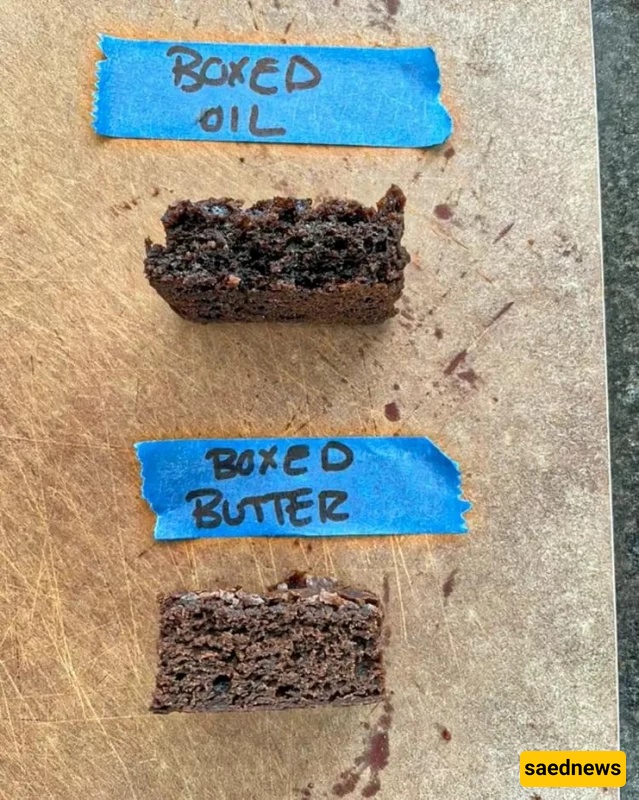
Boxed brownie mixes are typically designed for vegetable oil. When prepared as instructed, they produced the chewiest and most consistent results.
Replacing oil with butter made the brownies lighter in color and more cake-like in texture, with less chewiness but still acceptable flavor.
Conclusion: For classic chewy boxed brownies, oil is the better choice. Butter works as a substitute but changes the texture noticeably.
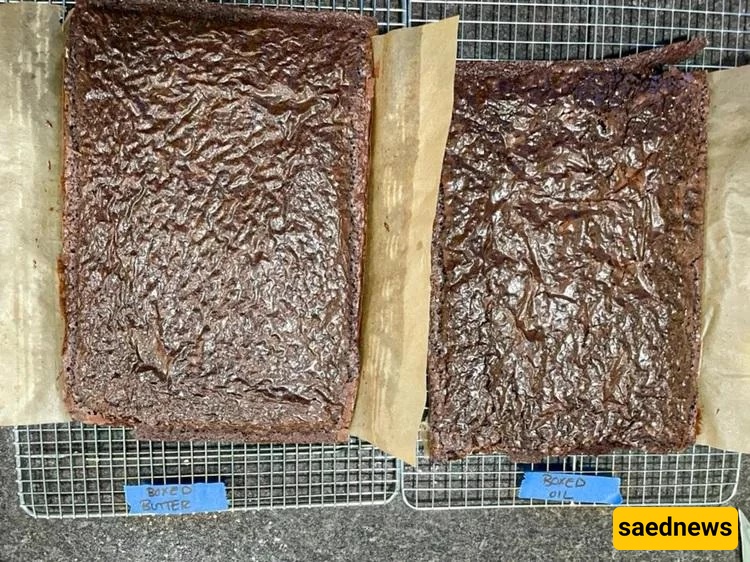
Overall, fat selection determines whether brownies turn out cakey, fudgy, or chewy—and how well that texture holds over time.
Butter contributes structure and rich flavor, often producing more cake-like or dense brownies. It is especially effective in recipes designed for it, including browned butter variations.
Oil produces softer, moister, and chewier brownies that stay tender longer. However, it lacks the structural firmness and flavor depth of butter.
Butter and oil are not interchangeable in brownies. Butter builds structure and flavor complexity, while oil ensures moisture and chewiness. The best choice depends entirely on the desired texture and the recipe design.