SAEDNEWS: CENTCOM said U.S. forces carried out precision strikes on dozens of targets to reduce Iran’s ability to attack international ships transiting the Strait of Hormuz.
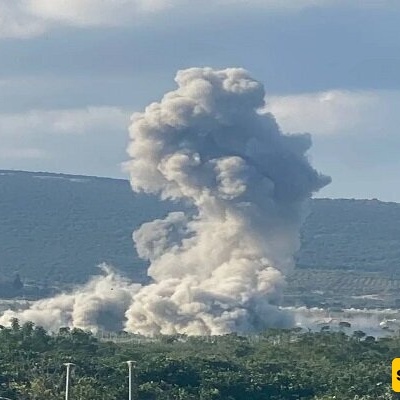
According to Saednews, The U.S. Central Command (CENTCOM) claimed that its strikes targeted Iran's air defense systems, coastal radar sites, missile and drone capabilities, as well as small military vessels. According to CENTCOM, the operation involved U.S. fighter aircraft, naval vessels, and one-way attack drones.
CENTCOM also stated that U.S. forces employed one-way unmanned surface vessels (USVs) for the first time during the operation.
The command asserted that the Strait of Hormuz is a vital maritime route for global trade and claimed that Iran does not control the waterway.
Additionally, the U.S. military said its forces remain on full alert to ensure freedom of navigation for commercial shipping despite what it described as Iran's "aggression, harassment, threats, and arbitrary and unfounded claims."
At the start of the attacks early Monday, CENTCOM announced that the strikes were carried out under the orders of U.S. President Donald Trump, Commander-in-Chief of the U.S. Armed Forces, with the stated objective of holding the Islamic Republic of Iran accountable.
Earlier, the Naval Force of Iran's Islamic Revolutionary Guard Corps (IRGC) had declared that, due to what it described as unlawful foreign intervention, the Strait of Hormuz would remain closed until further notice and until U.S. intervention in the region ends. It also stated that no vessels would be permitted to transit the strait during that period.
According to the fifth clause of the memorandum ending the conflict between Tehran and Washington, Iran considers itself solely responsible for restoring normal navigation through the Strait of Hormuz.
The clause reportedly allows Iran, during the first 60 days following the agreement, to establish the necessary arrangements for the safe passage of commercial vessels. At the same time, it explicitly requires Tehran to enter discussions with Oman regarding the future management and provision of maritime services in the Strait of Hormuz.
Iran has consistently maintained that the Strait of Hormuz is a shared Iranian-Omani waterway. However, it insists that vessel transit must be coordinated with Iran and argues that safe passage through the strait cannot be guaranteed without such coordination.