SAEDNEWS: Making homemade orange marmalade is an easy process that delivers a wonderfully delicious and healthy result. Using fresh oranges will help you create a delightful marmalade with a rich flavor and homemade charm.
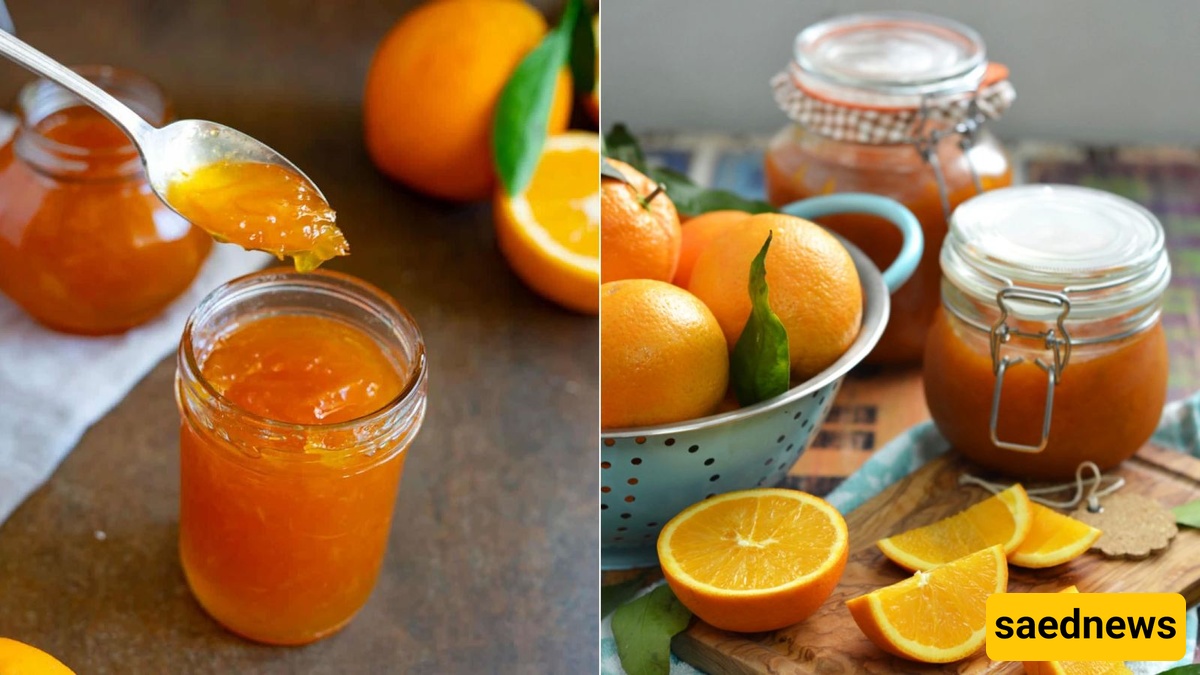
According to Saednews, Orange marmalade is one of the most popular and delicious types of fruit preserves around the world. With its perfect balance of sweet and slightly tangy flavors, it can add a special touch to your breakfast, desserts, and baked goods. Made from fresh oranges, this fragrant spread is rich in vitamin C and antioxidants, making it a healthy and natural choice to start your day.
In this article, we will explain how to prepare homemade orange marmalade step by step, along with important tips and techniques, so you can make a delicious, smooth, and preservative-free marmalade at home.
The ingredients are simple and easily available. Keep in mind that the quality of the oranges plays an important role in the final taste. It is recommended to use ripe and sweet varieties such as Thomson or Valencia oranges.
Oranges: 7 medium-sized (about 1 kilogram)
White sugar: 2 cups (about 400 grams)
Gelatin powder: 2½ teaspoons (optional, for a thicker texture)
Fresh lemon juice: 2 tablespoons
Cold water: ¼ cup (for dissolving gelatin)
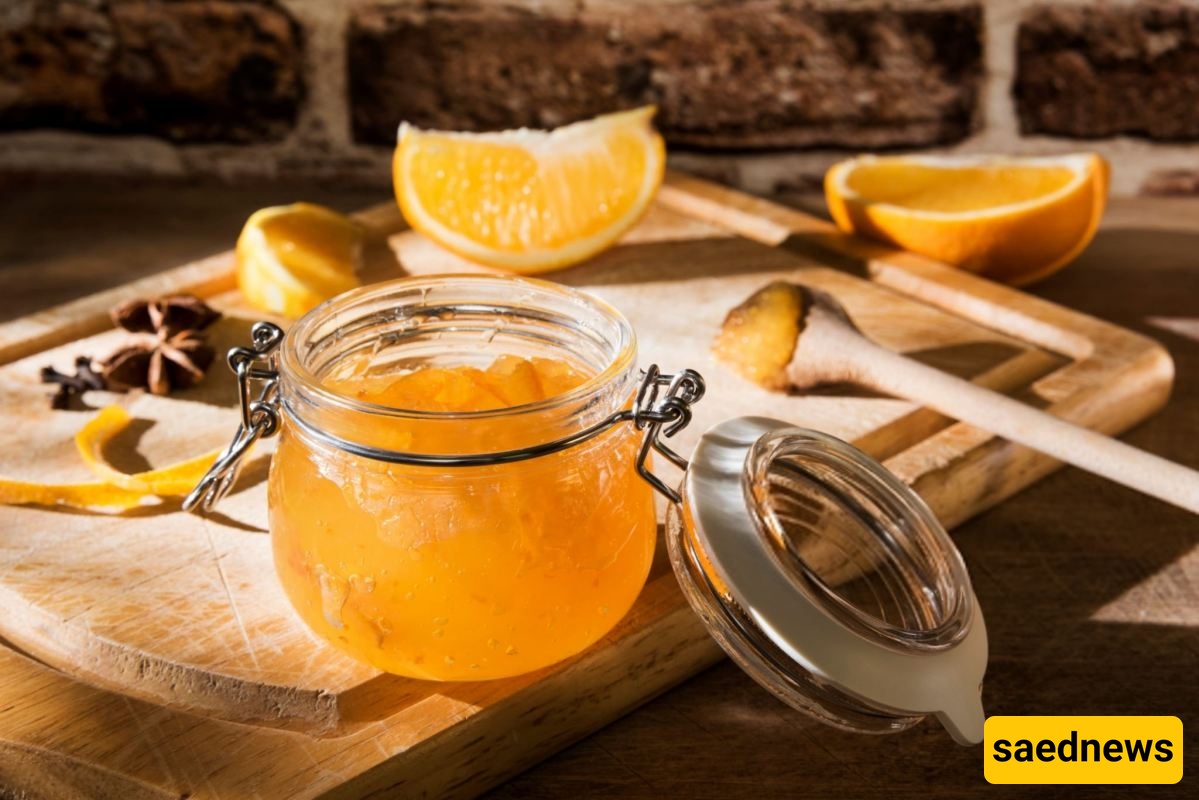
Wash the oranges with cold water and a little salt to remove surface impurities. Then choose one of the following preparation methods:
Method 1 (Removing orange segments):
Peel the oranges with a knife. Remove the white layer under the peel (pith) and the thin membranes around the segments completely, leaving only the juicy orange flesh. This method creates a smoother marmalade texture and reduces bitterness.
Method 2 (Making orange puree):
If you do not have enough time, remove the thick peel and white pith, then cut the oranges into large pieces. Blend them in a blender or food processor until completely pureed. This method is easier and produces a softer-textured marmalade.
Place the orange puree or segments into a non-stick or stainless-steel pot. Add the sugar and mix well. Put the pot over low heat and allow the mixture to slowly come to a boil.
Reduce the heat and cook for 30 to 40 minutes. Stir occasionally to prevent sticking. Remove any foam that forms on the surface using a spoon.
In a small bowl, mix gelatin powder with cold water. Let it sit for about 5 minutes until the gelatin absorbs the water.
Then heat it gently using indirect heat (such as placing the bowl over steam from boiling water or using a microwave at low power) until the gelatin completely dissolves. Do not allow the gelatin mixture to boil, as it may lose its properties.
To make sure the marmalade has reached the right thickness, use the following test:
Place a small plate in the freezer to chill. Put a spoonful of marmalade onto the cold plate and wait briefly. If the marmalade sets like jelly and does not release water, it has reached the correct consistency. If not, continue cooking for a little longer.
Once the marmalade reaches the desired thickness, add fresh lemon juice and stir well. Then slowly add the dissolved gelatin mixture and continue stirring over low heat for another 2 to 3 minutes.
Turn off the heat.
Remove the marmalade from the heat and allow it to cool in the same pot for about 30 minutes.
Transfer it into clean, sterilized glass jars with airtight lids. Make sure the jars are completely dry before filling them. Close the lids tightly and let the marmalade cool completely to room temperature before placing it in the refrigerator.
After 6 to 8 hours (or overnight), the marmalade will reach its final texture and be ready to enjoy.
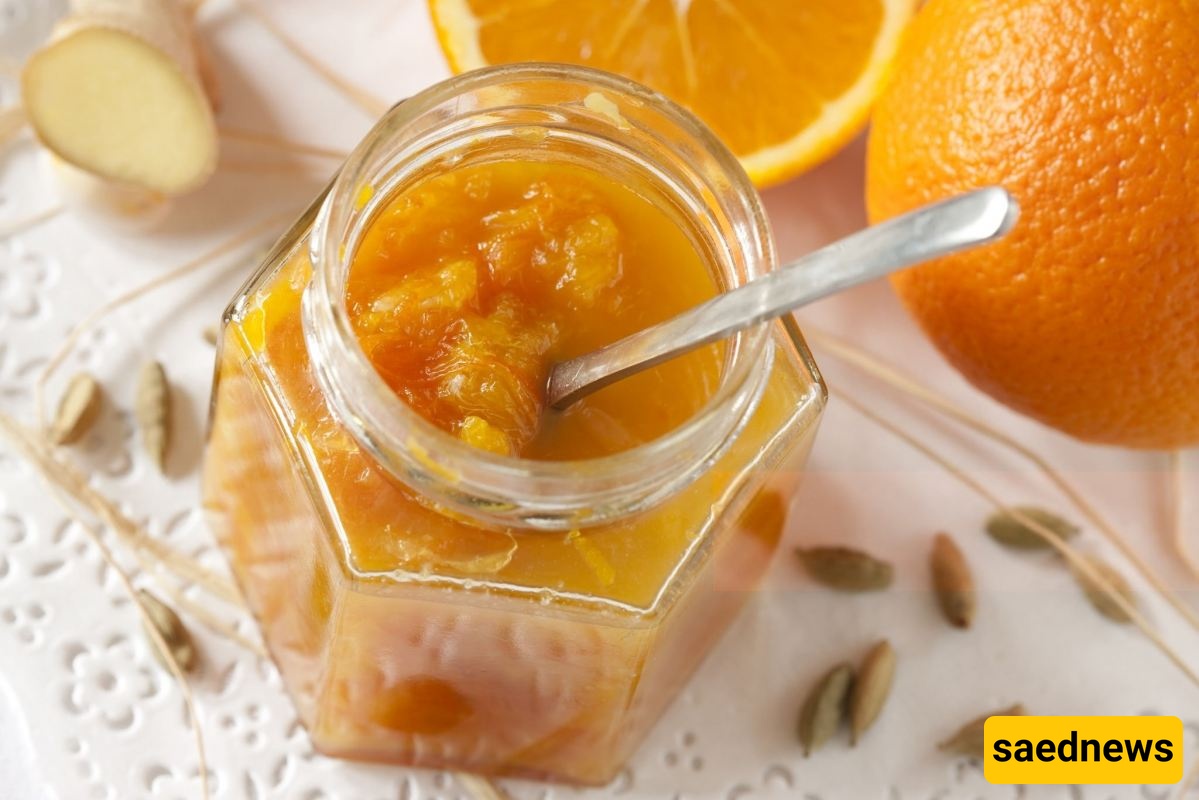
Sweet and juicy oranges are the best choice. If you prefer a slightly bitter flavor, you can combine sweet and bitter oranges or add some orange peel with the pith.
The standard sugar-to-orange ratio is about 1:2 (one cup of sugar for every two cups of orange puree). However, you can adjust the amount depending on the natural sweetness of your oranges.
If white sugar causes crystallization in your marmalade, add a little lemon juice or use special jam sugar that contains pectin.
If you prefer not to use gelatin, cook the marmalade for an additional 45 minutes to 1 hour after boiling. This allows extra water to evaporate, while the natural pectin in oranges helps thicken the mixture.
Adding a small amount of grated apple (about half an apple) can also help improve the natural consistency.
Homemade orange marmalade can be stored in the refrigerator for about 2 to 3 weeks. For longer storage, place it in the freezer.
To freeze it, transfer the cooled marmalade into freezer bags or suitable containers and store it for up to 3 months.
To enhance the aroma and appearance, cut the thin orange peel (without the white pith) into strips and add it during the final 10 minutes of cooking. This will give the marmalade a richer fragrance and a more attractive look.