SAEDNEWS: Discover the world's smelliest flower, famous for its corpse-like odor that resembles a decaying body. Despite its foul scent, it remains one of nature's most fascinating plants.
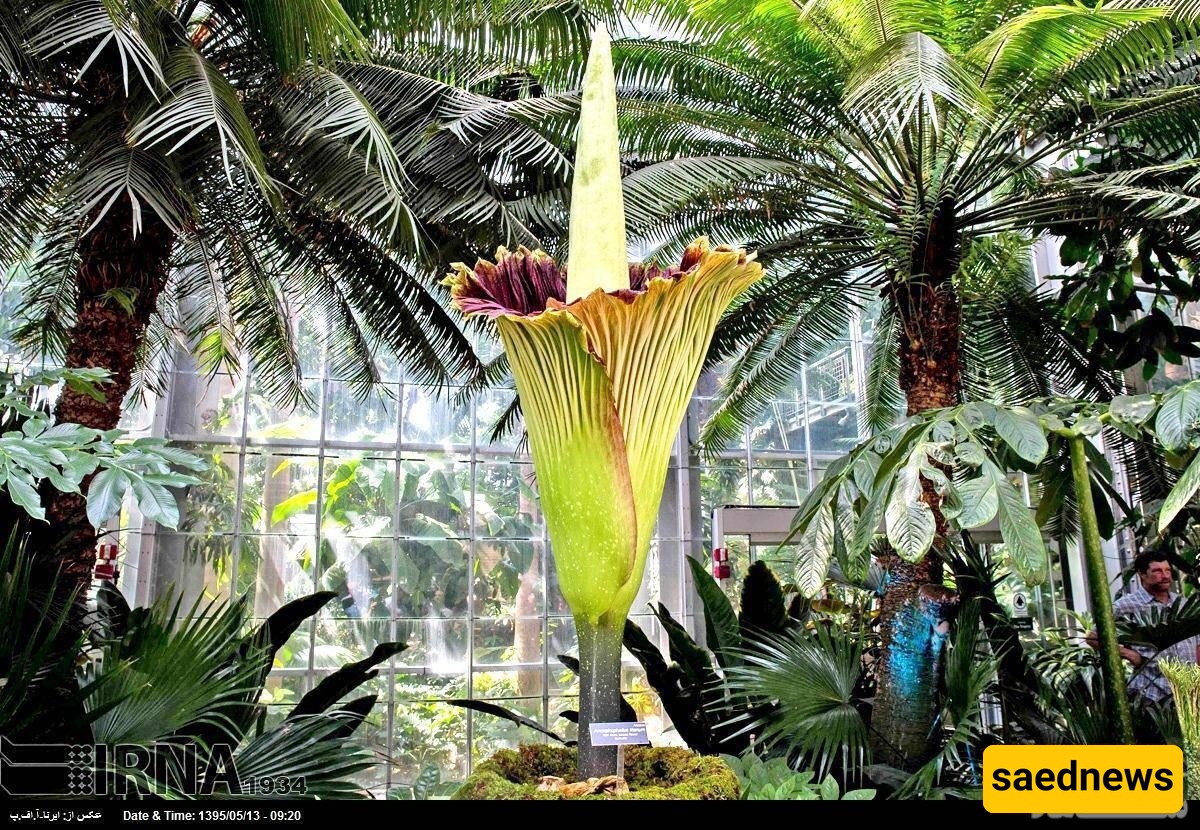
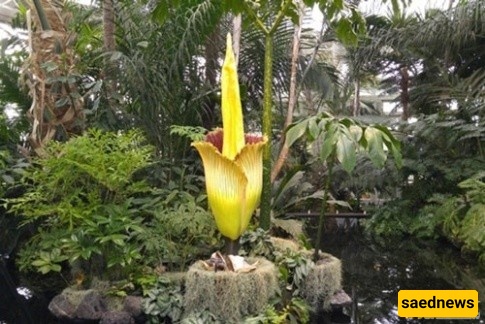
According to Saednews, The corpse flower (Amorphophallus titanum) has drawn large crowds to the New York Botanical Garden after blooming for the first time there in nearly ten years. Famous for its overwhelming odor, this rare tropical plant emits a smell similar to rotting flesh, making it one of the most unusual flowering plants in the world.
Native to the tropical rainforests of Sumatra, Indonesia, the corpse flower was first documented by Italian botanist Odoardo Beccari. The species is extremely rare and typically blooms only once every 7 to 10 years, making each flowering event a significant attraction for botanists and plant enthusiasts.
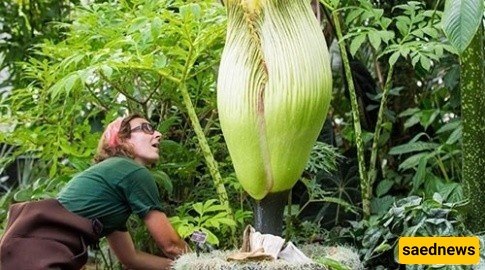
The flower's powerful scent has been compared to a decomposing animal, spoiled fish, or garbage left in the heat. This unpleasant odor plays an important role in nature by attracting carrion beetles and flesh flies, which help pollinate the plant.
The flowering structure of the corpse flower can grow to more than 3 meters (10 feet) tall. It features a massive leaf-like structure called a spathe, which surrounds a central spike known as the spadix. The outside of the spathe is deep green, while the inside is a rich dark burgundy with a deeply ridged texture.
The hollow spathe resembles a giant funnel or loaf-shaped structure. Before producing its first bloom, the corpse flower usually requires 7 to 10 years of growth. After its initial flowering, blooming intervals can vary considerably. Some plants may not bloom again for another decade, while others can flower every two or three years under favorable conditions.
Because of its rarity, enormous size, and unforgettable smell, the corpse flower remains one of the world's most remarkable botanical wonders, attracting thousands of visitors whenever it blooms.